The Illusion of Passivity
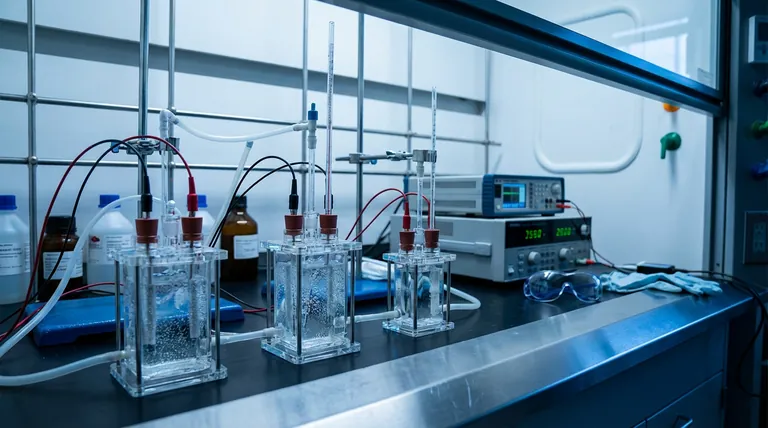
An operating electrolytic cell often looks deceptively calm. There is a hum of electricity and perhaps a gentle effervescence of bubbles.
But this passivity is an illusion.
Inside that vessel, bonds are breaking. Gases are expanding. Energy is transforming. The line between a successful experiment and a hazardous event is often thinner than the glass wall of the cell itself.
Safety in electrolysis is not merely about compliance or checking boxes. It is a discipline. It is an understanding that we are dealing with forces—chemical and electrical—that are indifferent to our intentions.
Here is how to structure your safety protocols to protect both the operator and the integrity of the data.
The Architecture of Containment
The primary risk in electrolysis is not just the chemical itself, but the byproduct of the reaction.
When you run a current through an electrolyte, you are often liberating gases. Sometimes these are benign. Often, they are toxic or flammable, like hydrogen.
Ventilation is your first safeguard. The accumulation of gas is a silent threat. Operating under a fume hood isn't just a recommendation; it is a necessity to prevent the inhalation of fumes and the buildup of explosive atmospheres.
The Seal. Before the current flows, the system must be closed. A leak does two things:
- It releases hazards into the lab environment.
- It compromises the "micro-universe" of your experiment, rendering your data useless.
Respecting the Invisible Current
Electricity is the engine of the electrolytic cell. It is also the most immediate physical threat.
The human brain often underestimates low-voltage systems. We get complacent. We touch things we shouldn't.
The Golden Rule: Never make direct contact with electrodes or the electrolyte during operation.
This seems obvious, yet it remains a leading cause of injury. The risk is twofold:
- Direct shock: The immediate electrical trauma.
- Chemical burns: The electrolyte is often corrosive. An electrical shock can cause a reflex action that knocks over the cell, splashing the operator with acid or base.
Furthermore, the marriage of hydrogen gas and electrical sparks is catastrophic. Open flames and ignition sources must be banished from the vicinity of the cell.
The Fragile Vessel
Most electrolytic cells are crafted from glass.
There is a reason for this. Glass is chemically inert. It allows us to see the reaction. It is the perfect material for science, but it introduces a structural weakness.
Glass breaks.
Handling these components requires a surgeon’s touch. A micro-fracture from rough handling today can become a catastrophic failure under thermal stress tomorrow.
Procedural Integrity:
- Handle gently: Avoid mechanical stress on the cell body.
- Cleaning protocols: Never use metal brushes on delicate glass or electrode surfaces. Scratches alter the surface area and can affect reaction kinetics.
- Chemical compatibility: When cleaning, never mix acid and alkaline agents blindly. The resulting exothermic reaction can shatter the vessel.
The Precision Paradox
Safety and accuracy are not separate goals. They are the same goal.
A safe experiment is a controlled experiment. If your temperature fluctuates wildy, you risk a thermal runaway (safety hazard) and your data becomes noise (scientific hazard).
Controlling variables like electrolyte concentration and temperature protects the equipment. Deviations can damage the cell and produce unexpected, hazardous byproducts.
If you are using a water bath, verify the thermometer. Trust, but verify.
Summary of Critical Safeguards
Below is a breakdown of hazards and the disciplined responses required to mitigate them.
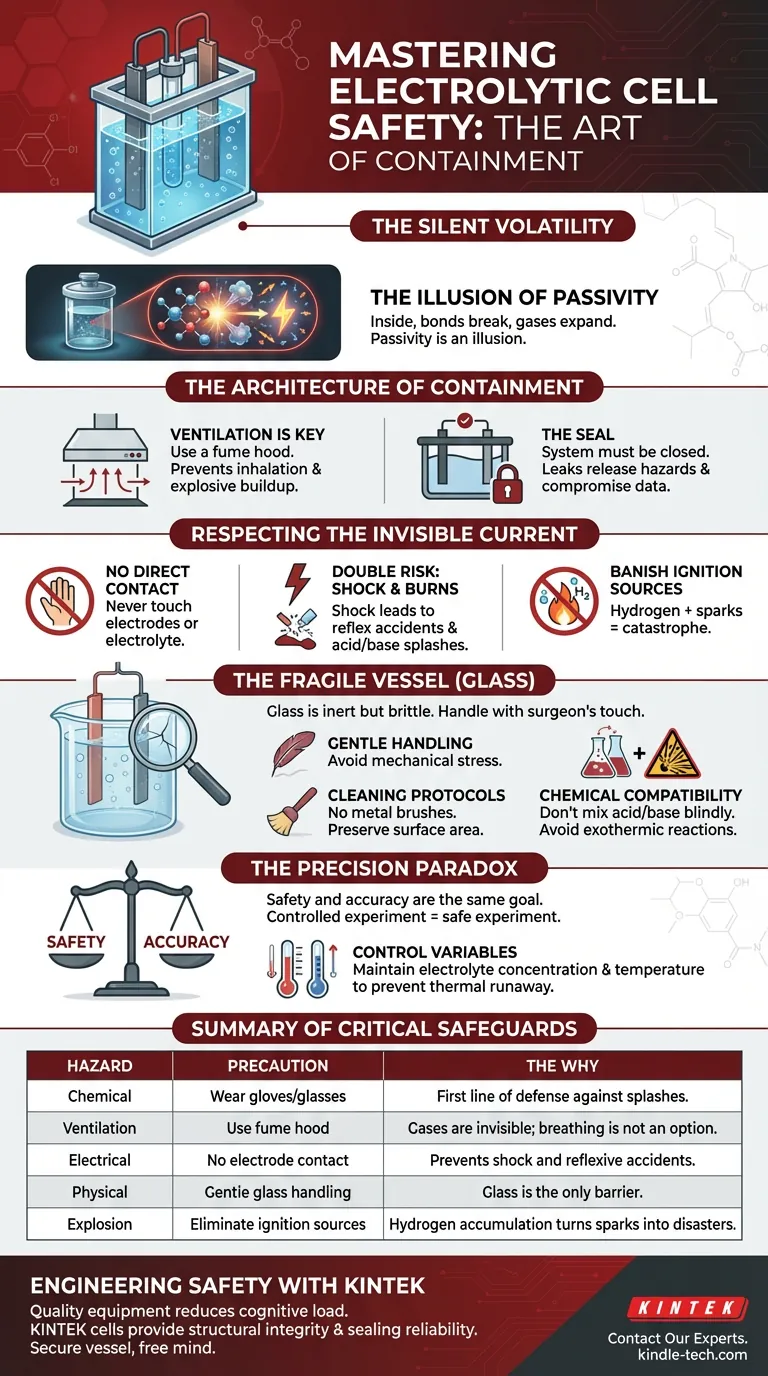
| Hazard Type | Key Precaution | The "Why" |
|---|---|---|
| Chemical | Wear gloves and safety glasses | The first line of defense against inevitable splashes. |
| Ventilation | Use a fume hood | Gases are invisible; breathing them shouldn't be an option. |
| Electrical | No contact with electrodes | Prevents shock and reflexive accidents. |
| Physical | Gentle handling of glass | Glass integrity is the only barrier between you and the reaction. |
| Explosion | Eliminate ignition sources | Hydrogen accumulation turns sparks into disasters. |
Engineering Safety
In the high-stakes environment of electrochemical research, the quality of your equipment is the variable you can control.
Cheap glass and poorly sealed connections increase the cognitive load on the scientist. You spend your time worrying about the equipment rather than focusing on the chemistry.
KINTEK understands this balance. Our electrolytic cells and consumables are engineered to provide the structural integrity and sealing reliability that safe, precise science demands. When the vessel is secure, the mind is free to discover.
Do not leave your safety to chance. Upgrade your laboratory with equipment designed to withstand the rigors of serious research. Contact Our Experts
Visual Guide
Related Products
- PTFE Electrolytic Cell Electrochemical Cell Corrosion-Resistant Sealed and Non-Sealed
- Super Sealed Electrolytic Electrochemical Cell
- Electrolytic Electrochemical Cell with Five-Port
- H Type Electrolytic Cell Triple Electrochemical Cell
- Electrolytic Electrochemical Cell Gas Diffusion Liquid Flow Reaction Cell
Related Articles
- Electrolytic Batteries A Solution to the Growing Energy Demands
- The Art of Resistance: Why Your Electrolytic Cell Needs Breathing Room
- The Architecture of Invisibility: Deconstructing the "All-Quartz" Cell
- The Architecture of Certainty: Mastering Control in Multifunctional Electrolytic Cells
- The Silent Partner: Why Material Choice in Electrochemistry is a Matter of Trust