Coaxial heating coils serve as the precise thermal driver within a Thermal Desorption Spectroscopy (TDS) system, acting as the foundation for quantitative analysis. By enabling the sample holder to undergo controlled, non-isothermal heating at specific, varied rates—typically 2, 4, or 6 °C/min—these coils facilitate the collection of data required to determine the binding energy of hydrogen traps.
The core function of these coils is to enable varying heating rates; by recording how hydrogen desorption peaks shift in response to these different rates, researchers can calculate the activation energy of specific material defects.
The Role of Precision Heating
Non-Isothermal Control
The primary mechanism for analyzing hydrogen traps is non-isothermal heating.
Rather than holding a static temperature, the system ramps the temperature up over time. Coaxial heating coils are essential here because they ensure this ramp is linear and controlled.
Variable Heating Rates
To calculate activation energy, a single test run is insufficient.
The coils allow researchers to run multiple experiments on samples at distinct rates, such as 2 °C/min, 4 °C/min, or 6 °C/min. This variability is the key variable needed for the mathematical analysis of the traps.
From Temperature Shifts to Activation Energy
The Peak Shift Phenomenon
As the heating rate changes, the temperature at which hydrogen releases (desorbs) from the material changes as well.
This phenomenon is known as a peak shift. By recording these shifts relative to the specific heating rates provided by the coils, researchers obtain the raw data needed for calculation.
Identifying Trap Types
Once the peak shifts are mapped, researchers can calculate the binding or activation energy.
This calculation allows them to distinguish between different types of hydrogen traps within the material. In materials like 316L stainless steel, for example, this method helps differentiate between hydrogen trapped in dislocation cell walls versus hydrogen residing in the austenite matrix.
Operational Constraints and Trade-offs
The Necessity of Multiple Runs
The system cannot determine activation energy from a single heating cycle.
Because the calculation relies on observing the shift in peaks, you are effectively trading time for data. You must perform multiple runs at the different rates (2, 4, and 6 °C/min) to build a valid dataset.
Dependence on Linearity
The accuracy of the energy calculation is entirely dependent on the precision of the coils.
If the coaxial coils fail to maintain a strictly linear heating rate (e.g., fluctuating between 3.5 and 4.5 °C/min instead of a steady 4), the peak shift data will be corrupted, leading to erroneous activation energy values.
Making the Right Choice for Your Analysis
Different research goals require different interpretations of the TDS data produced by these coils.
- If your primary focus is Trap Identification: Look for distinct desorption peaks to determine if hydrogen is located in deep traps (like dislocation cell walls) or the lattice matrix.
- If your primary focus is Quantitative Energy Analysis: Ensure you execute a full series of tests at varying rates (2, 4, and 6 °C/min) to capture the necessary peak shifts for calculation.
Precise thermal control is the bridge between observing raw desorption data and understanding the fundamental physics of hydrogen entrapment.
Summary Table:
| Feature | Function in TDS System | Benefit for Activation Energy Analysis |
|---|---|---|
| Linear Temperature Ramp | Provides controlled non-isothermal heating. | Ensures accurate peak identification without thermal fluctuations. |
| Variable Heating Rates | Allows rates like 2, 4, or 6 °C/min. | Necessary data points to observe the "peak shift" phenomenon. |
| Coaxial Coil Design | Ensures uniform heat distribution to the sample. | Minimizes data corruption for precise binding energy calculations. |
| Trap Differentiation | Distinguishes between lattice and defect traps. | Helps identify specific material defects like dislocation cell walls. |
Optimize Your Materials Research with KINTEK Precision
Unlock deeper insights into hydrogen embrittlement and material defects with KINTEK’s advanced thermal solutions. Our high-performance coaxial heating coils and high-temperature systems are engineered for the rigorous demands of Thermal Desorption Spectroscopy (TDS), ensuring the linear precision required for accurate activation energy calculations.
From high-temperature vacuum furnaces and CVD systems to our specialized laboratory consumables like ceramics and crucibles, KINTEK provides the comprehensive equipment suite needed by researchers and industrial labs worldwide. Whether you are analyzing 316L stainless steel or developing next-generation alloys, our expertise in high-pressure reactors and cooling solutions ensures your data is reliable and reproducible.
Ready to elevate your laboratory’s analytical capabilities? Contact us today to discover how our tailored equipment can streamline your research workflow and deliver superior material characterization.
References
- Polina Metalnikov, D. Eliezer. Hydrogen Trapping in Laser Powder Bed Fusion 316L Stainless Steel. DOI: 10.3390/met12101748
This article is also based on technical information from Kintek Solution Knowledge Base .
Related Products
- Multi Heating Zones CVD Tube Furnace Machine Chemical Vapor Deposition Chamber System Equipment
- Chemical Vapor Deposition CVD Equipment System Chamber Slide PECVD Tube Furnace with Liquid Gasifier PECVD Machine
- Customer Made Versatile CVD Tube Furnace Chemical Vapor Deposition Chamber System Equipment
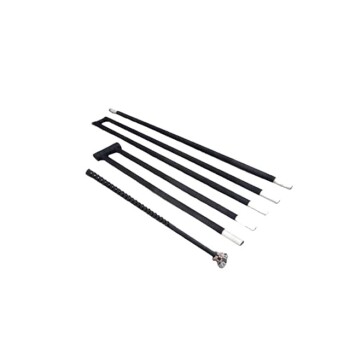
- Silicon Carbide SiC Thermal Heating Elements for Electric Furnace
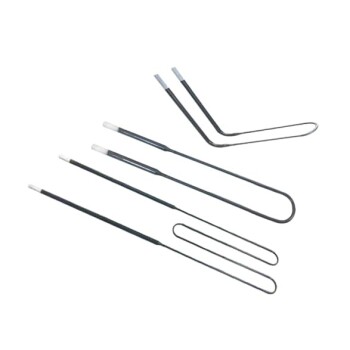
- Molybdenum Disilicide (MoSi2) Thermal Elements Electric Furnace Heating Element
People Also Ask
- What are the advantages of a multi-zone tube furnace for Sb2S3? Unlock Superior Semiconductor Thin Film Purity
- What are the advantages of using a Multi-zone Tube Furnace? Enhanced Thermal Uniformity for Diffusion Research
- What is a CVD tube furnace? A Complete Guide to Thin-Film Deposition
- What are the technical advantages of using a CVD tube furnace? Optimize Silicon-Carbon Battery Anodes
- What is the function of a high-temperature CVD tube furnace in 3D graphene foam prep? Master 3D Nanomaterial Growth