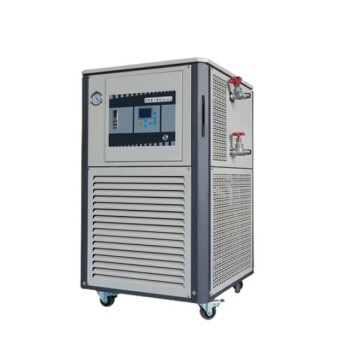
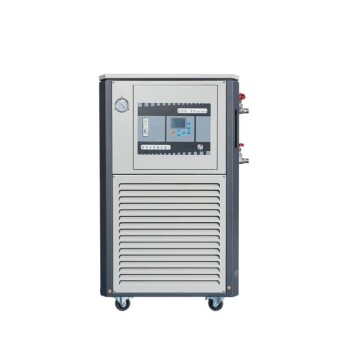
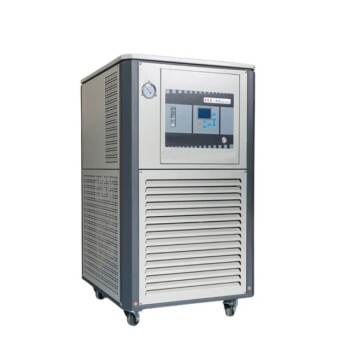
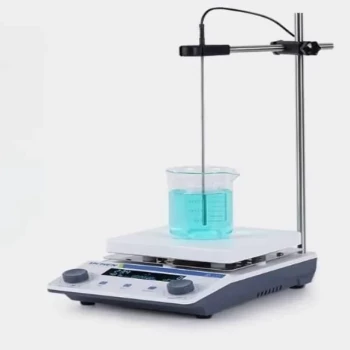
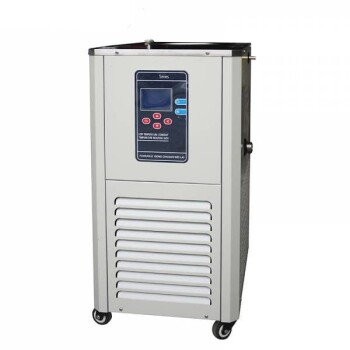
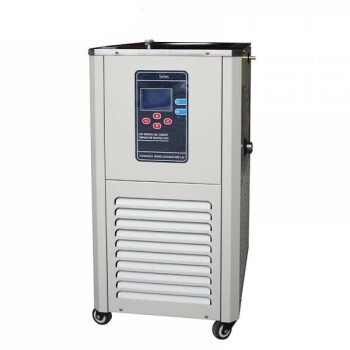
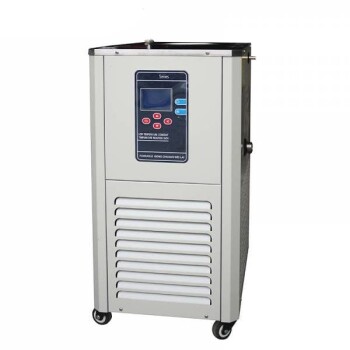
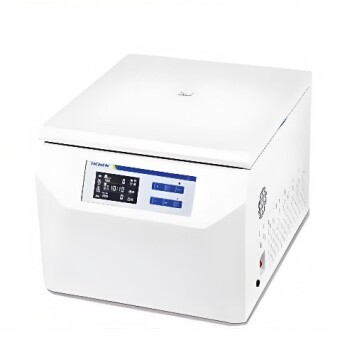
High-precision constant temperature reactors ensure process security by actively managing the significant heat released during the exothermic chemical oxidative polymerization process. By regulating the reaction system’s temperature in real-time, these reactors maintain the stable environment necessary to control reaction rates and preserve the structural integrity of the polymer.
Chemical oxidative polymerization is an exothermic process, meaning it naturally generates heat that can disrupt the reaction. A constant temperature reactor neutralizes this variable, ensuring that the oxidant and monomer react at a controlled pace to produce defect-free, high-conductivity composites.
The Critical Role of Thermal Management
Managing Exothermic Energy
Chemical oxidative polymerization is inherently exothermic. As the reaction progresses, it releases heat that, if left unchecked, alters the reaction environment.
Real-Time Regulation
High-precision reactors respond to these thermal changes immediately. They regulate the temperature of the system in real-time, absorbing excess heat to maintain a constant state regardless of the energy released by the chemicals.
Impact on Polymer Structure and Quality
Sensitivity to Temperature
The physical properties of conducting polymers—specifically molecular weight and conjugation length—are highly sensitive to thermal fluctuations. Even minor deviations can alter the molecular architecture of the final product.
Reducing Molecular Defects
Maintaining a stable, often low-temperature environment is the most effective way to minimize errors in the polymer chain. A constant temperature significantly reduces molecular chain defects, which are the primary cause of poor performance.
Controlling Reaction Rates
Process security relies on predictability. By fixing the temperature, the reactor ensures the oxidant and monomer react at a controlled rate. This prevents rapid, uncontrolled reaction spikes that lead to inconsistencies.
The Result: Morphology and Conductivity
Achieving Uniform Morphology
When the reaction rate is controlled, the physical structure of the polymer forms evenly. This stability results in a uniform morphology throughout the entire powder batch, rather than a mix of high and low-quality particles.
Maximizing Electrical Conductivity
The ultimate goal of this process is performance. By maximizing conjugation length and minimizing defects through precise thermal control, the process yields conducting polymer composites with high electrical conductivity.
Understanding the Trade-offs
Precision vs. Complexity
While high-precision reactors offer superior quality control, they introduce complexity to the setup. Achieving real-time regulation requires sophisticated sensing and cooling loops that must be calibrated perfectly to the specific exothermic profile of your reactants.
The Cost of Fluctuation
It is important to note that "close enough" is rarely sufficient in this context. Failing to maintain strict temperature stability doesn't just lower yield; it can result in a material with short conjugation lengths, rendering it electrically inferior for high-performance applications.
Making the Right Choice for Your Goal
To maximize the effectiveness of your polymerization process, align your temperature strategy with your specific output requirements:
- If your primary focus is Electrical Conductivity: Prioritize a stable low-temperature environment to maximize conjugation length and minimize chain defects.
- If your primary focus is Product Consistency: Focus on real-time regulation capabilities to ensure the oxidant and monomer reaction rates remain identical across every batch.
Precise temperature control is not merely a safety precaution; it is the fundamental variable that dictates the quality and performance of conducting polymers.
Summary Table:
| Feature | Impact on Process Security | Benefit to Final Product |
|---|---|---|
| Real-Time Regulation | Manages exothermic energy spikes | Prevents uncontrolled reaction rates |
| Thermal Stability | Reduces molecular chain defects | Enhances molecular weight & conjugation |
| Controlled Reaction Rate | Maintains oxidant-monomer balance | Uniform morphology across batches |
| Low-Temp Maintenance | Minimizes thermal fluctuations | Maximizes electrical conductivity |
Elevate Your Chemical Synthesis with KINTEK Precision
Don't let thermal fluctuations compromise your material integrity. KINTEK specializes in advanced laboratory solutions, including high-temperature high-pressure reactors and autoclaves designed for rigorous chemical oxidative polymerization. Whether you are developing high-conductivity composites or conducting sensitive battery research, our high-precision systems provide the thermal stability required to eliminate molecular defects and ensure batch-to-batch consistency.
Our value to you:
- Expertly Engineered Reactors: Tailored for exothermic management.
- Comprehensive Portfolio: From crushing and milling systems to vacuum furnaces and specialized PTFE consumables.
- Optimized Performance: Maximize conjugation length and electrical conductivity with our cooling solutions and precise thermal loops.
Ready to optimize your lab's efficiency and product quality? Contact our technical experts today to find the perfect reactor for your specific application.
References
- Lê Văn Cường, Hyeonseok Yoon. Advances in the Use of Conducting Polymers for Healthcare Monitoring. DOI: 10.3390/ijms25031564
This article is also based on technical information from Kintek Solution Knowledge Base .
Related Products
- High Temperature Constant Temperature Heating Circulator Water Bath Chiller Circulator for Reaction Bath
- 5L Heating Chilling Circulator Cooling Water Bath Circulator for High and Low Temperature Constant Temperature Reaction
- 100L Heating Chilling Circulator Cooling Water Bath Circulator for High and Low Temperature Constant Temperature Reaction
- 10L Heating Chilling Circulator Cooling Water Bath Circulator for High and Low Temperature Constant Temperature Reaction
- 20L Heating Chilling Circulator Cooling Water Bath Circulator for High and Low Temperature Constant Temperature Reaction
People Also Ask
- What is the necessity of a circulating water bath in chlorate production? Optimize Yield & Purity with Precision
- How does a constant temperature circulator support the leaching reaction of gold scrap? Optimize Gold Recovery Results
- How do constant temperature circulators impact weight-loss immersion tests? Ensure Precision in Corrosion Analysis
- Why is a constant temperature water bath used for precursor storage in CVD? Achieve Stable Nanocrystalline SiC Deposition
- Why is a high-precision constant temperature water bath necessary for anaerobic digestion? Ensure Success at 37±0.02°C