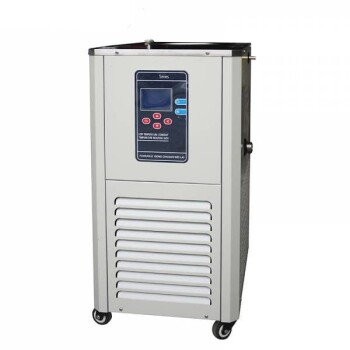
Precision reaction vessels and heating equipment ensure product quality by maintaining a rigorously constant reaction temperature, such as 230 °C. By stabilizing the thermal environment, these tools force multiple distinct metal salt precursors to undergo simultaneous reduction, preventing them from reacting sequentially based on their individual properties.
The fundamental challenge in High-Entropy Alloy synthesis is preventing component separation due to varying chemical behaviors. Precision heating overcomes this by enforcing a uniform environment that drives simultaneous nucleation, resulting in high-purity, single-phase nanoparticles.
The Challenge of Multi-Component Synthesis
Overcoming Physicochemical Differences
High-Entropy Alloys (HEAs) consist of multiple metal elements, each possessing unique physicochemical properties.
In a standard environment, these metals would react and reduce at different rates. Without intervention, this leads to phase separation rather than a unified alloy.
The Role of the Reducing Agent
To create an alloy, metal salt precursors must be reduced in the presence of a reducing agent.
However, the reducing agent alone cannot guarantee uniformity if the thermal conditions favor one metal over another.
How Precision Heating Drives Quality
Enforcing Simultaneous Reduction
Precision heaters maintain a specific, constant temperature (e.g., 230 °C in a triethylene glycol solution) to act as a distinct energy barrier.
This precise thermal energy forces all metal precursors to reduce at the exact same moment. This simultaneity is the key mechanism that overrides the natural tendency of the metals to segregate.
Achieving Uniform Single-Phase Nucleation
When reduction occurs simultaneously, the mixture undergoes uniform single-phase nucleation.
This means the crystal structure forms consistently across the entire batch, rather than growing irregular, multi-phase structures.
Controlling Grain Size and Dispersion
The result of this controlled nucleation is the production of ultra-fine nanoparticles, typically with grain sizes below 10 nm.
Furthermore, the constant temperature ensures uniform dispersion, preventing the particles from clumping or growing unevenly.
Understanding the Trade-offs
The Risk of Thermal fluctuation
The reliance on precise temperature means there is zero margin for error regarding thermal stability.
Even minor fluctuations in the reaction vessel can disrupt the simultaneous reduction process. If the temperature dips or spikes, the most reactive elements may nucleate first, destroying the single-phase structure.
Equipment Sensitivity
Achieving this level of control requires high-end equipment capable of uniform heat distribution.
Standard heating mantles that create "hot spots" or thermal gradients are unsuitable, as they will lead to inconsistent particle sizes and impure alloy phases.
Optimizing Your Synthesis Process
To replicate high-quality HEA nanoparticle synthesis, align your equipment choices with your specific quality metrics.
- If your primary focus is Phase Purity: Select reaction vessels that guarantee uniform thermal distribution to prevent localized fractionation of elements.
- If your primary focus is Particle Size (<10 nm): Prioritize heating systems with rapid feedback loops to maintain the exact target temperature required for simultaneous nucleation.
Precision thermal management is not just a process variable; it is the defining factor that transforms a mixture of salts into a unified high-entropy alloy.
Summary Table:
| Feature | Impact on HEA Synthesis | Benefit to Product Quality |
|---|---|---|
| Constant Temperature (230°C) | Enforces simultaneous reduction of precursors | Prevents phase separation and elemental segregation |
| Uniform Heat Distribution | Drives single-phase nucleation | Ensures high-purity alloy structure |
| Rapid Feedback Control | Eliminates thermal fluctuations | Maintains ultra-fine grain size (<10 nm) |
| Precision Vessels | Prevents localized hot spots | Ensures uniform dispersion and prevents clumping |
Elevate Your Advanced Material Synthesis with KINTEK
Precision is the difference between a failed mixture and a high-purity High-Entropy Alloy. At KINTEK, we specialize in the laboratory equipment essential for ultra-fine nanoparticle production. Our high-temperature high-pressure reactors and autoclaves, combined with advanced heating systems, provide the rigorous thermal stability required for simultaneous nucleation and uniform dispersion.
Whether you are focusing on phase purity or sub-10nm particle size, our team offers the technical expertise and robust equipment—from CVD/PECVD systems to precision crushing and milling tools—to optimize your research outcomes.
Ready to achieve superior consistency in your wet chemical synthesis?
References
- Denzel Bridges, Anming Hu. Novel Frontiers in High-Entropy Alloys. DOI: 10.3390/met13071193
This article is also based on technical information from Kintek Solution Knowledge Base .
Related Products
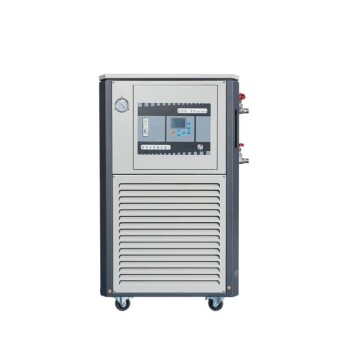
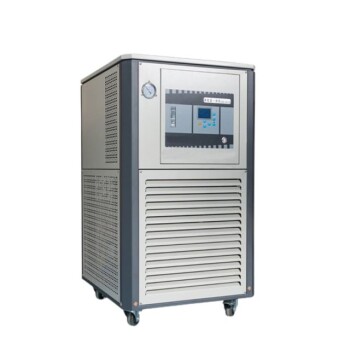
- High Temperature Constant Temperature Heating Circulator Water Bath Chiller Circulator for Reaction Bath
- Customizable High Pressure Reactors for Advanced Scientific and Industrial Applications
- High Pressure Laboratory Autoclave Reactor for Hydrothermal Synthesis
- Multi Heating Zones CVD Tube Furnace Machine Chemical Vapor Deposition Chamber System Equipment
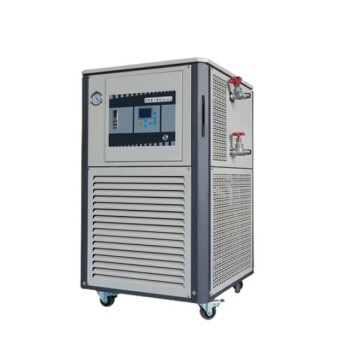
- 10L Heating Chilling Circulator Cooling Water Bath Circulator for High and Low Temperature Constant Temperature Reaction
People Also Ask
- What is the necessity of a circulating water bath in chlorate production? Optimize Yield & Purity with Precision
- How does a constant temperature circulator support the leaching reaction of gold scrap? Optimize Gold Recovery Results
- How do constant temperature circulators impact weight-loss immersion tests? Ensure Precision in Corrosion Analysis
- Why is a constant temperature water bath used for precursor storage in CVD? Achieve Stable Nanocrystalline SiC Deposition
- Why is a high-precision constant temperature water bath necessary for anaerobic digestion? Ensure Success at 37±0.02°C