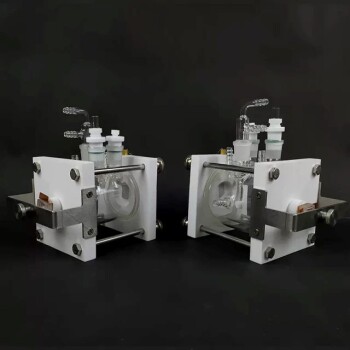
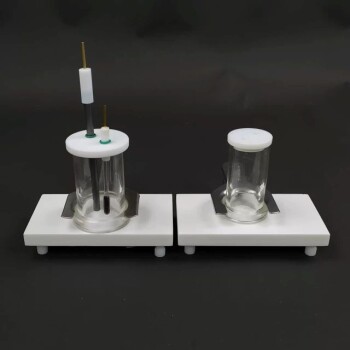
Quartz corrosion cells and reflux condensers work in tandem to maintain a chemically inert and consistent environment for testing Fe-high Si alloys. The quartz cell provides a vessel capable of withstanding extreme temperatures without contaminating the solution, while the reflux condenser prevents the loss of acid through evaporation. Together, they ensure that the test conditions remain stable over long durations, such as 24-hour cycles.
Accurate corrosion testing relies on isolating the material response from environmental variables. By eliminating container reactivity and stabilizing acid concentration, this specific apparatus ensures that any measured degradation is strictly a result of the alloy's interaction with the acid, rather than experimental error.
Creating a Stable Environment for Extreme Testing
To accurately evaluate Fe-high Si alloys, the testing environment must be aggressive enough to simulate real-world conditions but stable enough to yield reproducible data.
Withstanding Extreme Temperatures
Boiling concentrated sulfuric acid (95%) reaches temperatures of approximately 317°C.
Standard laboratory glass or metal containers often fail under these conditions due to thermal shock or melting. High-purity quartz offers superior thermal shock resistance, ensuring the physical integrity of the experiment.
Preventing Chemical Contamination
The primary requirement for a corrosion cell is chemical inertness.
If the container reacts with the boiling acid, it introduces impurities into the solution. These impurities can accelerate or inhibit corrosion rates, skewing the results. Quartz remains chemically neutral, ensuring the solution remains pure.
Maintaining Chemical Consistency via Reflux
The validity of a corrosion test depends on the corrosive medium remaining constant throughout the experiment.
The Problem of Evaporation
When sulfuric acid boils, it naturally turns into vapor and escapes the vessel.
Without intervention, this evaporation would rapidly decrease the volume of the solution and alter its concentration. A changing concentration means the alloy is being tested against a moving target, rendering the data invalid.
The Reflux Solution
The reflux condenser solves this by utilizing circulating cooling water.
As acid vapor rises from the boiling liquid, it enters the condenser, cools down, and re-liquefies. Gravity then returns this liquid directly back into the quartz cell.
Ensuring Long-Term Accuracy
This closed-loop cycle allows for long-term experimentation, often lasting 24 hours or more.
By constantly recycling the acid, the system maintains a specific concentration and volume. This stability is critical for generating reliable data on how Fe-high Si alloys perform over time.
Understanding the Constraints
While this setup is the gold standard for high-temperature acid testing, it introduces specific operational challenges.
Fragility and Cost
High-purity quartz is significantly more expensive than standard borosilicate glass. Furthermore, while it has excellent thermal resistance, it remains mechanically brittle and requires careful handling to prevent breakage during setup.
Specificity of Application
This setup is specialized for high-temperature, highly reactive liquid environments. It is unnecessary for low-temperature tests or neutral pH environments where standard glassware would suffice.
Making the Right Choice for Your Goal
The decision to use this specific apparatus depends on the severity of your testing parameters.
- If your primary focus is extreme temperature resistance: Use quartz cells to withstand temperatures above 300°C where standard glass would fracture or deform.
- If your primary focus is data precision over time: Implement a reflux condenser to ensure acid concentration remains constant during long-duration experiments.
By controlling the environment with this specialized equipment, you transform a chaotic chemical process into a precise, measurable science.
Summary Table:
| Component | Primary Function | Benefit for Fe-High Si Testing |
|---|---|---|
| Quartz Corrosion Cell | High-temperature containment | Withstands 317°C boiling acid without contamination or thermal shock. |
| Reflux Condenser | Acid vapor recycling | Maintains constant acid concentration and volume via a closed-loop cooling system. |
| Circulating Water | Heat exchange | Rapidly liquefies vapors to prevent loss of corrosive medium during 24-hour cycles. |
| Inert Material | Chemical neutrality | Eliminates container reactivity to isolate the alloy's true corrosion resistance. |
Elevate Your Materials Research with KINTEK Precision
Don't let environmental variables compromise your data. KINTEK specializes in high-performance laboratory solutions tailored for extreme environments. Whether you are testing the limits of Fe-high Si alloys or conducting complex chemical synthesis, our comprehensive range of high-purity quartz cells, electrolytic cells, and advanced heating systems ensures your results are accurate and reproducible.
From high-temperature furnaces and pressure reactors to specialized consumables like ceramics and PTFE products, KINTEK provides the tools researchers need to transform chaotic chemical processes into precise science.
Ready to optimize your corrosion testing setup? Contact our technical experts today to find the perfect equipment for your laboratory's unique requirements.
References
- Ikuo Ioka, Yoshiyuki Inagaki. ICONE23-1649 DEVELOPMENT RESEARCH OF CORROSION-RESISTANT STRUCTURAL MATERIAL USING FE-SI ALLOY LINING CENTRIFUGAL CAST-IRON FOR THERMOCHEMICAL WATER-SPLITTING IODINE-SULFUR PROCESS. DOI: 10.1299/jsmeicone.2015.23._icone23-1_321
This article is also based on technical information from Kintek Solution Knowledge Base .
Related Products
- Quartz Electrolytic Electrochemical Cell for Electrochemical Experiments
- Flat Corrosion Electrolytic Electrochemical Cell
- Electrolytic Electrochemical Cell for Coating Evaluation
- PTFE Electrolytic Cell Electrochemical Cell Corrosion-Resistant Sealed and Non-Sealed
- Optical Window Glass Substrate Wafer Quartz Plate JGS1 JGS2 JGS3
People Also Ask
- Why is a quartz electrolytic cell used for acrylic acid wastewater? Ensure Chemical Stability & Data Integrity
- How does the design of an electrochemical electrolytic cell influence the coating uniformity? Optimize Your Catalysts
- What are the key features of quartz that make it suitable for electrolytic cells? Discover the 4 Pillars of Superior Performance
- What is the correct shutdown and disassembly procedure after an experiment? Ensure Safety and Protect Your Equipment
- How do the electrochemical cell and three-electrode testing system collaborate? Optimize Zinc Anode Deposition Control