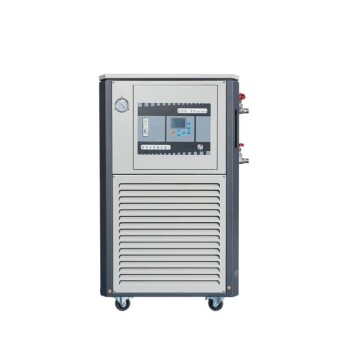
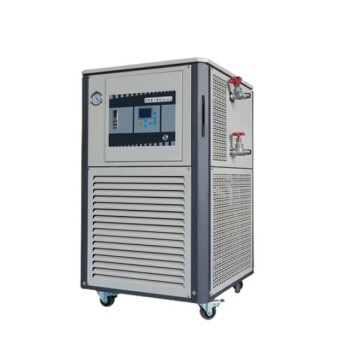
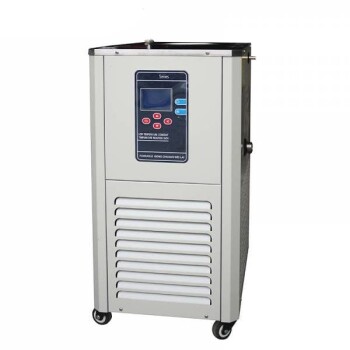
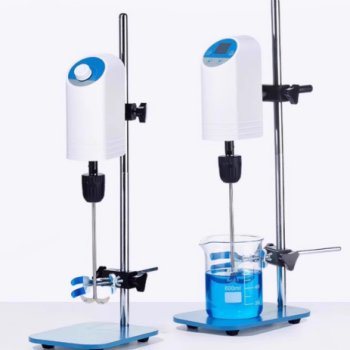
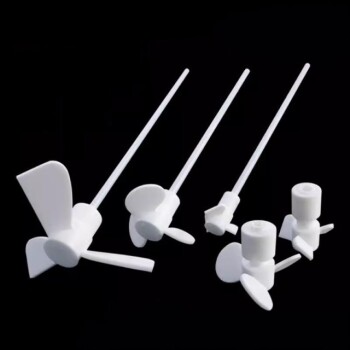
Reactors and constant temperature stirring devices function as precision control environments during the wet coating process for high-nickel materials. Their primary role is to maintain the specific thermal and kinetic conditions necessary for residual lithium compounds on the material's surface to react completely with a phosphate source. This ensures a uniform, controlled chemical conversion rather than a random surface deposit.
The core function of these devices is to stabilize the reaction between surface impurities and the coating solution, converting harmful residues into a beneficial, ionically conductive lithium phosphate (Li3PO4) layer.
The Chemical Transformation Process
Targeting Surface Impurities
High-nickel materials often retain residual lithium compounds on their surface after synthesis.
These residues primarily consist of lithium hydroxide (LiOH) and lithium carbonate (Li2CO3).
The reactor facilitates the interaction between these specific impurities and the coating solution.
The Phosphate Reaction
The process typically utilizes a solution containing a phosphate source, such as diammonium hydrogen phosphate.
Inside the stirring device, this solution is continuously mixed with the high-nickel material.
This contact initiates a chemical reaction where the phosphate binds with the residual lithium.
The Role of Environmental Stability
Ensuring Complete Conversion
The "constant temperature" aspect of the device is critical for reaction efficiency.
By maintaining a stable thermal environment, the device ensures that the reaction kinetics remain consistent throughout the batch.
This stability allows the residual lithium to fully react, rather than leaving unreacted impurities behind.
Creating the Protective Layer
The ultimate output of this controlled reaction is the formation of a lithium phosphate (Li3PO4) coating layer.
This new layer serves a dual purpose: it possesses ionic conductivity, allowing the battery to function efficiently, while acting as a physical barrier.
This barrier creates a shield that creates a physical separation between the active material and the electrolyte.
Preventing Corrosion
Without this coating, the high-nickel material is vulnerable to direct attack by the electrolyte.
The reactor-controlled process ensures the coating is uniform enough to protect the material from electrolyte corrosion.
This significantly extends the lifespan and stability of the cathode material.
Understanding the Trade-offs
Process Sensitivity
While these devices provide control, the process is highly sensitive to parameter deviations.
If the stirring speed is inconsistent, the contact between the phosphate source and the residual lithium may be uneven, leading to "patchy" coatings.
Thermal Precision
Similarly, fluctuations in temperature can alter the reaction rate.
This could result in either an incomplete conversion of impurities or a coating layer that does not adhere properly to the high-nickel substrate.
Optimizing the Coating Strategy
To maximize the effectiveness of wet coating processes for high-nickel materials, focus on the specific goals of the reaction.
- If your primary focus is material purity: Ensure the stirring mechanism provides aggressive enough agitation to expose all surface residual lithium (LiOH and Li2CO3) to the phosphate source.
- If your primary focus is cycle life: Prioritize precise temperature control to guarantee the formation of a continuous, high-quality Li3PO4 barrier against electrolyte corrosion.
Controlled agitation and thermal stability are the non-negotiable pillars of transforming surface defects into protective shields.
Summary Table:
| Feature | Role in Phosphate Coating Process | Impact on High-Nickel Material |
|---|---|---|
| Constant Temp | Maintains consistent reaction kinetics | Ensures complete conversion of LiOH/Li2CO3 |
| Active Stirring | Promotes uniform contact with phosphate source | Prevents patchy coatings and surface defects |
| Reactor Vessel | Provides a controlled chemical environment | Protects substrate from premature electrolyte contact |
| Li3PO4 Layer | Formation of ionically conductive barrier | Enhances cycle life and prevents electrolyte corrosion |
Elevate Your Battery Research with KINTEK Precision Engineering
Unlock the full potential of your high-nickel cathode materials with KINTEK’s advanced laboratory solutions. Our specialized high-temperature high-pressure reactors, autoclaves, and precision stirring systems are engineered to provide the thermal stability and kinetic control required for uniform phosphate coating and chemical conversion.
Whether you are scaling up synthesis or refining surface treatments, KINTEK offers a comprehensive range of battery research tools, consumables, and cooling solutions tailored to meet the rigorous demands of material science.
Ready to optimize your coating process? Contact our technical experts today to discover how KINTEK can enhance your lab's efficiency and material performance.
References
- Mehdi Ahangari, Hongmei Luo. Advancements and Challenges in High-Capacity Ni-Rich Cathode Materials for Lithium-Ion Batteries. DOI: 10.3390/ma17040801
This article is also based on technical information from Kintek Solution Knowledge Base .
Related Products
- Laboratory Small Constant Temperature Heated Magnetic Stirrer Heater and Stirrer
- High Temperature Constant Temperature Heating Circulator Water Bath Chiller Circulator for Reaction Bath
- 5L Heating Chilling Circulator Cooling Water Bath Circulator for High and Low Temperature Constant Temperature Reaction
- 10L Heating Chilling Circulator Cooling Water Bath Circulator for High and Low Temperature Constant Temperature Reaction
- 50L Heating Chilling Circulator Cooling Water Bath Circulator for High and Low Temperature Constant Temperature Reaction
People Also Ask
- What role does a magnetic stirrer with heating play in ZnO nanoparticle synthesis? Precision Control for Quality Results
- What role does a constant temperature heating magnetic stirrer play in MFC-HAp synthesis? Achieve Material Homogeneity
- What is the function of a laboratory magnetic stirrer in Ni–Cr–P electrodeposition? Optimize Ion Transport & Coating
- Why is a laboratory magnetic stirrer required for benzoic acid esters? Boost Reaction Speed & Yield with High RPM
- What role does a laboratory magnetic stirrer play in TiO2 and TiO2-Ag sol preparation? Master Chemical Kinetics