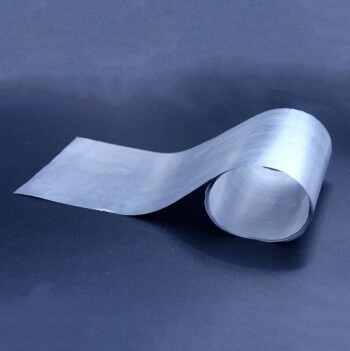
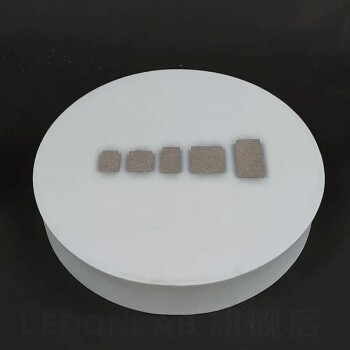
In the context of all-solid-state battery (ASSB) testing, stainless steel components—specifically cylinders and spacers—function as the critical structural and electrical backbone of the cell assembly. While termed "consumables" because they are part of the replaceable cell hardware, their active role is to serve simultaneously as current collectors and rigid mechanical supports.
Stainless steel parts in ASSB testing resolve the unique physical challenges of solid electrolytes by bridging the gap between electrical connectivity and the extreme mechanical pressure required to maintain material interfaces.
The Dual Roles of Stainless Steel Components
Function 1: Electrical Conductivity
In half-cell structures or full stack assemblies (such as Li|Li6PS5Cl|Li), stainless steel cylinders do not merely hold the materials in place.
They act as primary current collectors.
This function is essential for conducting electricity from the internal electrochemically active materials to the external testing equipment.
Function 2: Mechanical Rigidity
The more distinct role of stainless steel in solid-state batteries compared to liquid systems is its mechanical contribution.
These components provide the necessary rigid support.
Solid-state batteries require significant external pressure to function correctly. The stainless steel parts must be robust enough to withstand these high "stack pressures" without deforming.
Ensuring Interfacial Contact
The ultimate goal of applying this pressure via the stainless steel components is interface maintenance.
They ensure close physical contact between layers.
Specifically, the steel forces the solid electrolyte and electrode materials to remain touching throughout the cycling process, preventing the gaps that lead to failure.
Critical Considerations and Trade-offs
The Necessity of Rigidity
The primary pitfall in solid-state testing is the loss of contact between the solid electrolyte and the electrode.
If the spacer component deforms, the test is compromised.
Unlike liquid electrolytes that flow into gaps, solid electrolytes rely entirely on the mechanical pressure transmitted by these stainless steel parts to maintain an ionic pathway.
The Limits of Standardization
While stainless steel is the standard for general testing, its function relies on its ability to remain inert while conducting.
The trade-off is component precision.
Because the component serves as both the electrical path and the pressure vessel, any surface imperfection or lack of flatness in the steel spacer can lead to uneven pressure distribution or poor electrical contact.
Making the Right Choice for Your Goal
To obtain accurate data from your all-solid-state battery cells, you must select assembly components that satisfy both electrical and mechanical requirements.
- If your primary focus is electrochemical fidelity: Ensure your stainless steel spacers are highly polished to maximize surface area for the current collector function.
- If your primary focus is cycle life stability: Prioritize the structural integrity of the cylinder to maintain constant high stack pressure on the solid electrolyte over time.
By treating these "consumables" as precision engineering components, you ensure the validity of your solid-state performance data.
Summary Table:
| Component Role | Primary Function | Impact on Battery Performance |
|---|---|---|
| Current Collector | Electrical Conductivity | Facilitates electron flow between active materials and external testers. |
| Mechanical Support | Structural Rigidity | Withstands high stack pressures without deformation to maintain integrity. |
| Interface Bridge | Physical Contact | Ensures constant contact between solid electrolyte and electrodes to prevent failure. |
| Inert Backbone | Stability | Provides a stable, non-reactive platform for high-precision electrochemical cycling. |
Elevate Your Battery Research with KINTEK Precision Hardware
Unlock the full potential of your all-solid-state battery research with KINTEK’s specialized laboratory solutions. As experts in battery research tools and consumables, we provide high-precision stainless steel components, electrolytic cells, and electrodes designed to withstand extreme mechanical pressures and ensure flawless electrical connectivity.
Whether you need robust crushing and milling systems for material preparation or high-temperature furnaces for advanced sintering, KINTEK delivers the durability and precision required for cutting-edge energy storage development. Don't let mechanical deformation compromise your data.
Contact KINTEK today for expert advice and high-quality laboratory consumables!
Related Products
- Aluminum Foil Current Collector for Lithium Battery
- Copper Nickel Foam Metal Sheet
- Battery Lab Equipment 304 Stainless Steel Strip Foil 20um Thick for Battery Test
People Also Ask
- Why is aluminum foil selected as the current collector for F-HCNT electrodes? Superior Stability & Conductivity
- How is aluminum foil utilized as a consumable during the assembly of cold sintering molds? Optimize Tooling Longevity
- How to tell if a lithium-ion battery is bad? Spot the critical signs of failure before it's too late.
- How to check if a lithium battery is good? Safely Test Voltage, Capacity & Internal Resistance
- Is there a way to test lithium batteries? Understand Voltage vs. True Health