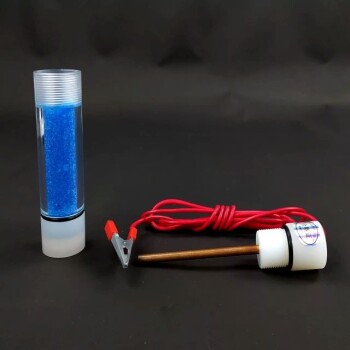
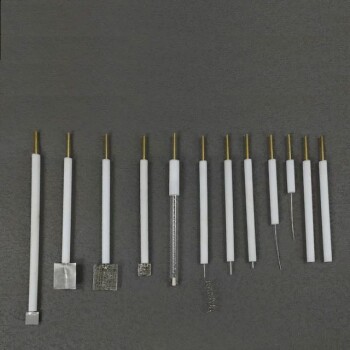
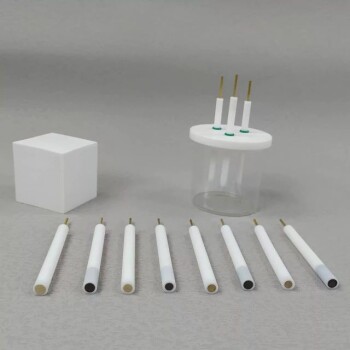
In a three-electrode electrochemical testing system, these components perform distinct functions to decouple voltage measurement from current flow. The Ag/AgCl reference electrode acts as a fixed voltage standard, providing a stable baseline against which the working electrode is measured. The platinum sheet counter electrode (also called the auxiliary electrode) completes the electrical circuit, allowing current to flow through the cell without chemically interfering with the test results.
Core Insight: The integrity of your corrosion data relies on separation of duties. The reference electrode provides a precise "ruler" for measurement but carries no significant current, while the counter electrode handles the heavy lifting of current transmission without becoming part of the reaction itself.
The Role of the Ag/AgCl Reference Electrode
Establishing a Stable Potential Baseline
The primary function of the Silver/Silver Chloride (Ag/AgCl) electrode is to provide an extremely stable and known potential. Because the potential of the working electrode (your sample) fluctuates during corrosion testing, you need a fixed point—like "sea level" in geography—to measure against.
Ensuring Data Accuracy and Comparability
By maintaining this fixed baseline, the reference electrode ensures the accuracy of the potential coordinates on your polarization curve. This stability allows you to objectively compare data across different experimental conditions or samples, ensuring that observed changes are due to the corrosion of the sample, not drift in the measurement tool.
The Role of the Platinum Sheet Counter Electrode
Completing the Current Circuit
The platinum sheet functions as the auxiliary electrode, physically completing the current loop with the working electrode. It ensures that the electrical current required for the electrochemical reaction can flow efficiently through the electrolyte, allowing the system to record kinetic parameters.
Chemical Inertness for Signal Purity
Platinum is selected for its high chemical inertness and stability, particularly in harsh conditions like strong alkaline environments. Unlike other metals, platinum facilitates the flow of current—often via hydrogen or oxygen evolution—without dissolving or oxidizing itself. This prevents the counter electrode from contaminating the solution or creating "noise" that would obscure the subtle corrosion signals from your sample.
Understanding the Trade-offs
Reference Electrode Junction Limits
While the Ag/AgCl electrode is stable, it relies on an internal electrolyte solution (typically KCl) leaking slightly through a porous junction to maintain electrical contact. If this junction becomes clogged or the solution interacts with your sample, the reference potential can drift, rendering your voltage data invalid.
Counter Electrode Surface Area
The platinum sheet must have sufficient surface area relative to the working electrode to avoid becoming a bottleneck. If the counter electrode is too small, it may limit the current flow, artificially constraining the corrosion rate measurements and leading to inaccurate kinetic data.
Making the Right Choice for Your Goal
To ensure the reliability of your electrochemical system, prioritize your setup based on your specific testing needs:
- If your primary focus is Precise Voltage Measurement: Ensure your Ag/AgCl reference electrode is properly maintained, with a clean junction and appropriate fill solution to prevent potential drift.
- If your primary focus is High Current/Corrosion Rates: Verify that your platinum sheet counter electrode has a large enough surface area and remains chemically inert to prevent limiting the reaction kinetics.
Ultimately, the quality of your corrosion analysis depends on the reference electrode remaining static while the counter electrode efficiently facilitates the dynamic current flow.
Summary Table:
| Component | Role | Primary Function | Key Material Property |
|---|---|---|---|
| Ag/AgCl Electrode | Reference Electrode | Provides a stable potential baseline (fixed voltage standard) | High potential stability and low drift |
| Platinum Sheet | Counter (Auxiliary) Electrode | Completes the electrical circuit and facilitates current flow | Exceptional chemical inertness and conductivity |
Elevate Your Electrochemical Research with KINTEK Precision
Don't let electrode drift or circuit bottlenecks compromise your corrosion data. KINTEK specializes in high-performance laboratory solutions, providing the specialized tools researchers need for accurate electrochemical analysis. From premium platinum counter electrodes and stable Ag/AgCl reference electrodes to advanced electrolytic cells and electrodes, our portfolio is designed for durability and precision in the most demanding environments.
Whether you are conducting battery research, high-temperature material testing, or complex chemical synthesis, KINTEK offers a comprehensive range of equipment, including:
- High-temperature furnaces & reactors (Muffle, Vacuum, CVD, and more)
- Crushing, milling, and sieving systems for sample preparation
- Hydraulic presses (Pellet, Hot, Isostatic) and high-pressure autoclaves
- Essential consumables like PTFE products, ceramics, and crucibles
Ready to ensure the integrity of your results? Contact our technical experts today to find the perfect electrochemical components and laboratory equipment for your specific application.
References
- С. В. Савушкина, И. В. Суминов. Study of Coatings Formed on Zirconium Alloy by Plasma Electrolytic Oxidation in Electrolyte with Submicron Yttria Powder Additives. DOI: 10.3390/met11091392
This article is also based on technical information from Kintek Solution Knowledge Base .
Related Products
- Reference Electrode Calomel Silver Chloride Mercury Sulfate for Laboratory Use
- Copper Sulfate Reference Electrode for Laboratory Use
- Electrolytic Electrochemical Cell Gas Diffusion Liquid Flow Reaction Cell
- Glassy Carbon Electrochemical Electrode
- Graphite Disc Rod and Sheet Electrode Electrochemical Graphite Electrode
People Also Ask
- What is the function of a reference electrode? Master Precision in Three-Electrode Reactor Reconstruction
- What is the recommended maintenance for the filling solution of a reference electrode? A Guide to Stable & Accurate Readings
- Which electrode is used as a ground reference? Master the Key to Accurate Electrochemical Measurements
- What is the reference electrode in potentiometry? The Key to Stable & Accurate Measurements
- Which electrode is used as a reference? A Guide to Accurate Electrochemical Measurements