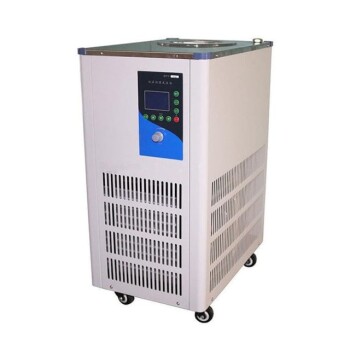
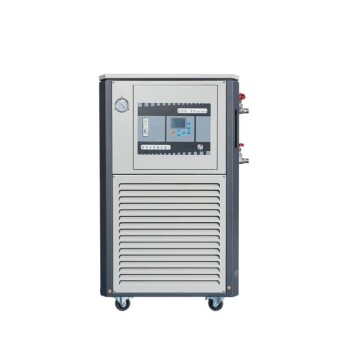
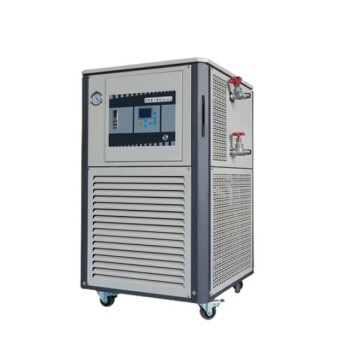
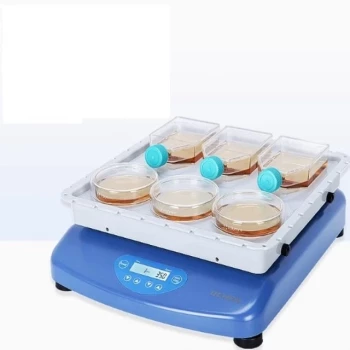
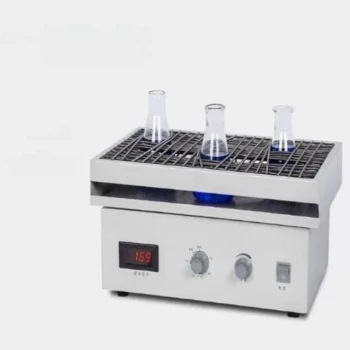
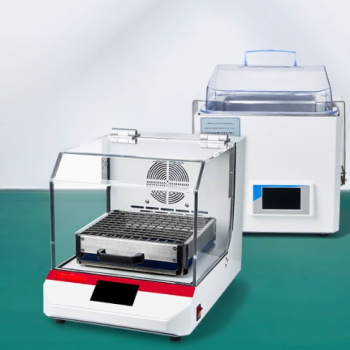
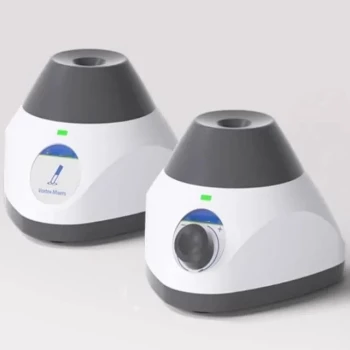
A constant temperature shaker improves experimental accuracy by providing consistent mechanical agitation to keep composite materials suspended and by maintaining precise thermal control to eliminate environmental variables. This dual functionality ensures that the interaction between tetracycline and the adsorbent is governed by intrinsic chemical properties rather than physical limitations like settling or temperature fluctuations.
Stability is the prerequisite for reproducibility in adsorption studies. By standardizing the kinetic energy and thermal environment, a constant temperature shaker isolates the reaction mechanism, allowing for the precise calculation of kinetic rates and thermodynamic parameters without interference from external variables.
Optimizing Mass Transfer Efficiency
To obtain accurate kinetic data, the tetracycline molecules must effectively reach the surface of the adsorbent. The shaker’s mechanical action is the primary driver of this physical process.
Maintaining a Suspended State
The primary function of the shaker is to generate consistent mechanical agitation. This prevents the adsorbent materials from settling at the bottom of the container.
By keeping the materials in a suspended state, the device ensures thorough and uniform contact between the solid particles and the liquid solution throughout the entire experiment.
Overcoming Liquid Film Resistance
Surrounding every adsorbent particle is a stagnant layer of liquid known as the hydrodynamic boundary layer. This layer creates resistance that slows down the movement of pollutants toward the solid surface.
The mechanical force generated by specific rotation speeds disrupts this layer. This effectively overcomes liquid film mass transfer resistance, allowing tetracycline molecules to reach the adsorbent surface more efficiently.
Promoting Internal Pore Diffusion
Once the liquid film barrier is breached, the pollutant must penetrate the internal structure of the material.
The continuous agitation promotes the diffusion of molecules into the internal pores of the adsorbent. This ensures that the total surface area of the composite material is utilized, leading to data that reflects the material's true capacity.
Ensuring Thermodynamic Consistency
Adsorption is a temperature-dependent process. Without rigorous thermal control, kinetic data becomes unreliable and difficult to interpret.
Eliminating Ambient Fluctuations
Reaction rates are highly sensitive to changes in heat. If an experiment is exposed to shifting ambient room temperatures, the rate of tetracycline removal will fluctuate unpredictably.
Precise temperature control eliminates this variable. It ensures that any observed changes in adsorption rate are due to the reaction mechanism itself, not the time of day or laboratory conditions.
Enabling Accurate Parameter Calculation
Researchers rely on stable data to calculate thermodynamic parameters, such as enthalpy and entropy. These calculations require data points collected at specific, non-varying temperatures.
By holding the reaction environment constant, the shaker ensures the reproducibility required for scientific analysis. This is essential for simulating how pollutant removal will occur under different real-world environmental conditions.
Common Pitfalls to Avoid
While constant temperature shakers are powerful tools, their effectiveness relies on proper configuration. Understanding the limitations of experimental conditions is vital for data integrity.
Inconsistent Rotation Speeds
If the rotation speed is too low, the adsorbent may settle, rendering the suspension concept void. This reintroduces mass transfer resistance and leads to an underestimation of the adsorption rate.
Ignoring Temperature Equilibration
Starting an experiment before the solution has reached the set temperature introduces immediate error. The kinetic data from the initial minutes—often the most critical phase—will be skewed, leading to inaccurate adsorption isotherm models.
Making the Right Choice for Your Goal
To maximize the quality of your tetracycline removal data, align your equipment settings with your specific research objectives.
- If your primary focus is Kinetic Modeling: Prioritize optimization of the rotation speed to fully overcome liquid film diffusion resistance and ensure kinetic equilibrium.
- If your primary focus is Thermodynamic Analysis: Prioritize the thermal stability of the unit to ensure the resulting isotherms accurately reflect the energy changes of the adsorption process.
True accuracy in adsorption experiments is achieved when mechanical consistency meets thermal stability.
Summary Table:
| Feature | Impact on Adsorption Kinetics | Benefit to Accuracy |
|---|---|---|
| Mechanical Agitation | Prevents settling and maintains suspension | Ensures uniform contact between adsorbent and tetracycline |
| Film Resistance Reduction | Disrupts the hydrodynamic boundary layer | Promotes faster and more consistent mass transfer |
| Pore Diffusion Support | Drives molecules into internal structures | Reflects the true adsorption capacity of the material |
| Thermal Regulation | Eliminates ambient temperature fluctuations | Provides stable data for thermodynamic parameter calculation |
| Consistent Speed Control | Standardizes kinetic energy input | Ensures reproducibility of kinetic models and rates |
Elevate Your Research Precision with KINTEK
Achieving reproducible results in adsorption kinetics requires equipment that delivers absolute stability. KINTEK specializes in high-performance laboratory solutions designed for rigorous research environments. From advanced constant temperature shakers and incubators to precise homogenizers and shakers, we provide the tools you need to eliminate variables and ensure data integrity.
Our comprehensive portfolio also includes:
- High-Temperature Solutions: Muffle, tube, and vacuum furnaces for material synthesis.
- Sample Processing: Crushing, milling, and hydraulic presses for pellet preparation.
- Specialized Reactors: High-temperature high-pressure reactors and autoclaves for advanced chemical studies.
- Lab Essentials: PTFE products, ceramics, and high-quality crucibles.
Ready to optimize your tetracycline removal studies? Contact KINTEK today to discover how our laboratory equipment and consumables can enhance your experimental accuracy and efficiency.
References
- Guofu Huang, Jun Liu. Efficient removal of tetracycline in water using modified eggplant straw biochar supported green nanoscale zerovalent iron: synthesis, removal performance, and mechanism. DOI: 10.1039/d3ra08417e
This article is also based on technical information from Kintek Solution Knowledge Base .
Related Products
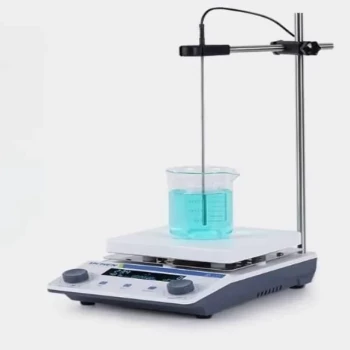
- Laboratory Small Constant Temperature Heated Magnetic Stirrer Heater and Stirrer
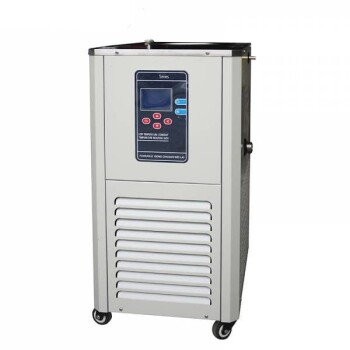
- High Temperature Constant Temperature Heating Circulator Water Bath Chiller Circulator for Reaction Bath
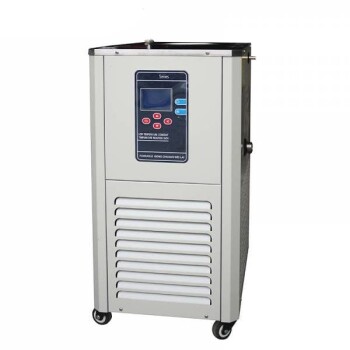
- 40L Chiller Water Bath Cooling Circulator Low Temperature Constant Temperature Reaction Bath
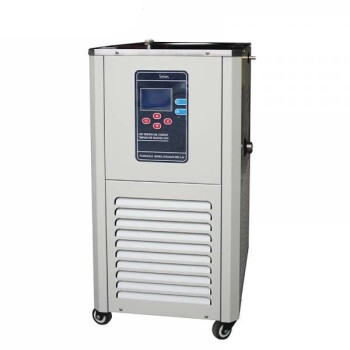
- 50L Chiller Water Bath Cooling Circulator Low Temperature Constant Temperature Reaction Bath
- 5L Chilling Circulator Cooling Water Bath Circulator for Low Temperature Constant Temperature Reaction Bath
People Also Ask
- What role does a magnetic stirrer with heating play in ZnO nanoparticle synthesis? Precision Control for Quality Results
- What role does a constant temperature heating magnetic stirrer play in MFC-HAp synthesis? Achieve Material Homogeneity
- What is the function of a laboratory magnetic stirrer in Ni–Cr–P electrodeposition? Optimize Ion Transport & Coating
- Why is a laboratory magnetic stirrer required for benzoic acid esters? Boost Reaction Speed & Yield with High RPM
- What role does a laboratory magnetic stirrer play in TiO2 and TiO2-Ag sol preparation? Master Chemical Kinetics