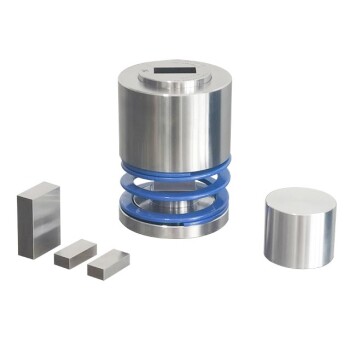
The high-pressure reactor enhances adsorption by driving a hydrothermal carbonization process that fundamentally restructures the spent mushroom substrate (SMS). By maintaining a sealed environment at approximately 180°C, the reactor generates autogenous pressure that accelerates dehydration, decarboxylation, and polymerization reactions, directly converting loose biomass into a highly porous, chemically active hydrochar.
Core Insight: The reactor's sealed, high-pressure environment is not merely for containment; it is the catalyst for tripling the material's adsorption capacity. It forces a physicochemical transformation that creates a dense network of micropores and oxygen-containing functional groups, turning agricultural waste into a high-performance filter for heavy metals.
The Mechanism of Transformation
The Role of Autogenous Pressure
The reactor operates as a closed system. As the temperature rises to 180°C, the water inside cannot evaporate effectively due to the seal.
This generates autogenous pressure (pressure generated by the substance itself). This high-pressure aqueous environment is critical because it forces reactions that cannot occur under standard atmospheric conditions.
Accelerating Chemical Reactions
Under these intense conditions, the biomass undergoes three primary thermochemical changes:
- Dehydration: The removal of water molecules from the biomass structure.
- Decarboxylation: The removal of carboxyl groups, releasing carbon dioxide.
- Polymerization: The combining of smaller molecules into larger, more complex structures.
These reactions strip away the volatile components of the raw mushroom substrate, leaving behind a stable, carbon-rich skeleton.
Structural Enhancements for Adsorption
Creation of Effective Micropores
The raw spent mushroom substrate is typically loose and possesses a disorganized structure.
The reactor processes this loose material into hydrochar, which is defined by a rich, developed pore structure. The high pressure aids in fracturing the biomass matrix, creating a vast network of effective micropores. These pores act as physical traps, significantly increasing the surface area available to capture contaminants.
Surface Functionalization
Beyond physical structure, the reactor alters the chemical properties of the material's surface.
The hydrothermal process increases the abundance of oxygen-containing functional groups (and aromatic groups) on the surface of the hydrochar. These functional groups are chemically "sticky" to heavy metals, allowing the hydrochar to bind with ions more effectively than the raw biomass could.
Quantifiable Performance Gains
The impact of this high-pressure treatment is measurable and significant.
According to the data, the adsorption capacity for heavy metals sees a dramatic increase. Specifically, the adsorption of Cadmium ions (Cd2+) rises from 28 mg/L in the raw substrate to 92 mg/L in the resulting hydrochar. This indicates that the reactor treatment effectively triples the material's performance.
Understanding the Operational Requirements
While the output is high-performance, the process relies on strict operational controls.
The Necessity of the Seal
The enhancement of adsorption properties is entirely dependent on the integrity of the reactor's seal. Without a perfect seal, autogenous pressure cannot build, and the water would simply boil away rather than facilitating hydrothermal carbonization.
Temperature Specificity
The process is optimized at specific thermal setpoints. The references highlight 180°C as the target temperature (often held for roughly 1 hour). Deviating significantly from this temperature could result in incomplete carbonization (too low) or excessive degradation of surface functional groups (too high).
Making the Right Choice for Your Goal
When utilizing spent mushroom substrate for remediation, the high-pressure reactor is a critical tool for valorization.
- If your primary focus is heavy metal removal: Prioritize the generation of oxygen-containing functional groups, as these provide the chemical binding sites responsible for the leap in Cd2+ adsorption.
- If your primary focus is process optimization: Ensure your reactor creates and maintains sufficient autogenous pressure at 180°C, as this is the physical driver for the dehydration and polymerization reactions.
Summary: The high-pressure reactor is essential for converting low-value agricultural waste into a high-value adsorbent by engineering the specific porosity and surface chemistry required to trap heavy metals.
Summary Table:
| Process Parameter | Effect on Hydrochar | Adsorption Benefit |
|---|---|---|
| Autogenous Pressure | Forces dehydration & polymerization | Creates dense carbon-rich skeleton |
| 180°C Temperature | Drives thermochemical carbonization | Triples Cd2+ removal capacity |
| Sealed Environment | Prevents evaporation, enables HTC | Enhances micropore development |
| Functionalization | Increases oxygen-containing groups | Improves chemical binding to metals |
Maximize Your Material Transformation with KINTEK
Unlock the full potential of your biomass research with KINTEK’s industry-leading high-temperature high-pressure reactors and autoclaves. Whether you are optimizing hydrothermal carbonization (HTC) or developing advanced adsorbents, our precision-engineered systems provide the perfect sealed environment to generate the autogenous pressure and temperature control necessary for superior results.
From high-performance reactors to crushing systems and PTFE consumables, KINTEK specializes in laboratory equipment that empowers researchers to turn agricultural waste into high-value solutions.
Ready to elevate your lab's performance? Contact our specialists today to find the ideal reactor for your specific application!
References
- Iuliana Urzică, Petronela Gheorghe. Microfluidic properties of laser exposed metallic surface. DOI: 10.21175/rad.abstr.book.2023.5.6
This article is also based on technical information from Kintek Solution Knowledge Base .
Related Products
- Customizable Laboratory High Temperature High Pressure Reactors for Diverse Scientific Applications
- Customizable High Pressure Reactors for Advanced Scientific and Industrial Applications
- Stainless High Pressure Autoclave Reactor Laboratory Pressure Reactor
- Visual High-Pressure Reactor for In-Situ Observation
- Mini SS High Pressure Autoclave Reactor for Laboratory Use
People Also Ask
- How do high-pressure and high-temperature reactors ensure the effective treatment of lignocellulosic wastewater in WAO?
- What equipment is required for high-pressure high-temperature reactions? Master Extreme Chemistry Safely
- How do you control high pressure in a reactor? A Guide to Safe & Stable Operation
- Why is argon better than nitrogen for inert atmosphere? Ensure Absolute Reactivity & Stability
- How does initial oxygen pressure affect the wet oxidation of pharmaceutical sludge? Master Your Oxidation Depth