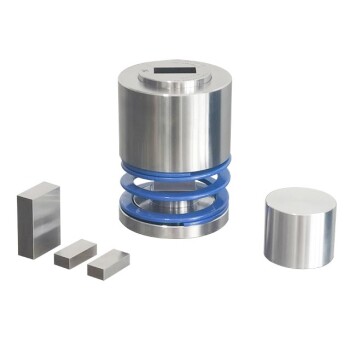
The integration of supercritical carbon dioxide (CO2) within a high-pressure reactor fundamentally transforms the synthesis of rosin methyl esters by serving dual roles: acts as both a solvent and an auxiliary catalyst. By maintaining CO2 in this unique state, the system eliminates the need for traditional organic solvents while simultaneously accelerating reaction rates and boosting overall yields.
By maintaining CO2 in a supercritical or subcritical state, high-pressure reactors create a unique reaction medium that regulates pH and enhances mass transfer, delivering a faster, higher-yield, and greener synthesis process compared to conventional methods.
Optimizing Reaction Dynamics
The primary advantage of using a high-pressure reactor in this context is its ability to manipulate the physical state of carbon dioxide.
Enhancing Mass Transfer
In a standard esterification process, reactants often struggle to mix efficiently on a molecular level.
The high-pressure environment maintains CO2 as a supercritical or subcritical fluid. In this state, the CO2 possesses liquid-like density but gas-like viscosity.
This unique property significantly improves mass transfer between the reactants. The fluid dynamics within the reactor allow for better penetration and interaction of the molecules, preventing the stagnation often seen in conventional liquid-phase reactions.
Regulating System pH
Beyond acting as a physical medium, supercritical CO2 plays an active chemical role.
It functions as an auxiliary catalyst by helping to regulate the pH of the reaction system.
This self-regulating catalytic effect reduces the reliance on harsh external catalysts, streamlining the chemical pathway required to synthesize rosin methyl esters.
Operational and Environmental Benefits
The physical and chemical optimization provided by the reactor translates into tangible process improvements.
Increased Yields and Speed
The combination of enhanced mass transfer and catalytic support drives the reaction forward more aggressively.
Operators observe significantly higher reaction yields compared to traditional methods.
Furthermore, the process becomes more efficient, leading to notably shorter reaction times.
Eliminating Organic Solvents
Perhaps the most critical advantage for modern chemical engineering is sustainability.
Because supercritical CO2 acts as the solvent, the process does not require additional organic solvents.
This creates a "greener," more environmentally friendly esterification process, reducing the generation of toxic waste and simplifying downstream purification.
Understanding the Trade-offs
While the benefits are substantial, utilizing high-pressure reactors involves specific engineering considerations.
Equipment Complexity and Safety
A high-pressure reactor (often referred to as an autoclave) is a sophisticated piece of equipment designed to withstand extreme conditions.
Implementing this technology requires robust safety protocols to manage the high-pressure environment effectively.
Energy Implications
maintaining CO2 in a supercritical state requires precise temperature and pressure control.
While the reaction time is shorter, the energy input required to sustain the reactor's environment must be balanced against the efficiency gains in the chemical reaction itself.
Making the Right Choice for Your Goal
Deciding to implement a high-pressure supercritical CO2 system depends on your specific production priorities.
- If your primary focus is Process Efficiency: This method is superior for maximizing output per hour, offering higher yields and faster turnover than conventional setups.
- If your primary focus is Sustainability: This is the ideal choice for "Green Chemistry" initiatives, as it completely eliminates the need for volatile organic solvents (VOCs).
- If your primary focus is Chemical Precision: The ability to use CO2 for precise pH regulation offers a controlled environment for high-quality ester synthesis.
By leveraging the unique properties of supercritical fluids, you move beyond simple containment and turn the reactor environment itself into a catalyst for performance.
Summary Table:
| Feature | Supercritical CO2 Benefit | Conventional Method |
|---|---|---|
| Solvent Use | Solvent-free (Green Chemistry) | Requires organic solvents |
| Mass Transfer | Enhanced (gas-like viscosity) | Limited by liquid-phase dynamics |
| Catalysis | CO2 acts as an auxiliary catalyst | Requires external chemical catalysts |
| Reaction Speed | Significantly faster | Slower turnover times |
| Yield Rate | Higher conversion efficiency | Standard lower yields |
Elevate Your Chemical Synthesis with KINTEK Precision
Ready to harness the power of supercritical fluids for your research? KINTEK specializes in high-performance laboratory equipment, providing the advanced high-temperature high-pressure reactors and autoclaves needed to master complex reactions like rosin methyl ester synthesis.
Our extensive portfolio supports every stage of your workflow—from crushing and milling systems to cooling solutions and essential PTFE or ceramic consumables. Whether you are focusing on green chemistry or industrial efficiency, we deliver the reliability your lab demands.
Contact KINTEK today to find the perfect reactor solution!
References
- Mardiah Mardiah, Antonius Indarto. Recent Progress on Catalytic of Rosin Esterification Using Different Agents of Reactant. DOI: 10.3390/agriengineering5040132
This article is also based on technical information from Kintek Solution Knowledge Base .
Related Products
- Customizable Laboratory High Temperature High Pressure Reactors for Diverse Scientific Applications
- Customizable High Pressure Reactors for Advanced Scientific and Industrial Applications
- Stainless High Pressure Autoclave Reactor Laboratory Pressure Reactor
- Mini SS High Pressure Autoclave Reactor for Laboratory Use
- High Pressure Laboratory Autoclave Reactor for Hydrothermal Synthesis
People Also Ask
- How do high-pressure and high-temperature reactors ensure the effective treatment of lignocellulosic wastewater in WAO?
- What equipment is required for high-pressure high-temperature reactions? Master Extreme Chemistry Safely
- How do you control high pressure in a reactor? A Guide to Safe & Stable Operation
- Why is argon better than nitrogen for inert atmosphere? Ensure Absolute Reactivity & Stability
- How does initial oxygen pressure affect the wet oxidation of pharmaceutical sludge? Master Your Oxidation Depth