A Jet-Stirred Reactor (JSR) operates as a specialized thermogravimetric analysis (TGA) tool, specifically engineered to evaluate the anti-coking properties of high-temperature alloys in real time. By simulating aggressive industrial environments—such as ethane cracking with steam and sulfur—it captures in-situ data on how coke accumulates on metal surfaces. Crucially, the reactor’s design ensures a uniform flow and temperature field, which allows engineers to derive precise kinetic coking rates without the interference of heat or mass transfer gradients.
The Core Value of the JSR While traditional testing methods often struggle with environmental inconsistencies, the Jet-Stirred Reactor eliminates these variables through perfect homogeneity. This ensures that the coking rates you measure are a result of the alloy's intrinsic properties, not artifacts of the experimental setup.
The Mechanics of Precision Testing
To understand the value of a JSR, one must look beyond simple exposure testing and understand how it actively measures material performance under stress.
In-Situ Thermogravimetric Analysis (TGA)
The JSR functions as a high-precision TGA device. This means it does not merely weigh the sample before and after testing; it tracks mass changes continuously.
This allows researchers to observe the exact onset and rate of coke formation as it happens. You gain visibility into the "when" and "how fast" of coking, rather than just the final "how much."
Dynamic Atmospheric Simulation
Static tests cannot predict performance in a live cracking furnace. The JSR operates under dynamic atmospheres that closely mimic industrial ethane cracking.
It introduces a complex mixture of high-temperature steam, hydrocarbons, and sulfur additives. This exposes the alloy to the specific chemical interactions that drive coke formation in real-world scenarios.
Achieving Data Integrity
The primary challenge in high-temperature testing is "noise" caused by uneven conditions. The JSR addresses this through rigorous design principles.
Establishing Uniform Fields
The reactor is engineered to create a highly uniform flow field and temperature field.
In many reactors, "hot spots" or stagnant zones can skew results. The JSR utilizes jet-stirring mechanisms to ensure the environment is perfectly homogeneous around the test sample.
Eliminating Transfer Gradients
By maintaining this uniformity, the JSR effectively eliminates mass and heat transfer gradients.
Gradients act as resistance layers that distort data. Removing them ensures that the chemical reaction at the surface is the only limiting factor being measured.
Isolating Kinetic Rates
Because external physical variables (like temperature variance) are removed, the data collected represents the precise kinetic coking rate.
This allows for a pure evaluation of the alloy's chemical resistance to coking, unclouded by physical transport limitations.
Understanding the Operational Constraints
While the JSR is a powerful tool for kinetic analysis, it is important to recognize the requirements for its effective use.
The Requirement for Perfect Mixing
The validity of JSR data relies entirely on the successful generation of a uniform field.
If the jet-stirring mechanism fails to achieve perfect mixing, gradients will re-emerge, rendering the kinetic data inaccurate. The system requires precise calibration to maintain this state.
Specificity of Simulation
The JSR excels at simulating specific environments, such as ethane cracking with sulfur additives.
However, the quality of the output is strictly tied to the fidelity of the input atmosphere. Inaccurate feed ratios of steam or hydrocarbons will produce precise, yet irrelevant, data.
Making the Right Choice for Your Goal
When deciding how to utilize a Jet-Stirred Reactor for your materials program, consider your specific end-game.
- If your primary focus is Fundamental Kinetics: Rely on the JSR to remove physical transport limitations, providing you with the pure chemical reaction rates of the alloy surface.
- If your primary focus is Material Screening: Use the real-time TGA capability to quickly rank alloys based on the onset time of coke formation under identical dynamic conditions.
The Jet-Stirred Reactor transforms anti-coking evaluation from a rough estimation into an exact science, giving you the data confidence needed to select high-performance alloys.
Summary Table:
| Feature | JSR Functional Benefit | Impact on Data Accuracy |
|---|---|---|
| In-Situ TGA | Real-time mass tracking | Captures exact onset and rate of coke formation |
| Dynamic Simulation | Mimics industrial atmospheres | Tests alloys under real-world ethane cracking conditions |
| Uniform Flow Field | Eliminates stagnant zones | Ensures consistent surface exposure across the sample |
| Perfect Mixing | Removes heat/mass gradients | Isolates pure kinetic coking rates from physical noise |
| Atmospheric Control | Controlled steam/sulfur feed | Provides high-fidelity simulation for chemical resistance |
Elevate Your Material Research with KINTEK Precision
At KINTEK, we understand that data integrity is the foundation of material science. Whether you are evaluating the anti-coking performance of high-temperature alloys or developing next-generation catalysts, our comprehensive range of specialized laboratory equipment is designed to deliver the precision you demand.
From high-temperature high-pressure reactors and autoclaves to advanced crushing and milling systems, KINTEK provides the tools necessary to simulate aggressive industrial environments and capture accurate kinetic data. Our portfolio also features high-performance muffle and vacuum furnaces, essential consumables like ceramics and crucibles, and cutting-edge battery research tools.
Ready to transform your anti-coking evaluation into an exact science?
Contact KINTEK today to discuss your specific testing requirements and discover how our high-temperature solutions can enhance your lab's efficiency and research outcomes.
References
- Stamatis A. Sarris, Kevin M. Van Geem. Effect of Long-Term High Temperature Oxidation on the Coking Behavior of Ni-Cr Superalloys. DOI: 10.3390/ma11101899
This article is also based on technical information from Kintek Solution Knowledge Base .
Related Products
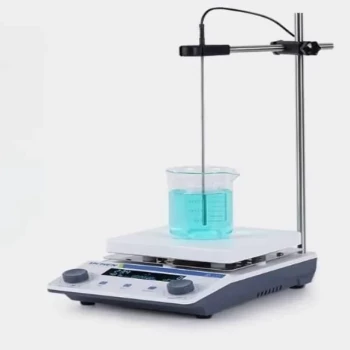
- Laboratory Small Constant Temperature Heated Magnetic Stirrer Heater and Stirrer
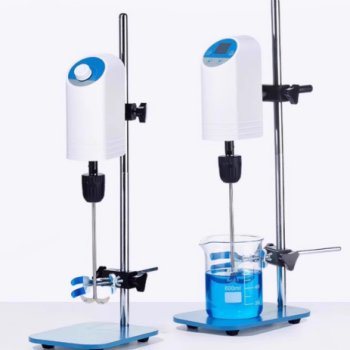
- High Performance Laboratory Stirrers for Diverse Applications
- Customizable Laboratory High Temperature High Pressure Reactors for Diverse Scientific Applications
- Customizable High Pressure Reactors for Advanced Scientific and Industrial Applications
- High Pressure Laboratory Autoclave Reactor for Hydrothermal Synthesis
People Also Ask
- What role does a magnetic stirrer with heating play in ZnO nanoparticle synthesis? Precision Control for Quality Results
- What role does a constant temperature heating magnetic stirrer play in MFC-HAp synthesis? Achieve Material Homogeneity
- What is the function of a laboratory magnetic stirrer in Ni–Cr–P electrodeposition? Optimize Ion Transport & Coating
- Why is a laboratory magnetic stirrer required for benzoic acid esters? Boost Reaction Speed & Yield with High RPM
- What role does a laboratory magnetic stirrer play in TiO2 and TiO2-Ag sol preparation? Master Chemical Kinetics