A laboratory shaker acts as a critical control mechanism in liquid culture experiments involving bacteria and nanomaterials. It provides continuous oscillation to simultaneously support the metabolic needs of the bacteria (specifically Klebsiella pneumoniae) and ensure the physical suspension of chromium oxide nanoparticles, allowing for precise toxicity measurements.
The Core Insight Accurate antimicrobial testing requires eliminating environmental variables. The laboratory shaker ensures that any observed bacterial inhibition is strictly caused by the nanoparticles, rather than oxygen starvation or inconsistent dosage due to particle settling.
The Mechanics of Accurate Antimicrobial Testing
Sustaining Bacterial Metabolism
For aerobic bacteria like Klebsiella pneumoniae, access to oxygen is non-negotiable.
In a static liquid culture, oxygen is rapidly depleted, limiting bacterial growth and potentially skewing results.
The laboratory shaker provides continuous oscillation, which facilitates gas exchange and ensures an adequate oxygen supply to maintain standard metabolic activity.
Ensuring Homogeneity
Chromium oxide nanoparticles are distinct physical entities that can settle out of suspension due to gravity.
Without agitation, the nanoparticles would accumulate at the bottom of the container, creating an uneven distribution.
The shaker forces a uniform distribution of nanoparticles throughout the liquid medium, ensuring the solution remains consistent from top to bottom.
Maximizing Interaction
The efficacy of a contact-dependent antimicrobial agent relies on physical collisions.
By keeping the nanoparticles suspended, the shaker significantly increases the contact frequency between the chromium oxide particles and the bacterial cell walls.
This ensures that the bacteria are constantly exposed to the intended concentration of the nanomaterial.
Why This Matters for Data Validity
Accurate MIC Determination
The ultimate goal of this testing is to find the Minimum Inhibitory Concentration (MIC)—the lowest dose required to stop bacterial growth.
If the bacteria die due to lack of oxygen, the MIC appears lower than it actually is (a false positive).
If the nanoparticles settle and fail to touch the bacteria, the MIC appears higher than it actually is (a false negative).
By standardizing oxygen and distribution, the shaker enables a more accurate determination of the MIC.
Common Pitfalls to Avoid
The Danger of Insufficient Agitation
If the oscillation speed is too low, it fails to counteract gravity.
This leads to a concentration gradient where bacteria at the top of the liquid encounter fewer nanoparticles than those at the bottom.
This lack of uniformity invalidates the assumption that the concentration is constant throughout the volume.
Misinterpreting Metabolic Stress
It is crucial to distinguish between nanoparticle toxicity and metabolic stress.
If the shaker malfunctions, Klebsiella pneumoniae may exhibit reduced growth simply due to hypoxia.
Attributing this growth reduction to the chromium oxide nanoparticles would result in scientifically flawed conclusions.
Making the Right Choice for Your Experiment
If your primary focus is biological viability:
- Calibrate the shaker speed to ensure adequate oxygenation specifically for the metabolic rate of Klebsiella pneumoniae.
If your primary focus is material characterization:
- Verify that the continuous oscillation is vigorous enough to maintain the specific density of chromium oxide nanoparticles in a fully uniform suspension.
Reliable data is born from the precise control of environmental variables.
Summary Table:
| Function | Role in Liquid Culture Experiment | Impact on Data Validity |
|---|---|---|
| Gas Exchange | Sustains oxygen levels for Klebsiella pneumoniae metabolism | Prevents false positives from hypoxia-induced cell death |
| Homogenization | Maintains uniform suspension of chromium oxide nanoparticles | Prevents concentration gradients and dosage inconsistency |
| Contact Frequency | Maximizes collisions between nanoparticles and cell walls | Ensures accurate Minimum Inhibitory Concentration (MIC) |
| Variable Control | Eliminates environmental stressors like particle settling | Isolates nanoparticle toxicity as the sole growth inhibitor |
Elevate Your Microbiology Research with KINTEK Precision
Precision in nanoparticle toxicity studies starts with reliable environmental control. KINTEK specializes in high-performance laboratory equipment, providing the shakers, homogenizers, and cooling solutions essential for maintaining uniform suspensions and consistent metabolic conditions. Whether you are conducting antimicrobial testing or advanced material synthesis, our comprehensive range—including high-temperature furnaces, hydraulic presses, and autoclaves—is designed to meet the rigorous demands of modern labs.
Don't let inconsistent agitation compromise your MIC data. Contact our laboratory specialists today to find the perfect shaking and incubation solution for your bacterial culture experiments.
References
- Poonam Sangwan, Harish Kumar. SYNTHESIS, CHARACTERIZATION AND ANTIBACTERIAL ACTIVITIES OF CHROMIUM OXIDE NANOPARTICLES AGAINST KLEBSIELLA PNEUMONIAE. DOI: 10.22159/ajpcr.2017.v10i2.15189
This article is also based on technical information from Kintek Solution Knowledge Base .
Related Products
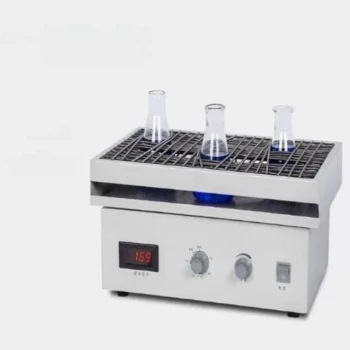
- Laboratory Multifunctional Small Speed-Adjustable Horizontal Mechanical Shaker for Lab
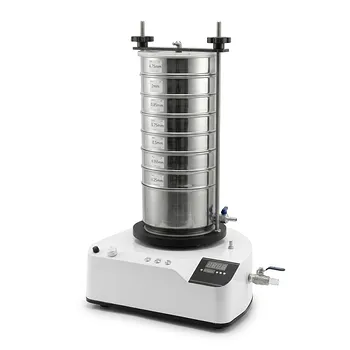
- Laboratory Vibratory Sieve Shaker Machine for Dry and Wet Three-Dimensional Sieving
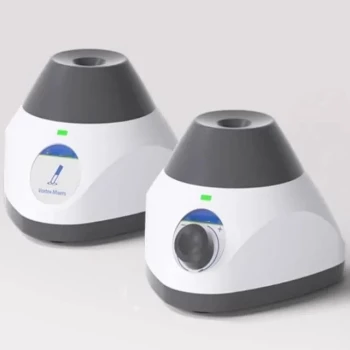
- Laboratory Oscillating Orbital Shaker
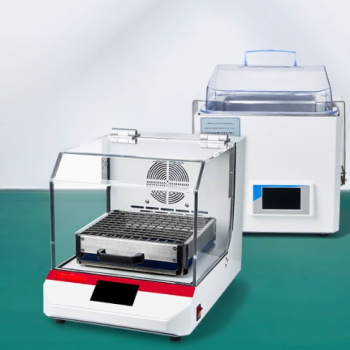
- Shaking Incubators for Diverse Laboratory Applications
- Laboratory Vibratory Sieve Shaker Machine Slap Vibrating Sieve
People Also Ask
- How do static culture and shaking culture affect the morphology of BC? Optimize Lab Shaker Results
- What is the role of a laboratory shaker in silane sol preparation? Master Uniform Aramid Fabric Coating
- Why is a laboratory shaker required for continuous 24-hour catalyst treatment? Achieve Deep Uniform Impregnation
- What is the function of a laboratory shaker in evaluating Fe-C@C nanoparticles? Optimize Methylene Blue Adsorption
- How do laboratory shakers or stirrers influence the efficiency of hydrogen production during dark fermentation?