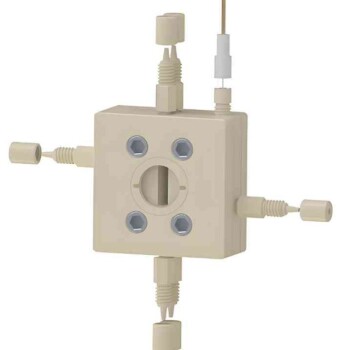
High-temperature operation is the primary mechanism behind the superior efficiency of Solid Oxide Electrolyzer Cells (SOEC). By operating between 500 and 850 degrees Celsius, an SOEC utilizes thermal energy to "pre-load" the water molecules, significantly lowering the amount of electrical energy required to split them.
While conventional low-temperature alkaline electrolysis requires approximately 4.5 kWh/Nm³ of hydrogen, an SOEC reduces this electrical demand to about 3 kWh/Nm³. This difference stems from the fundamental thermodynamic advantage of substituting expensive electrical power with thermal energy, which is often available as industrial waste heat.
Core Insight: The total energy required to split water remains relatively constant regardless of the method. However, SOEC technology changes the energy mix: as temperature rises, the requirement for electricity (Gibbs free energy) drops, while the contribution from heat increases. This allows operators to substitute thermal energy for electrical load, drastically boosting electrical efficiency.
The Thermodynamics of Efficiency
Substituting Heat for Electricity
In water electrolysis, the energy required to break the molecular bonds comes from two sources: electricity and heat.
In low-temperature systems, electricity must provide almost all of this energy. In an SOEC, the high operating temperature (500–850 °C) allows thermal energy to do a significant portion of the work.
Reducing Gibbs Free Energy
The specific amount of electrical work needed to split water is known as the Gibbs free energy.
As the temperature of the system rises, the Gibbs free energy required decreases. Therefore, the theoretical voltage necessary to drive the reaction drops, allowing the system to produce the same amount of hydrogen with less electrical input.
Kinetic Advantages
Enhancing Reaction Rates
Heat acts as a catalyst for electrochemical performance. The elevated temperatures in an SOEC environment significantly improve the reaction kinetics at the electrodes.
This means the chemical reactions occur faster and more readily than they would in a cooler environment, improving overall system throughput.
Reducing Overpotential
"Overpotential" refers to the extra energy required to overcome resistance and drive the reaction beyond the theoretical minimum.
High-temperature operation lowers this electrode overpotential. Because the internal resistance is reduced, less energy is wasted as heat loss within the cell, ensuring more of the input power actually converts water into hydrogen.
The Efficiency Gap by the Numbers
Electrical Consumption Comparison
The efficiency difference is quantifiable and significant. Low-temperature methods, such as alkaline electrolysis, typically consume around 4.5 kWh of electricity to produce one normal cubic meter (Nm³) of hydrogen.
In contrast, an SOEC requires only about 3 kWh per Nm³.
The Role of Steam
It is important to note that SOEC performs electrolysis on water vapor (steam) rather than liquid water.
The phase change from liquid to gas requires energy (latent heat of vaporization). By feeding steam directly into the system—often sourced from industrial processes—the electrolyzer saves the energy payload that would otherwise be needed to vaporize the water electrically.
Understanding the Trade-offs
Thermal Source Dependency
The high efficiency of SOEC is most viable when integrated with an external heat source. If you must generate the high temperatures using electricity alone, the net system efficiency advantage diminishes.
Material Durability
Operating at 850 °C places immense stress on system components.
The materials used (ceramics and specialized alloys) must withstand extreme heat and thermal cycling. This can lead to faster degradation rates compared to robust low-temperature alkaline systems, potentially impacting the lifespan of the stack.
Operational Flexibility
SOEC systems generally dislike rapid fluctuations.
Because they operate at high thermal mass, they take longer to start up and shut down compared to PEM (Proton Exchange Membrane) electrolyzers. They are best suited for steady-state baseload operations rather than chasing intermittent renewable spikes.
Making the Right Choice for Your Goal
When evaluating SOEC against low-temperature options, consider your specific operational constraints:
- If your primary focus is Electrical Efficiency: SOEC is the superior choice, provided you have a steady supply of steam or waste heat to minimize the electrical load (3 kWh/Nm³).
- If your primary focus is Equipment Durability and Start-up Speed: Low-temperature electrolysis (Alkaline or PEM) offers a more robust, responsive solution, albeit with higher electrical consumption (4.5 kWh/Nm³).
Ultimately, SOEC achieves its efficiency advantage by treating heat as a resource, not a byproduct, allowing you to turn cheap thermal energy into valuable chemical potential.
Summary Table:
| Feature | Low-Temp Electrolysis (Alkaline/PEM) | SOEC (High-Temp) |
|---|---|---|
| Operating Temp | 60°C - 80°C | 500°C - 850°C |
| Elec. Consumption | ~4.5 kWh/Nm³ H₂ | ~3.0 kWh/Nm³ H₂ |
| Energy Source | Primarily Electricity | Electricity + Thermal Heat |
| Feedstock | Liquid Water | Steam (Water Vapor) |
| Reaction Kinetics | Slower (Higher Overpotential) | Rapid (Lower Overpotential) |
Maximize Your Hydrogen Yield with KINTEK Advanced Solutions
Are you looking to optimize your electrochemical research or industrial hydrogen production? KINTEK specializes in high-performance laboratory equipment designed for extreme environments. Whether you need precision electrolytic cells and electrodes, high-temperature furnaces for material testing, or high-pressure reactors and autoclaves, we provide the tools necessary to leverage SOEC technology's efficiency.
Our value to you:
- Precision Engineering: Durable ceramics and alloys designed to withstand 850°C+ thermal stress.
- Comprehensive Portfolio: From battery research tools to specialized crushing and milling systems.
- Expert Support: Tailored solutions for labs and industrial pilot plants.
Ready to transition to high-efficiency electrolysis? Contact KINTEK today for a technical consultation and quote!
References
- Diogo M.F. Santos, José L. Figueiredo. Hydrogen production by alkaline water electrolysis. DOI: 10.1590/s0100-40422013000800017
This article is also based on technical information from Kintek Solution Knowledge Base .
Related Products
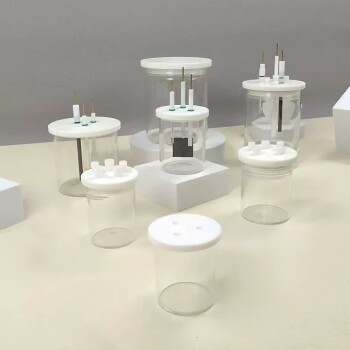
- PTFE Electrolytic Cell Electrochemical Cell Corrosion-Resistant Sealed and Non-Sealed
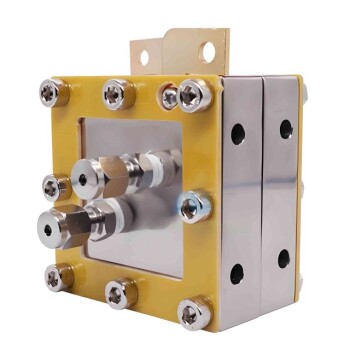
- Customizable PEM Electrolysis Cells for Diverse Research Applications
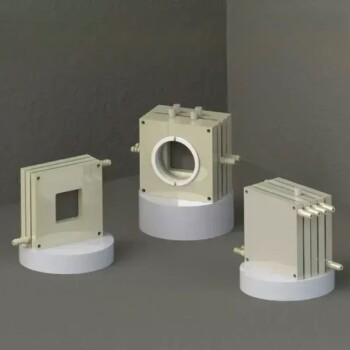
- Electrolytic Electrochemical Cell Gas Diffusion Liquid Flow Reaction Cell
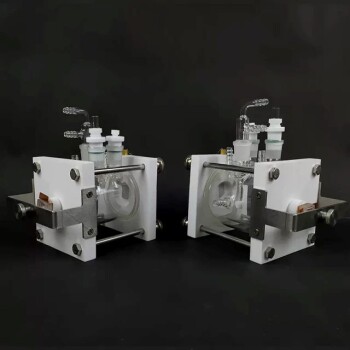
- Flat Corrosion Electrolytic Electrochemical Cell
- Quartz Electrolytic Electrochemical Cell for Electrochemical Experiments
People Also Ask
- What is the necessity of selecting a PTFE electrolytic cell? Ensure Precise Graphene Corrosion Testing Accuracy
- What is the proper method for cleaning the surface of an all-PTFE electrolytic cell? Ensure Accurate Results with a Pristine Surface
- How should an all-PTFE electrolytic cell be stored after use? Expert Maintenance Tips for Long-Lasting Performance
- What is the proper cleaning method for an all-PTFE electrolytic cell? Essential Tips for Surface Integrity
- What are the standard opening specifications for all-PTFE electrolytic cells? A Guide to Sealed vs. Non-Sealed Ports