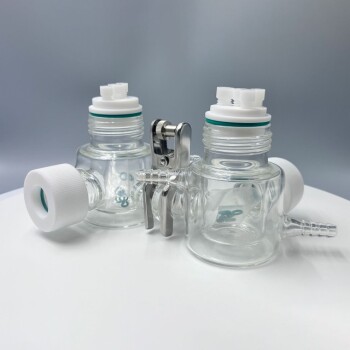
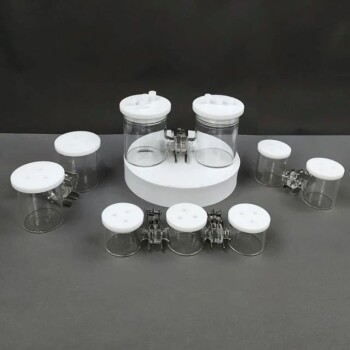
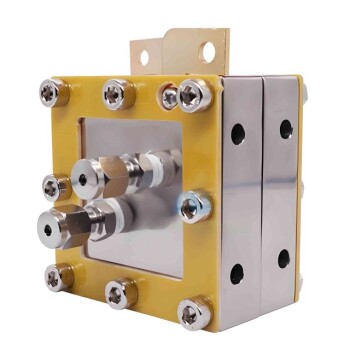
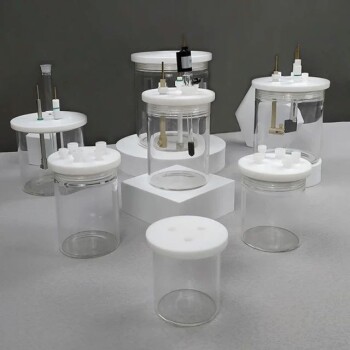
To adjust experimental parameters in an H-type electrolytic cell, you must prioritize gradual and controlled modulation. Specifically, you need to regulate the power supply's voltage and current, the electrolysis duration, and the constant temperature water bath to match your specified conditions. Crucially, these adjustments must be made slowly to prevent sudden operational shifts that could compromise your data or physically damage the cell.
Core Takeaway The success of an H-type cell experiment relies on stability over speed. Rapid changes to electrical or thermal inputs are the primary cause of inaccurate results and equipment failure; always prioritize incremental adjustments over immediate jumps to target values.
The Core Adjustment Protocol
Establishing Electrical Parameters
Once your equipment is connected and the power supply is active, you must set the voltage and current. Do not immediately dial these to their maximum or final target settings. Instead, increase the values incrementally until you reach the specific conditions required for your experiment.
Managing Thermal Conditions
If your experiment requires thermal regulation, activate the constant temperature water bath. Adjust the temperature setting to meet your experimental design. Just like electrical parameters, thermal changes should be allowed to stabilize rather than forcing rapid heating or cooling, which can stress the glass components or the ion-exchange membrane.
Defining Electrolysis Time
Set the duration of the electrolysis carefully. This parameter dictates the extent of the reaction and must be aligned with the expected reaction rate determined by your voltage and current settings.
Monitoring for Feedback
Observing Electrode Activity
As you adjust the voltage and current, closely monitor the electrode surfaces. The formation of bubbles is a direct indicator of reaction rate. If bubble generation becomes violent or erratic, you may have adjusted the parameters too aggressively.
Tracking Electrolyte Changes
Watch for color changes within the electrolyte. These visual cues often signal the progress of the reaction or the formation of specific products. Unexpected color shifts can indicate that your parameters need to be fine-tuned to prevent side reactions.
Thermal Stability
Throughout the experiment, keep an eye on temperature fluctuations. While the water bath provides a baseline, the electrochemical reaction itself can generate heat. You may need to micro-adjust the water bath to compensate for internal heat generation.
Understanding the Trade-offs
The Risk of Rapid Shifts
The primary reference explicitly warns against sudden shifts in parameters. Rushing to a high voltage or current can lead to inaccurate results, as the system does not have time to reach equilibrium. This introduces noise into your data that is difficult to filter out later.
Equipment Integrity
Beyond data quality, aggressive adjustments pose a physical risk. Sudden surges can damage the delicate ion-exchange membrane or cause rapid degradation of the electrode surfaces. Gradual adjustment protects the structural integrity of the cell, ensuring it remains viable for future use.
Making the Right Choice for Your Goal
To apply these principles effectively, consider your immediate experimental priority:
- If your primary focus is Data Accuracy: Prioritize slow, incremental increases in voltage and current, allowing the system to stabilize at each step to ensure the reaction proceeds linearly.
- If your primary focus is Equipment Longevity: Focus on thermal management, ensuring the water bath temperature and electrical inputs never cause sudden thermal shock to the cell or membrane.
Control is better than speed; precise, gradual adjustments act as the safeguard for both your results and your equipment.
Summary Table:
| Parameter | Adjustment Method | Monitoring Indicator | Risk of Rapid Change |
|---|---|---|---|
| Voltage & Current | Incremental, slow increases | Electrode bubble activity | Data noise & electrode damage |
| Temperature | Water bath stabilization | Internal heat generation | Thermal shock to membrane |
| Electrolysis Time | Fixed based on reaction rate | Electrolyte color shifts | Incomplete or over-reaction |
| Equipment Setup | Pre-check connections | System equilibrium | Physical cell integrity |
Elevate Your Electrochemical Research with KINTEK
Precision is the cornerstone of successful electrolysis. KINTEK provides high-quality H-type electrolytic cells, specialized electrodes, and advanced battery research tools designed to withstand rigorous experimental demands. Whether you require precise thermal control or durable ion-exchange membranes, our laboratory solutions ensure stability and repeatable results.
Our value to you:
- Comprehensive Range: From high-temperature high-pressure reactors to specialized electrolytic cells.
- Expert Support: Tailored solutions for crushing, milling, and high-temperature furnace applications.
- Durability: Premium ceramics, PTFE products, and consumables that protect your investment.
Don't compromise your data with inferior equipment. Contact KINTEK today to find the perfect cell for your lab!
Related Products
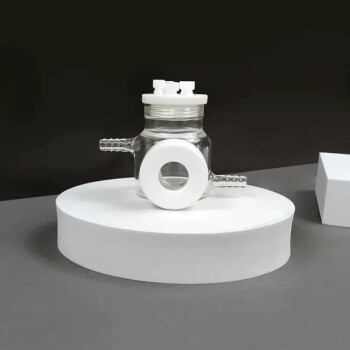
- H-Type Double-Layer Optical Electrolytic Electrochemical Cell with Water Bath
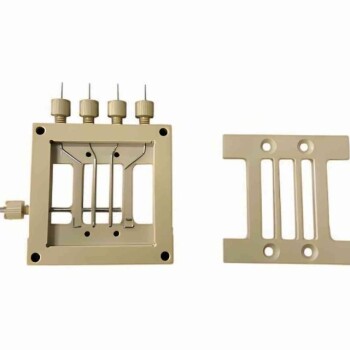
- H Type Electrolytic Cell Triple Electrochemical Cell
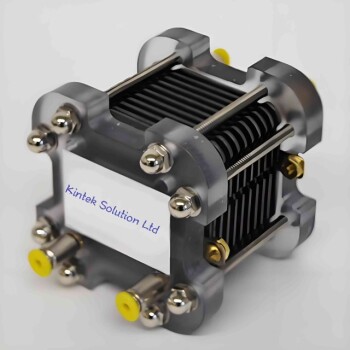
- Customizable PEM Electrolysis Cells for Diverse Research Applications
- Electrolytic Electrochemical Cell with Five-Port
- Super Sealed Electrolytic Electrochemical Cell
People Also Ask
- What is the overall structure of the H-type double-layer optical water bath electrolytic cell? Precision Design for Controlled Experiments
- How is the electrolyte managed in H-type electrolytic cells for specific reactions? Achieve Precise Control and High Purity
- What checks should be performed on the H-type electrolytic cell before use? Ensure Accurate Electrochemical Data
- What is important regarding temperature control for the H-type electrolytic cell? Ensure Precision and Data Integrity
- What is the overall structure of the H-type electrolytic cell? Understanding Dual-Chamber Electrochemical Designs