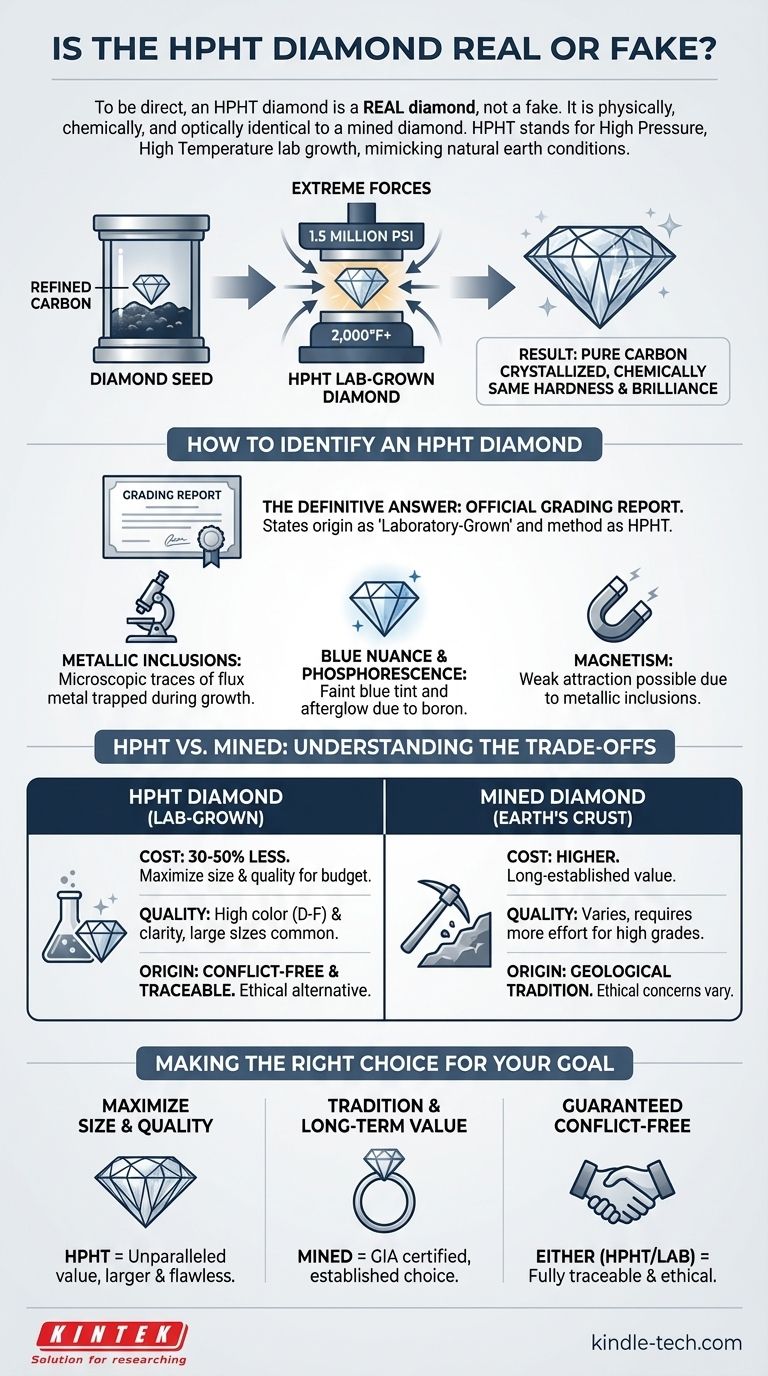
To be direct, an HPHT diamond is a real diamond, not a fake one. It is physically, chemically, and optically identical to a diamond mined from the earth. The term HPHT refers to the "High Pressure, High Temperature" method used to grow it in a lab, which mimics the natural conditions deep within the Earth's crust. It is not a simulant like cubic zirconia or moissanite.
The question is not whether an HPHT diamond is "real" or "fake," but whether it is "mined" or "lab-grown." Both are authentic diamonds, but their origin and the journey they take to become a finished stone are fundamentally different.
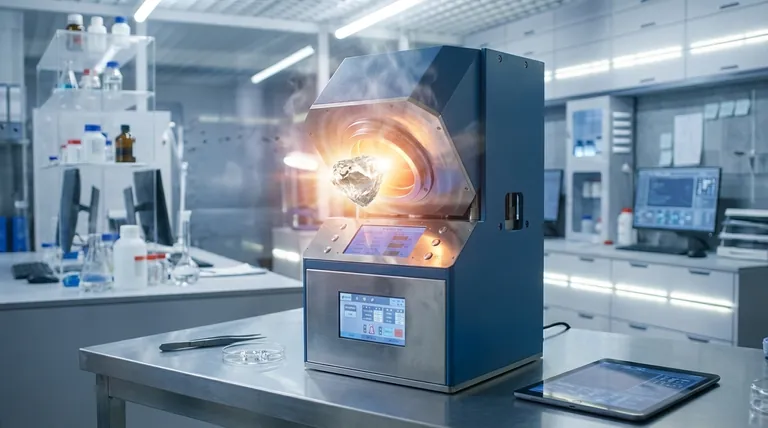
What Defines an HPHT Diamond?
The HPHT process is one of the primary methods for creating laboratory-grown diamonds. It is a marvel of engineering designed to replicate the immense forces of nature in a controlled environment.
Recreating Earth's Process
The process begins with a small, high-quality diamond fragment known as a diamond seed. This seed is placed in a chamber along with a refined form of carbon.
Inside a specialized press (such as a belt, cubic, or BARS press), the chamber is subjected to pressures of around 1.5 million pounds per square inch (PSI) and temperatures exceeding 2,000 degrees Fahrenheit.
At this extreme point, the carbon melts and crystallizes around the diamond seed, atom by atom, growing into a larger, rough diamond over several days or weeks.
The Result: A Chemically Identical Diamond
The resulting stone is pure carbon crystallized in an isometric cubic system. It has the same hardness, brilliance, and fire as a mined diamond because, on a molecular level, it is the same material. The only difference is its origin: a lab instead of the earth.
How to Identify an HPHT Diamond
For a consumer, visually distinguishing a lab-grown HPHT diamond from a mined one is virtually impossible. Identification requires the expertise of a trained gemologist and specialized equipment.
The Definitive Answer: The Grading Report
The single most reliable way to know a diamond's origin is to review its official grading report from a reputable gemological laboratory.
This certificate will explicitly state the diamond's origin as "Laboratory-Grown" and often specifies the growth method as HPHT. Insist on seeing this report before any purchase.
Telltale Clues for Gemologists
While you cannot see these with the naked eye, gemologists look for specific markers left behind by the unique growth process.
- Metallic Inclusions: The HPHT process uses a molten metal flux (often containing iron, nickel, or cobalt) to dissolve the carbon. Microscopic traces of this metal can become trapped within the diamond, which are a definitive sign of lab origin.
- Color Distribution: HPHT diamonds can sometimes exhibit unique color zoning patterns that differ from the patterns seen in mined diamonds.
- A "Blue Nuance": Some HPHT diamonds may have a faint blue tint due to the unintentional presence of boron gas during growth. This can sometimes result in a temporary afterglow (phosphorescence) when exposed to UV light.
- Magnetism: Because of the potential for metallic inclusions, some HPHT diamonds may show a weak attraction to a powerful magnet. However, this is not a universally reliable test.
Understanding the Trade-offs: HPHT vs. Mined
Choosing between an HPHT and a mined diamond comes down to understanding a clear set of trade-offs. The decision is less about quality and more about value and personal priorities.
Cost and Financial Value
This is the most significant difference. An HPHT diamond typically costs 30-50% less than a mined diamond of identical size, cut, color, and clarity. This allows you to acquire a much larger or higher-quality stone for the same budget.
However, mined diamonds have a long-established history of retaining and appreciating in value, whereas the long-term resale value of lab-grown diamonds is still developing.
Quality and Appearance
The HPHT method is renowned for producing diamonds with very high color and clarity grades. It is common to find HPHT diamonds in the colorless (D-F) range, often in sizes over two carats.
This is a key distinction from the other primary growth method, CVD (Chemical Vapor Deposition), which often produces diamonds with warmer colors that may require post-growth HPHT treatment to improve their grade.
Origin and Ethics
By definition, lab-grown diamonds are a conflict-free and traceable alternative to mined diamonds. They provide a clear chain of custody from the lab to the consumer, bypassing the environmental and ethical concerns sometimes associated with diamond mining.
Making the Right Choice for Your Goal
Your final decision should be guided by your primary objective for the purchase.
- If your primary focus is tradition and long-term resale value: A mined diamond with a GIA certificate is the established choice.
- If your primary focus is maximizing size and quality for your budget: An HPHT diamond offers unparalleled value, enabling you to get a larger and more flawless stone.
- If your primary focus is a guaranteed conflict-free origin: Both HPHT and other lab-grown diamonds provide a fully traceable and ethical option.
Ultimately, choosing an HPHT diamond is a choice of modern technology and value over geological tradition.
Summary Table:
| Feature | HPHT Diamond | Mined Diamond |
|---|---|---|
| Chemical Composition | Pure Carbon | Pure Carbon |
| Origin | Laboratory | Earth's Crust |
| Typical Cost | 30-50% Less | Higher |
| Primary Appeal | Size & Quality for Budget | Tradition & Resale Value |
| Ethical Consideration | Conflict-Free | Varies |
Still have questions about choosing the right diamond for your needs? Whether you're a jeweler, researcher, or gem enthusiast, KINTEK specializes in providing the expertise and equipment for advanced material analysis. Our lab solutions can help you verify diamond properties and make informed decisions. Contact our experts today via our Contact Form to discuss how we can support your specific requirements with precision and reliability.
Visual Guide
Related Products
- Horizontal High Temperature Graphite Vacuum Graphitization Furnace
- Manual High Temperature Heated Hydraulic Press Machine with Heated Plates for Lab
- HFCVD Machine System Equipment for Drawing Die Nano-Diamond Coating
- Laboratory High Pressure Vacuum Tube Furnace
- Customizable Laboratory High Temperature High Pressure Reactors for Diverse Scientific Applications
People Also Ask
- What gas is used in graphite furnace? Maximize Accuracy with the Right Inert Gas
- What are the advantages and disadvantages of graphite furnace? Unlock Extreme Heat Performance
- Where is a horizontal furnace installed? A Guide to Space-Saving Heating Solutions
- What is the use of graphite furnace? Achieve Extreme-Temperature Processing for Advanced Materials
- Where are horizontal furnaces used? Achieve Superior Thermal Processing for Your Materials