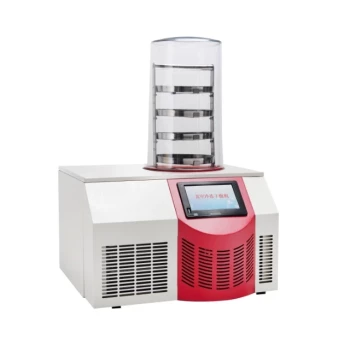
The primary advantage of a vacuum drying oven is its ability to prepare specimens in an oxygen-deprived, low-pressure environment, which is critical for supercritical water oxidation (SCWO) studies. By eliminating oxygen during the drying phase, this method prevents alloy specimens from undergoing secondary oxidation or surface contamination before the actual experiment begins.
Core Takeaway Conventional drying exposes reactive alloys to heat and oxygen, potentially altering their surface chemistry before the test starts. Vacuum drying mitigates this by lowering the boiling point of solvents, allowing for effective moisture removal at lower temperatures while maintaining the chemical stability and reproducibility required for precise corrosion kinetic studies.
Preserving Specimen Integrity
Prevention of Secondary Oxidation
The most critical function of a vacuum drying oven in SCWO preparation is the removal of ambient oxygen.
In a conventional oven, drying heat accelerates oxidation on the surface of alloy specimens. Vacuum drying creates an inert environment that effectively blocks this secondary oxidation, ensuring the surface state remains pristine.
Elimination of Surface Contamination
Supercritical water oxidation reactions are highly sensitive to surface impurities.
By drying in a vacuum, you prevent the specimen from contacting airborne contaminants and reactive gases. This ensures that the only reactions observed during your experiment are those caused by the supercritical water environment, not by pre-test impurities.
The Physics of Vacuum Drying
Lowering Solvent Boiling Points
Vacuum ovens operate by significantly reducing the ambient pressure within the chamber.
This pressure drop reduces the boiling point of water and organic solvents, as noted in general vacuum drying principles. This allows specimens to dry rapidly without requiring the high temperatures standard ovens use to evaporate moisture.
Reducing Thermal Stress
Because moisture removal occurs at lower temperatures (e.g., around 45 °C for certain sensitive materials), the specimen undergoes less thermal stress.
While this is often associated with preserving biological materials, in the context of alloys, it further ensures that the microstructure and surface composition are not altered by excessive heat prior to the high-stress SCWO test.
Impact on Experimental Data
Ensuring Chemical Stability
For corrosion kinetic studies, the starting weight and chemical composition of the specimen must be known with absolute precision.
Vacuum drying locks in the chemical stability of the specimen prior to weighing. This eliminates variables related to moisture retention or oxide layer formation that can skew mass-change calculations.
Improving Reproducibility
Scientific rigor demands that experiments can be repeated with consistent results.
By standardizing the drying process and removing environmental variables (like humidity fluctuations or oxygen levels), vacuum drying significantly improves the reproducibility of your experimental data.
Understanding the Trade-offs
Operational Complexity vs. Data Quality
While vacuum ovens offer superior specimen protection, they introduce operational complexity compared to conventional ovens.
Users must manage vacuum pumps, ensure seal integrity, and often process smaller batches due to chamber size limitations. However, for SCWO applications where surface chemistry is paramount, the cost of complexity is outweighed by the necessity for accuracy.
Making the Right Choice for Your Goal
To ensure your SCWO preparation aligns with your experimental needs, consider the following:
- If your primary focus is Precise Corrosion Kinetics: You must use a vacuum drying oven to prevent pre-test oxidation and ensure accurate initial weight measurements.
- If your primary focus is Rough Screening of Inert Materials: A conventional oven may suffice, provided the material is known to be non-reactive to oxygen at drying temperatures.
- If your primary focus is Removing High-Boiling Point Solvents: Vacuum drying is essential to evaporate solvents without reaching temperatures that could degrade the specimen.
Ultimately, for accurate supercritical water oxidation studies, vacuum drying is not just an advantage—it is a prerequisite for valid data.
Summary Table:
| Feature | Vacuum Drying Oven | Conventional Drying Oven |
|---|---|---|
| Environment | Oxygen-deprived / Low Pressure | Ambient Air / Atmospheric Pressure |
| Oxidation Risk | Negligible (Prevents secondary oxidation) | High (Heat accelerates surface oxidation) |
| Drying Temperature | Lower (Reduces thermal stress) | Higher (Potential material alteration) |
| Surface Integrity | Pristine (Blocks contaminants) | Risk of airborne contamination |
| Data Accuracy | High (Critical for corrosion kinetics) | Variable (Potential mass-change skew) |
| Reproducibility | High (Standardized variables) | Moderate (Subject to humidity fluctuations) |
Elevate Your Research Precision with KINTEK
Don't let pre-test oxidation compromise your experimental data. KINTEK specializes in advanced laboratory solutions designed for the most demanding applications, including supercritical water oxidation studies.
From high-performance vacuum drying ovens and high-temperature furnaces (muffle, tube, and vacuum) to our specialized high-temperature high-pressure reactors and autoclaves, we provide the tools you need for chemical stability and reproducibility. Whether you require precision crushing and milling systems, isostatic hydraulic presses, or essential PTFE and ceramic consumables, KINTEK is your partner in scientific excellence.
Ready to optimize your specimen preparation? Contact our technical experts today to find the perfect equipment for your laboratory.
References
- Zitao Lin, Jianjun Cai. The Effect of Molten Phosphate on Corrosion of 316 Stainless Steel, Alloy 625, and Titanium TA8 in Supercritical Water Oxidation Conditions. DOI: 10.3390/ma16010395
This article is also based on technical information from Kintek Solution Knowledge Base .
Related Products
- 56L Vertical Laboratory Vacuum Drying Oven
- 23L Laboratory Vacuum Drying Oven
- Laboratory Scientific Electric Heating Blast Drying Oven
- Benchtop Laboratory Vacuum Freeze Dryer
- Vacuum Heat Treat Sintering Brazing Furnace
People Also Ask
- Why is a laboratory vacuum drying oven recommended for rice straw residues? Protect Your Biomass Integrity
- What role does a laboratory vacuum drying oven play in the preparation of modified multi-walled carbon nanotubes?
- What is the importance of using a laboratory vacuum drying oven? Preserving Slow-Release Microcapsule Integrity
- Why is a Laboratory Vacuum Drying Oven recommended for PBAT microspheres? Protect Sensitive Polymer Integrity
- What role does a laboratory vacuum drying oven play in processing nanoparticle powder samples? Protect Sample Integrity