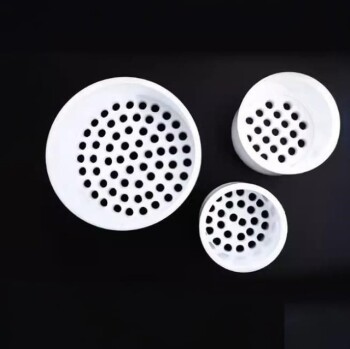
The primary advantages of using a Polytetrafluoroethylene (PTFE) electrochemical cell in actinide research are its superior chemical corrosion resistance and exceptional electrical insulation. These properties prevent the container itself from interacting with the electrolyte solution, ensuring that experimental data reflects only the behavior of the target material, such as a thin film, rather than the environment around it.
Ideally suited for nuclear material studies, PTFE eliminates container interference and electrical noise, creating the inert environment necessary to accurately map the long-term corrosion and dissolution of actinides.
The Molecular Basis of Chemical Inertness
The "Fluorinated" Shield
The exceptional stability of PTFE stems from its unique molecular structure. In this configuration, fluorine atoms replace the hydrogen atoms typically found in polyethylene, wrapping tightly around the carbon chain skeleton. This creates a complete "fluorinated" protective layer that physically shields the carbon core from external chemical attacks.
High-Energy Bond Stability
Beyond the physical shield, the chemical bonds themselves provide robust defense. The carbon-fluorine (C-F) bond energy is extremely high and stable. This bonding strength contributes to a level of corrosion resistance that is unmatched by most other container materials, allowing PTFE to withstand aggressive chemical environments without degrading.
Ensuring Experimental Integrity
Preventing Solution Interference
In delicate electrochemical experiments involving solutions like 0.01 M NaCl, standard containers can leach ions or react with the electrolyte. PTFE prevents this interference entirely. By remaining chemically inert, the cell ensures that the composition of the simulated natural environment remains constant throughout the experiment.
Confining Electrochemical Reactions
PTFE serves as an excellent electrical insulator. This property is critical for ensuring that electrochemical currents are not diverted through the cell walls. It guarantees that all measured reactions are confined strictly to the surface of the target thin film, providing precise data on the actinide material's behavior.
Suitability for Long-Term Studies
Researching nuclear materials often requires simulating environmental exposure over extended periods. Because PTFE resists dissolution and corrosion indefinitely in these conditions, it is the ideal vessel for studying the long-term lifecycle and degradation of actinides.
Common Pitfalls in Material Selection
The Risk of Container Reactivity
The most significant pitfall in actinide corrosion research is overlooking the reactivity of the test cell itself. If a researcher utilizes glass or lower-grade polymers, the container may slowly dissolve or react with the electrolyte. This introduces false positives in corrosion data, making it impossible to distinguish between the degradation of the nuclear material and the degradation of the container.
Electrical "Noise" and Leakage
Using materials with poor insulation properties can lead to current leakage. In electrochemical impedance spectroscopy or potentiodynamic polarization, this leakage creates background "noise" that obscures the subtle signals from the actinide thin film. PTFE is required to eliminate this variable, ensuring that the electrical signal is purely a result of the material interaction being studied.
Making the Right Choice for Your Goal
When designing experiments for actinide corrosion, your choice of cell material dictates the validity of your data.
- If your primary focus is Data Purity: Choose PTFE to ensure that the electrolyte chemistry remains unaltered by the container, isolating the specific reaction of the actinide thin film.
- If your primary focus is Long-Term Simulation: Rely on PTFE to maintain structural and chemical integrity over extended durations, mimicking natural environments without degradation.
By utilizing PTFE electrochemical cells, you effectively remove the variable of the "container" from the equation, allowing for a precise and uncompromised assessment of nuclear material stability.
Summary Table:
| Feature | Advantage in Actinide Research | Benefit to Experimental Data |
|---|---|---|
| Chemical Inertness | Resists aggressive electrolytes (e.g., NaCl) | Prevents solution contamination and false positives |
| Electrical Insulation | High dielectric strength | Eliminates background noise and current leakage |
| Molecular Stability | High-energy Carbon-Fluorine (C-F) bonds | Ensures long-term container integrity in nuclear studies |
| Surface Shielding | Fluorinated protective layer | Confines reactions strictly to the target material surface |
Elevate Your Nuclear Research Precision with KINTEK
In the delicate field of actinide corrosion and electrochemical studies, the integrity of your results depends on the purity of your environment. KINTEK specializes in high-performance laboratory equipment, providing the specialized PTFE products, electrolytic cells, and electrodes necessary to eliminate experimental variables and container interference.
Whether you are conducting long-term degradation simulations or high-precision impedance spectroscopy, our portfolio—ranging from high-temperature furnaces and reactors to advanced battery research tools—is engineered to meet the rigorous demands of nuclear science and materials engineering.
Ready to secure uncompromised data? Contact KINTEK today to discuss our custom PTFE solutions and comprehensive laboratory consumables tailored for your research goals.
References
- Pelin Cakir, T. Gouder. Thorium effect on the oxidation of uranium: Photoelectron spectroscopy (XPS/UPS) and cyclic voltammetry (CV) investigation on (U1−xThx)O2 (x = 0 to 1) thin films. DOI: 10.1016/j.apsusc.2016.10.010
This article is also based on technical information from Kintek Solution Knowledge Base .
Related Products
- PTFE Electrolytic Cell Electrochemical Cell Corrosion-Resistant Sealed and Non-Sealed
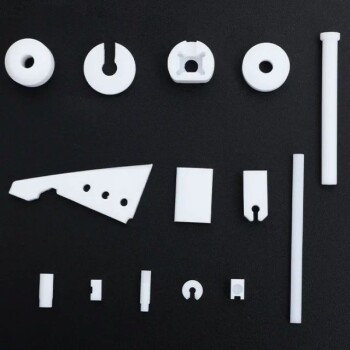
- Custom PTFE Teflon Parts Manufacturer for Non-Standard Insulator Customization
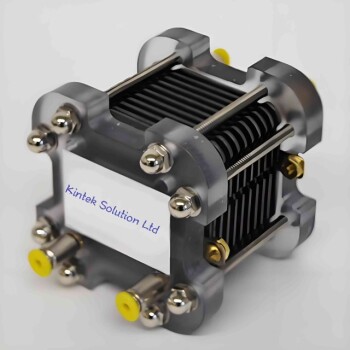
- FS Electrochemical Hydrogen Fuel Cells for Diverse Applications
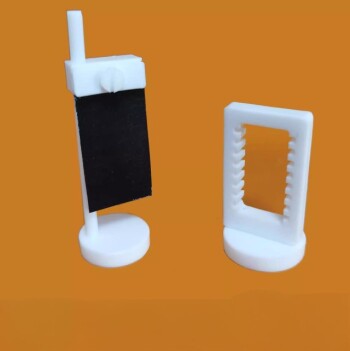
- Thin-Layer Spectral Electrolysis Electrochemical Cell
- Double Layer Five-Port Water Bath Electrolytic Electrochemical Cell
People Also Ask
- What is the necessity of selecting a PTFE electrolytic cell? Ensure Precise Graphene Corrosion Testing Accuracy
- What is the proper method for cleaning the surface of an all-PTFE electrolytic cell? Ensure Accurate Results with a Pristine Surface
- How should an all-PTFE electrolytic cell be stored after use? Expert Maintenance Tips for Long-Lasting Performance
- What is the proper cleaning method for an all-PTFE electrolytic cell? Essential Tips for Surface Integrity
- What are the standard opening specifications for all-PTFE electrolytic cells? A Guide to Sealed vs. Non-Sealed Ports