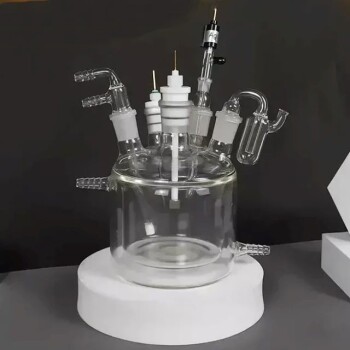
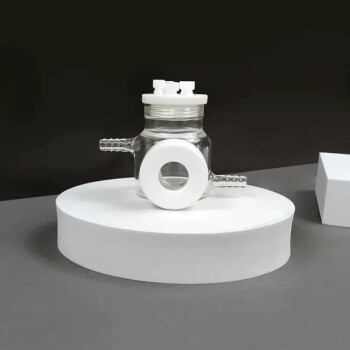
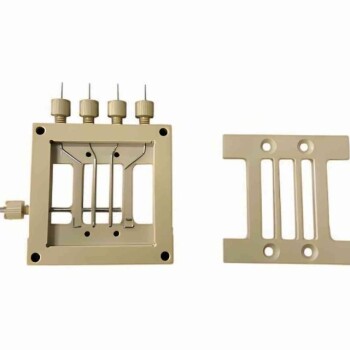
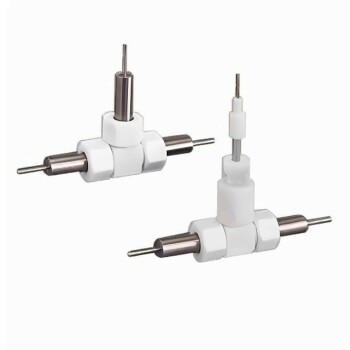
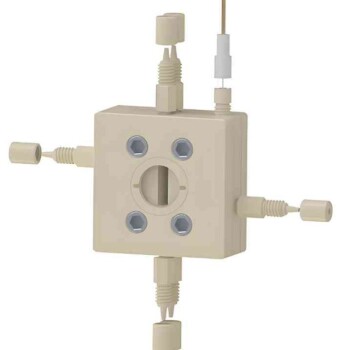
The strategic advantage of using an undivided electrolytic cell for processing Acid Red-20 lies in its ability to significantly lower system complexity while simultaneously increasing reaction speed. By eliminating the physical barrier between electrodes, this design reduces internal electrical resistance and creates a robust environment for multiple oxidation pathways to function concurrently.
An undivided cell design simplifies the electrochemical oxidation process by enabling both direct and indirect oxidation mechanisms in a single chamber. This approach minimizes internal resistance and maximizes the generation of powerful oxidants, resulting in superior removal kinetic efficiency.
The Mechanics of Enhanced Oxidation
Dual Oxidation Pathways
The most critical feature of the undivided cell is its ability to facilitate direct and indirect oxidation within a single reaction chamber. Unlike divided systems that segregate reactions, an undivided cell allows dye molecules to interact freely with the anode surface and the bulk solution.
Generation of Strong Oxidants
This configuration promotes the generation of a potent mix of chemical oxidants. Specifically, the system produces chlorine, hypochlorite, and hydroxyl radicals at the anode.
Aggressive Pollutant Degradation
These oxidants act synergistically to attack the dye structure. The simultaneous presence of these reactive species accelerates the breakdown of complex molecules like Acid Red-20, leading to faster treatment times.
Operational and Electrical Efficiency
Reduced Internal Resistance
A major technical benefit of removing the membrane divider is the significant reduction in internal resistance (IR drop). Membranes in divided cells often impede ion flow, requiring higher voltages to drive the current.
Enhanced Kinetic Efficiency
By lowering resistance, the system maintains higher current efficiency for the same energy input. This directly enhances the removal kinetic efficiency, meaning the rate at which the Acid Red-20 is eliminated from the wastewater is significantly improved.
Simplified System Architecture
The undivided design inherently reduces operational complexity. Without the need to maintain and monitor a fragile separator or manage distinct anolyte and catholyte loops, the mechanical design remains robust and easier to scale.
Understanding the Trade-offs
Specificity vs. Aggression
While the undivided cell is superior for bulk removal efficiency, it is an "aggressive" treatment method. The system relies on the generation of non-selective oxidants (like chlorine and hydroxyl radicals) to destroy everything in the chamber.
Reaction Environment
In this configuration, reaction products from the anode mix freely with the cathode environment. For the specific goal of degrading Acid Red-20, this mixing is beneficial because it ensures the dye is constantly exposed to the oxidizing agents generated throughout the bulk solution.
Making the Right Choice for Your Goal
To determine if an undivided electrolytic cell is the correct engineering solution for your specific wastewater challenge, consider the following key drivers:
- If your primary focus is process speed: Choose the undivided cell to leverage reduced internal resistance and faster removal kinetics.
- If your primary focus is operational simplicity: Utilize this design to eliminate membrane maintenance and simplify the reactor architecture.
- If your primary focus is oxidation power: Rely on this configuration to generate a high concentration of chlorine, hypochlorite, and hydroxyl radicals for maximum degradation.
The undivided cell represents a streamlined, high-efficiency approach for the rapid electrochemical destruction of Acid Red-20.
Summary Table:
| Feature | Advantage for Acid Red-20 Oxidation | Impact on Lab/Industrial Performance |
|---|---|---|
| Cell Design | Undivided (No Membrane) | Lower internal resistance and system simplicity |
| Oxidation Path | Direct & Indirect Pathways | Concurrent degradation at anode and in bulk solution |
| Reactive Species | Cl₂, ClO⁻, and ·OH Radicals | Aggressive and rapid breakdown of dye structures |
| Electrical Flow | Reduced IR Drop | Higher current efficiency with lower energy input |
| Operational | Simplified Architecture | Reduced maintenance and easier scalability |
Scale Your Electrochemical Research with KINTEK
Ready to optimize your wastewater treatment or chemical synthesis? KINTEK specializes in high-performance electrolytic cells and electrodes designed to maximize kinetic efficiency and withstand aggressive oxidation environments. Whether you are researching Acid Red-20 degradation or developing next-generation battery tools, our comprehensive range of laboratory equipment—including high-temperature furnaces, hydraulic presses, and specialized ceramics—provides the precision your data demands.
Enhance your laboratory's capabilities today. Contact KINTEK for expert solutions and custom equipment configurations.
References
- Jülide Erkmen, Mahmut ADIGÜZEL. Acid Red-20 sentetik endüstriyel boyar maddenin elektro-oksidasyon yöntemi ile sulu çözeltiden uzaklaştırılması. DOI: 10.28948/ngumuh.854958
This article is also based on technical information from Kintek Solution Knowledge Base .
Related Products
- PTFE Electrolytic Cell Electrochemical Cell Corrosion-Resistant Sealed and Non-Sealed
- Super Sealed Electrolytic Electrochemical Cell
- Electrolytic Electrochemical Cell Gas Diffusion Liquid Flow Reaction Cell
- Electrolytic Electrochemical Cell with Five-Port
- Customizable PEM Electrolysis Cells for Diverse Research Applications
People Also Ask
- What is the necessity of selecting a PTFE electrolytic cell? Ensure Precise Graphene Corrosion Testing Accuracy
- What is the proper method for cleaning the surface of an all-PTFE electrolytic cell? Ensure Accurate Results with a Pristine Surface
- How should an all-PTFE electrolytic cell be stored after use? Expert Maintenance Tips for Long-Lasting Performance
- What is the proper cleaning method for an all-PTFE electrolytic cell? Essential Tips for Surface Integrity
- What are the standard opening specifications for all-PTFE electrolytic cells? A Guide to Sealed vs. Non-Sealed Ports