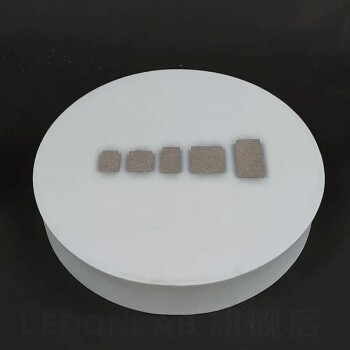
The decisive advantage of using titanium (Ti) foil in sulfide-based all-solid-state batteries is its superior chemical stability. Unlike standard current collectors, titanium remains inert when in contact with reactive sulfide electrolytes, preventing corrosion that can compromise battery performance and skew research data.
Core Takeaway While common metals like stainless steel are prone to corrosion when paired with sulfide electrolytes like Li₆PS₅Cl, titanium effectively resists these side reactions. This stability ensures that electrochemical test results reflect the true behavior of the battery chemistry, rather than artifacts caused by the degradation of the current collector.
The Challenge of Sulfide Electrolytes
Reactivity of Standard Metals
Sulfide solid-state electrolytes, such as Li₆PS₅Cl, are highly conductive but also chemically aggressive. When these electrolytes come into contact with standard current collector metals like stainless steel, unwanted chemical reactions often occur at the interface.
The Risk of High-Voltage Corrosion
The vulnerability of standard metals increases significantly under operational stress. Corrosion and side reactions are particularly prevalent when the battery is subjected to high voltages or during long-term cycling tests, leading to the breakdown of the collector material.
Why Titanium is the Superior Choice
Exceptional Chemical Inertness
Titanium foil is selected specifically for its resistance to the corrosive nature of sulfide compounds. It maintains a stable, non-reactive interface with the solid electrolyte, even under the demanding conditions of battery testing.
Eliminating Side Reactions
By using titanium, you effectively block the parasitic reactions that plague other metals. This ensures that the current collector acts solely as a conductor of electrons, rather than an active participant in the cell's chemistry.
Ensuring Data Accuracy
The most critical advantage for researchers is the fidelity of the test data. Because titanium does not corrode or introduce foreign species into the electrolyte, the resulting electrochemical data accurately represents the performance of the active materials, free from noise or false signals.
Common Pitfalls in Material Selection
The Liability of Stainless Steel
A frequent error in assembling test cells is relying on standard stainless steel components for sulfide-based systems. While durable in other applications, stainless steel can degrade in this specific chemical environment, introducing substantial errors into efficiency and cycle life measurements.
Misinterpreting Cell Failure
If a current collector corrodes, it can mimic the failure of the active battery material. Researchers using non-titanium collectors risk diagnosing a material failure when the root cause is actually the incompatibility of the test cell hardware itself.
Making the Right Choice for Your Goal
To ensure the validity of your solid-state battery research, select your current collector based on your specific testing parameters.
- If your primary focus is data precision: Use titanium foil to eliminate the variable of side reactions and ensure your data purely reflects active material performance.
- If your primary focus is long-term cycling: Choose titanium to prevent interface corrosion that typically occurs over extended periods in sulfide systems.
Titanium foil is not just a component choice; it is a prerequisite for generating trustworthy data in sulfide-based solid-state battery research.
Summary Table:
| Material | Chemical Stability (with Sulfides) | Corrosion Risk | Research Data Impact |
|---|---|---|---|
| Titanium (Ti) Foil | High (Inert) | Extremely Low | High Fidelity & Accuracy |
| Stainless Steel | Low (Reactive) | High (Corrodes) | Potential Errors & Artifacts |
| Aluminum/Copper | Variable/Low | High at high voltage | Inconsistent Performance |
Elevate Your Battery Research with KINTEK
Precise research requires high-purity materials and reliable hardware. KINTEK specializes in advanced laboratory equipment and consumables, providing the essential tools needed for sulfide-based all-solid-state battery assembly. From high-quality titanium foils and electrolytic cells to battery research tools, vacuum furnaces, and hydraulic presses, we offer a comprehensive portfolio designed to eliminate variables and ensure data integrity.
Don't let hardware corrosion compromise your breakthroughs. Contact us today to source premium consumables and equipment tailored for your energy storage research.
Related Products
- Aluminum Foil Current Collector for Lithium Battery
- High-Purity Titanium Foil and Sheet for Industrial Applications
- Copper Nickel Foam Metal Sheet
People Also Ask
- Why is aluminum foil selected as the current collector for F-HCNT electrodes? Superior Stability & Conductivity
- How is aluminum foil utilized as a consumable during the assembly of cold sintering molds? Optimize Tooling Longevity
- How to tell if a lithium-ion battery is bad? Spot the critical signs of failure before it's too late.
- How to check if a lithium battery is good? Safely Test Voltage, Capacity & Internal Resistance
- Is there a way to test lithium batteries? Understand Voltage vs. True Health