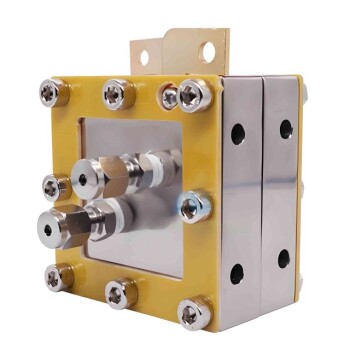
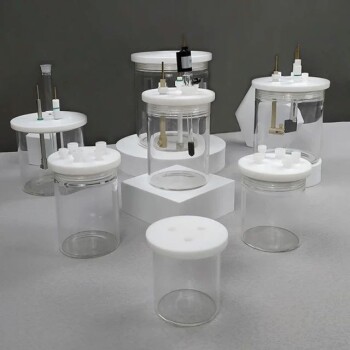
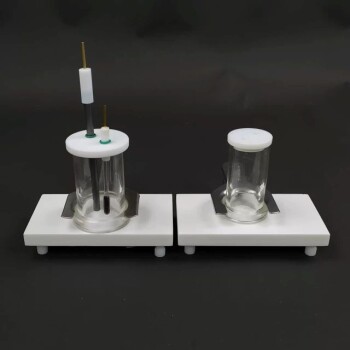
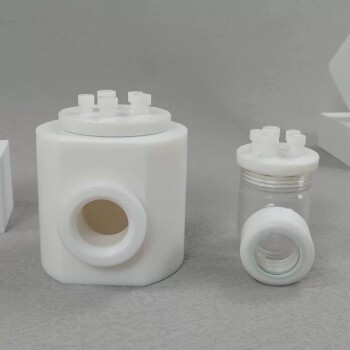
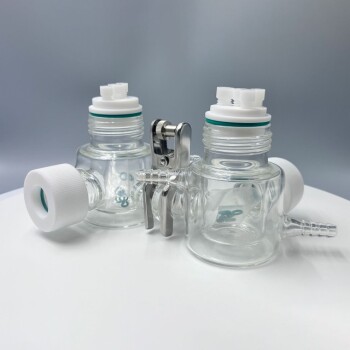
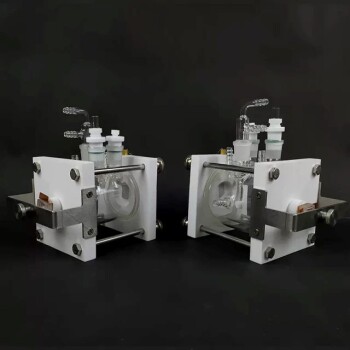
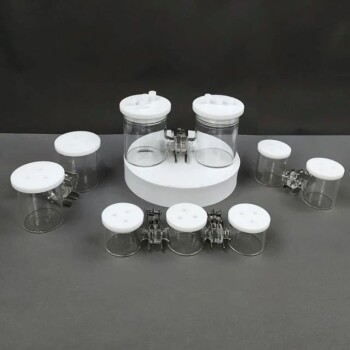
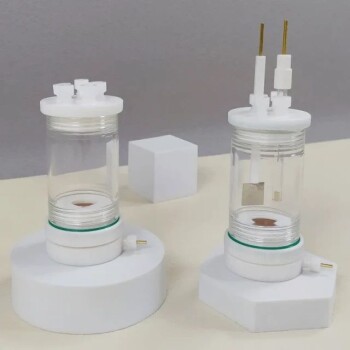
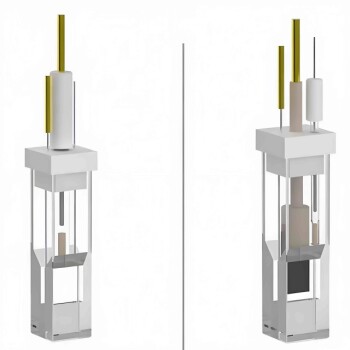
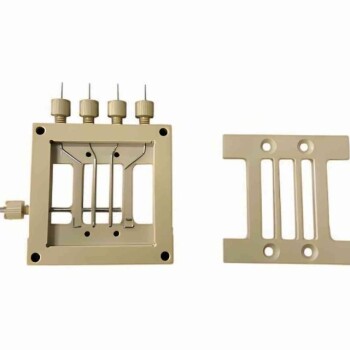
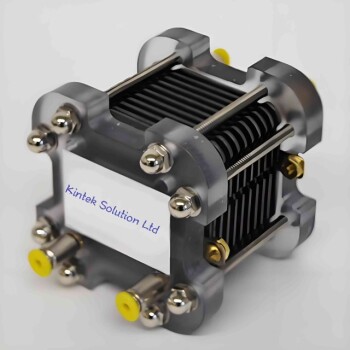
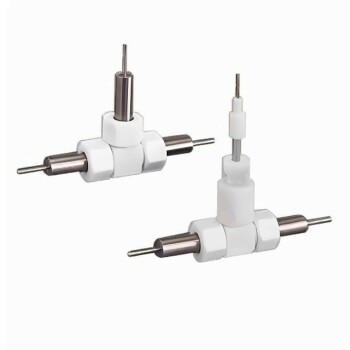
Flow electrolytic cells offer a definitive advantage over batch reactors by enabling continuous production while simultaneously solving the critical issues of heat and mass transfer. By leveraging a high surface-area-to-volume ratio, these systems eliminate the uneven mixing and cooling difficulties inherent in large-scale batch processing, ensuring consistent quality for high-value nanomaterials.
The shift from batch to flow electrolysis fundamentally changes how reaction environments are controlled. By removing "hot spots" and mixing dead zones, flow cells prevent product degradation, making them the superior choice for scaling up sensitive nanoscale fine chemicals.
Solving the Scale-Up Challenge
Scaling up nanomaterial synthesis is rarely as simple as building a larger tank. The physics of fluids and electricity change as dimensions increase. Flow electrolytic cells address the physical limitations that plague large batch reactors.
The Surface-Area-to-Volume Advantage
In electrosynthesis, the reaction happens at the electrode interface. Flow cells are designed with a high surface-area-to-volume ratio.
This geometry maximizes the contact between the reactants and the electrode. It ensures that mass transfer efficiency remains high, even as production volumes increase.
Eliminating Uneven Mixing
Large batch reactors often suffer from mixing gradients. Some areas of the tank may be turbulent, while others are stagnant.
Flow cells operate on a continuous stream. This ensures that every unit of fluid experiences the same hydrodynamic conditions, resulting in a uniform product structure.
Precision Control Over Reaction Conditions
The primary risk in synthesizing nanomaterials is losing the specific nanostructure due to uncontrolled reaction variables. Flow cells provide a level of strict environmental control that batch reactors cannot match at scale.
Superior Thermal Management
Electrochemical reactions generate heat. In a large batch reactor, cooling the electrode surface is difficult, leading to temperature spikes.
Flow cells allow for superior thermal management. The continuous movement of fluid and the cell design facilitate rapid heat dissipation, maintaining the precise temperature required for synthesis.
Preventing Product Degradation
When mixing and temperature are uneven, products can remain near the electrode too long or in "hot spots."
This exposure often leads to over-oxidation or degradation. Flow cells remove the product from the reaction zone immediately after formation, preserving the integrity of high-value-added fine chemicals.
Understanding the Trade-offs
While the benefits of flow cells are clear for large-scale quality, the transition requires a shift in engineering philosophy.
Complexity of Design
Batch reactors are mechanically simple vessels. Flow cells are sophisticated engineered systems.
Implementing flow electrolysis requires precise control over pumps and fluid dynamics. You are trading the mechanical simplicity of a tank for the operational precision of a continuous system.
Equipment Specialization
A batch reactor is a generalist tool; a flow cell is often specialized.
The design must be tailored to the specific electrochemical needs of the nanomaterial. This requires a deeper upfront understanding of your reaction kinetics compared to "pot-based" synthesis.
Making the Right Choice for Your Goal
Deciding between batch and flow depends on the specific sensitivities of your nanomaterial and your production targets.
- If your primary focus is product consistency: Flow cells are essential because they ensure every particle experiences identical mixing and electrical conditions.
- If your primary focus is preventing degradation: The continuous removal of product in flow cells is the best defense against over-oxidation and thermal damage.
- If your primary focus is massive throughput: Continuous production allows for non-stop synthesis, bypassing the downtime associated with filling, emptying, and cleaning batch reactors.
Flow electrolysis transforms the challenge of scaling nanomaterials from a gamble on mixing mechanics into a precise, controllable engineering process.
Summary Table:
| Feature | Batch Reactors | Flow Electrolytic Cells |
|---|---|---|
| Production Mode | Discontinuous (Batch-by-batch) | Continuous (Non-stop) |
| Mixing Consistency | Prone to gradients/dead zones | Highly uniform hydrodynamics |
| Thermal Management | Difficult at large scales | Superior heat dissipation |
| Product Integrity | Risk of over-oxidation/degradation | Immediate removal from reaction zone |
| Surface-Area-to-Volume | Low (decreases as scale increases) | High (optimized for mass transfer) |
| System Complexity | Simple mechanical design | Advanced engineered precision |
Revolutionize Your Nanomaterial Production with KINTEK
Transitioning from batch to flow electrolysis is the key to unlocking consistent, high-quality nanomaterial synthesis at scale. KINTEK specializes in advanced laboratory and industrial equipment, providing the precision tools you need to eliminate product degradation and optimize thermal management.
Our extensive portfolio includes high-performance electrolytic cells and electrodes, as well as complementary solutions like ULT freezers and cooling systems for thermal control, centrifuges, and homogenizers. Whether you are working on battery research, fine chemicals, or advanced materials, KINTEK offers the expertise and consumables (PTFE, ceramics, and crucibles) to support your entire workflow.
Ready to scale your synthesis with confidence? Contact our experts today to find the perfect flow electrolysis solution for your application!
References
- G. Malathi G. Malathi, M.I. Niyas Ahamed. Extensive Research and Evaluation of Electro-Organic Synthesis of Nanomaterials. DOI: 10.13005/ojc/380511
This article is also based on technical information from Kintek Solution Knowledge Base .
Related Products
- Electrolytic Electrochemical Cell Gas Diffusion Liquid Flow Reaction Cell
- Customizable CO2 Reduction Flow Cell for NRR ORR and CO2RR Research
- Double Layer Five-Port Water Bath Electrolytic Electrochemical Cell
- Double-Layer Water Bath Electrolytic Electrochemical Cell
- Customizable PEM Electrolysis Cells for Diverse Research Applications
People Also Ask
- How does the design of an electrochemical electrolytic cell influence the coating uniformity? Optimize Your Catalysts
- What is the correct shutdown and disassembly procedure after an experiment? Ensure Safety and Protect Your Equipment
- Why are electrolytic cells essential in titanium production? Powering Circular Efficiency and Cost Savings
- What is galvanic cell or electrolytic cell? Unlock the Secrets of Electrochemical Power
- What are the three essential components that comprise an electrolytic cell? Key Elements of Chemical Synthesis