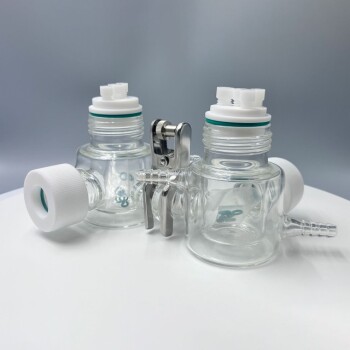
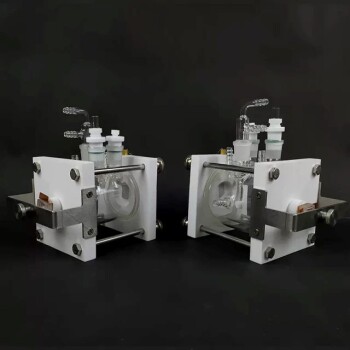
The double-layer structure in an H-type electrolytic cell serves primarily to maintain precise thermal stability through insulation and active temperature control. The design consists of an inner reaction chamber nested within an outer protective shell. This dual-wall configuration isolates the electrolyte from external environmental fluctuations and allows for the circulation of thermal fluids to regulate reaction heat.
The core purpose of the double-layer design is to eliminate temperature as an uncontrolled variable, ensuring that experimental data reflects true electrochemical behavior rather than thermal anomalies.
The Anatomy of the Double Layer
The Inner Reaction Chamber
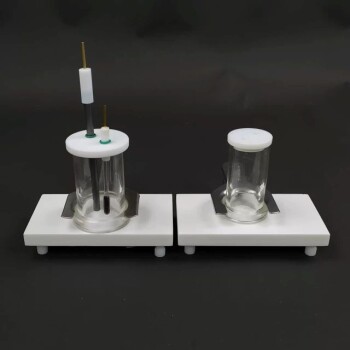
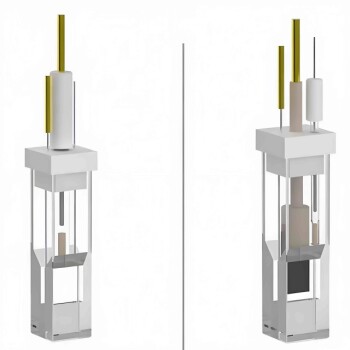
The inner layer forms the actual vessel for the experiment. It directly holds the electrolyte and accommodates the working, counter, and reference electrodes.
Because this layer is the only physical barrier between the chemical reaction and the thermal control medium, it facilitates efficient heat transfer.
The Outer Protective Shell
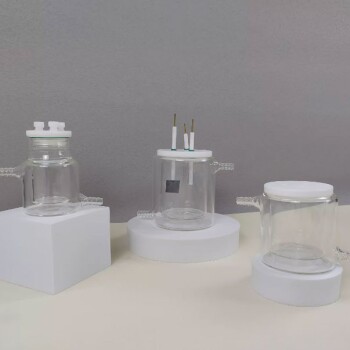
The outer layer acts as a jacket or insulating shell surrounding the inner chamber.
In many configurations, this space serves as a water bath container. By filling this outer void with a constant-temperature liquid (such as hot water or a coolant), researchers can actively manipulate the environment surrounding the reaction.
Why Thermal Stability is Critical
Mitigating Environmental Impact
Electrochemical reactions are highly sensitive to ambient changes. The double-layer structure effectively minimizes the impact of the external laboratory environment on the internal electrolytic reaction.
By providing a physical buffer, the cell ensures that room temperature fluctuations do not skew sensitive measurements.
Ensuring Uniform Temperature Distribution
Electrolysis generates heat, which can lead to "hot spots" within the electrolyte. The double-layer design promotes a uniform temperature distribution across the electrode surface.
This prevents local overheating or cooling, which is essential for maintaining consistent reaction rates and improving the reproducibility of the product.
Supporting Temperature-Sensitive Applications
Many advanced applications, such as organic electrosynthesis or metal electrodeposition, require specific thermal conditions to proceed correctly.
The double-layer system allows these experiments to occur under constant, controlled temperatures, which is impossible in standard single-walled beakers.
Understanding the Trade-offs
Complexity of Setup
While the double-layer design offers superior control, it requires additional infrastructure. To function as intended, you typically need an external circulating bath or chiller to maintain the fluid temperature in the outer jacket.
Optical Considerations
The H-type cell often includes a quartz window for photoelectrochemical research. However, adding a second layer of glass and a liquid medium (water bath) can introduce refractive complexities.
Care must be taken to ensure the path of light remains clear and unobstructed by the thermal control fluid if optical measurements are required.
Making the Right Choice for Your Goal
When selecting an electrolytic cell configuration, consider the precision required for your specific experiment:
- If your primary focus is thermodynamic data or kinetics: The double-layer structure is essential to keep temperature constant, as these parameters are temperature-dependent.
- If your primary focus is photoelectrochemistry: Ensure the double-layer design includes a high-quality quartz optical window that aligns with your light source without interference from the cooling jacket.
- If your primary focus is general qualitative testing: A standard single-layer cell may suffice, but you accept the risk of thermal drift affecting your results over time.
By isolating your reaction from thermal variables, the double-layer cell transforms a rough experiment into a rigorous scientific measurement.
Summary Table:
| Feature | Purpose | Benefit |
|---|---|---|
| Inner Chamber | Houses electrolyte & electrodes | Facilitates direct heat transfer |
| Outer Jacket | Circulates thermal fluids | Enables active temperature regulation |
| Dual-Wall Design | Environmental isolation | Eliminates external temperature fluctuations |
| Thermal Buffering | Uniform heat distribution | Prevents local hot spots and skews |
Elevate Your Electrochemical Precision with KINTEK
Don't let thermal drift compromise your experimental integrity. KINTEK specializes in high-performance laboratory equipment, offering advanced H-type electrolytic cells, electrodes, and comprehensive battery research tools designed for the most demanding scientific applications.
Whether you require precise temperature control for organic electrosynthesis or high-quality quartz windows for photoelectrochemistry, our expert team is ready to provide the right solution. Beyond electrolytic cells, we offer a full range of high-temperature furnaces, hydraulic presses, and specialized consumables like PTFE and ceramics to support your entire workflow.
Ready to achieve more rigorous and reproducible results? Contact KINTEK Today to Consult with Our Experts
Related Products
- H-Type Double-Layer Optical Electrolytic Electrochemical Cell with Water Bath
- H Type Electrolytic Cell Triple Electrochemical Cell
- Customizable PEM Electrolysis Cells for Diverse Research Applications
- Electrolytic Electrochemical Cell with Five-Port
- Super Sealed Electrolytic Electrochemical Cell
People Also Ask
- What is the overall structure of the H-type double-layer optical water bath electrolytic cell? Precision Design for Controlled Experiments
- How is the electrolyte managed in H-type electrolytic cells for specific reactions? Achieve Precise Control and High Purity
- What checks should be performed on the H-type electrolytic cell before use? Ensure Accurate Electrochemical Data
- What is important regarding temperature control for the H-type electrolytic cell? Ensure Precision and Data Integrity
- What is the overall structure of the H-type electrolytic cell? Understanding Dual-Chamber Electrochemical Designs