To ensure the integrity of the One-Pot High-Pressure Melt Polymerization (OHPMP) process, the autoclave must meet strict specifications regarding pressure containment and agitation power. Specifically, the vessel is required to withstand autogenous steam pressures exceeding 2.0 MPa and utilize a nitrogen pressurization system to maintain constant pressure (typically 350 psig) during thermal ramping. Furthermore, the system necessitates precision safety relief valves, hermetic sealing, and high-temperature stirring capable of handling the rapid viscosity increases associated with rising molecular weight.
The core engineering challenge of an OHPMP autoclave is not just containing high pressure, but maintaining that pressure precisely while the melt transitions from a liquid to a highly viscous, high-molecular-weight polymer.
Pressure Management Systems
Structural Integrity Requirements
The vessel must be engineered to withstand significant internal force. The primary reference dictates a design capability to handle autogenous steam pressures in excess of 2.0 MPa.
Active Nitrogen Pressurization
Static pressure containment is insufficient; active control is required. The system must include a nitrogen pressurization unit capable of maintaining a constant pressure, such as 350 psig.
Thermal and Pressure Ramping
This constant pressure must be maintained even while temperatures are simultaneously increased. The autoclave's control systems must balance the nitrogen feed against the thermal expansion of the contents.
Precision Safety Mechanisms
Given the high-pressure environment, standard relief valves are inadequate. The autoclave must be equipped with precision safety relief valves to prevent catastrophic over-pressure events during the polymerization reaction.
Handling Material Dynamics
High-Temperature Stirring
As the polymerization proceeds and molecular weight rises, the melt's viscosity increases rapidly. The autoclave must possess a stirring mechanism designed for high temperatures that delivers sufficient torque to mix a thickening fluid without stalling.
Sealing Capabilities
The reference emphasizes the need for "excellent sealing." Any breach in the seal compromises the constant pressure environment required for the reaction, leading to process failure or inconsistent polymer quality.
Operational Challenges and Trade-offs
Torque vs. Seal Integrity
There is an inherent mechanical conflict between high-torque stirring and high-pressure sealing. As the mixer fights against the increased drag of the viscous polymer, it places significant shear stress on the shaft seals, which are already under high pressure.
Complexity of Control
maintaining a flat pressure profile (e.g., 350 psig) while increasing temperature requires a responsive system. If the relief valves or nitrogen feed are not perfectly calibrated, you risk pressure spikes or drops that can alter the reaction kinetics.
Making the Right Choice for Your Goal
Selecting the correct autoclave configuration depends on the specific priorities of your polymerization project.
- If your primary focus is Process Safety: Prioritize the specification of the precision safety relief valves and ensure the vessel rating exceeds the 2.0 MPa baseline by a significant safety factor.
- If your primary focus is Polymer Quality (Molecular Weight): Invest heavily in the stirring drive train to ensure it can maintain consistent agitation rates despite the rapid viscosity increase of the melt.
Ultimately, the autoclave must function as a dynamic pressure vessel that can adapt to the changing rheology of the polymer without losing containment.
Summary Table:
| Requirement Category | Specification/Feature | Importance in OHPMP |
|---|---|---|
| Pressure Capability | > 2.0 MPa (Autogenous) | Ensures vessel integrity under steam pressure |
| Active Control | Nitrogen Pressurization (350 psig) | Maintains constant pressure during thermal ramping |
| Stirring System | High-Torque, High-Temp Stirring | Handles rapid viscosity increase as MW rises |
| Safety Features | Precision Relief Valves | Prevents over-pressure during polymerization |
| Seal Integrity | Hermetic/High-Pressure Sealing | Prevents process failure and ensures polymer quality |
Elevate Your Polymer Research with KINTEK’s Advanced Reactors
Precision is non-negotiable in One-Pot High-Pressure Melt Polymerization (OHPMP). KINTEK specializes in high-performance laboratory equipment, offering a premium range of high-temperature high-pressure reactors and autoclaves engineered to handle the most demanding viscosity and pressure profiles.
Our systems provide the robust torque, precise nitrogen control, and superior hermetic sealing required to ensure your high-molecular-weight polymers meet exact specifications. Beyond reactors, we support your entire lab workflow with high-temperature furnaces, crushing and milling systems, and specialized consumables like PTFE and ceramics.
Ready to optimize your polymerization process? Contact our technical experts today to find the perfect high-pressure solution for your research goals.
References
- Chuanhui Zhang. Progress in semicrystalline heat-resistant polyamides. DOI: 10.1515/epoly-2018-0094
This article is also based on technical information from Kintek Solution Knowledge Base .
Related Products
- Mini SS High Pressure Autoclave Reactor for Laboratory Use
- High Pressure Laboratory Autoclave Reactor for Hydrothermal Synthesis
- Customizable High Pressure Reactors for Advanced Scientific and Industrial Applications
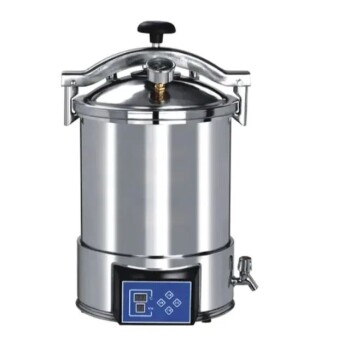
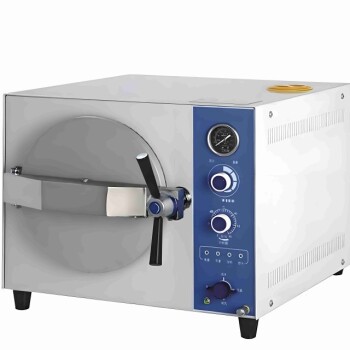
- Desktop Fast High Pressure Laboratory Autoclave Sterilizer 16L 24L for Lab Use
- Portable High Pressure Laboratory Autoclave Steam Sterilizer for Lab Use
People Also Ask
- Why use high-pressure reactors for molecular sieve synthesis? Unlock Superior Crystallinity and Framework Control
- What are the advantages of using a high-pressure reactor like an autoclave? Maximize Liquefaction Speed & Yield
- What is the function of a high-pressure reactor autoclave? Enhancing Cu/N Co-Doped Carbon Catalyst Synthesis
- Why are high-pressure reactors or autoclaves necessary for the synthesis of new functional materials? Unlock Precision.
- How are high-pressure reactors used to prepare metaphosphate electrocatalysts? Master In-Situ Precursor Growth