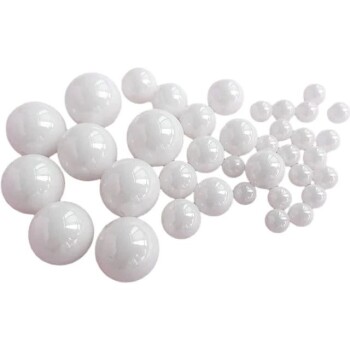
The primary reasons for choosing Zirconia (ZrO2) grinding media for Al6061/B4C composites are its ability to deliver high impact energy while maintaining exceptional material purity. Its specific density and hardness allow it to physically embed extremely hard Boron Carbide (B4C) particles into the softer Aluminum matrix during milling. Crucially, Zirconia's high wear resistance minimizes the risk of introducing foreign impurities, ensuring the final composite retains the chemical integrity required for high-performance applications.
Zirconia strikes the critical balance between physical force and chemical inertness, enabling the embedding of hard reinforcements without contaminating the sensitive aluminum alloy matrix.
Achieving Effective Particle Reinforcement
High Density for Kinetic Energy
To successfully reinforce an aluminum matrix, the milling process requires significant kinetic energy. Zirconia’s high density allows the grinding balls to generate sufficient impact force during collisions.
Overcoming Hard Particle Resistance
Boron Carbide (B4C) is an extremely hard ceramic material. The grinding media must possess high hardness to effectively act upon these particles. Zirconia provides the necessary rigidity to embed the B4C into the Al6061 particles without shattering or deforming ineffectively upon impact.
Facilitating Plastic Deformation
The milling process relies on severe plastic deformation, cold welding, and fracture to refine the powder. Zirconia media delivers the intense ball-powder-ball collisions required to facilitate this mechanical alloying process, ensuring a uniform distribution of reinforcement particles.
Preserving Material Purity
Superior Wear Resistance
A major challenge in powder metallurgy is "wear debris"—contamination caused by the grinding media breaking down. Zirconia exhibits excellent wear resistance, meaning it degrades very slowly even under high-energy milling conditions.
Chemical Stability
In the event that minor wear occurs, Zirconia is chemically stable. Unlike steel or other reactive media, minute amounts of Zirconia are less likely to chemically react with the Aluminum or Boron Carbide in a way that degrades the composite's final mechanical properties.
Minimizing Impurities
The primary reference highlights that Zirconia helps minimize the introduction of impurities. Maintaining this high purity is essential, as contaminants can act as stress concentrators or brittle phases that weaken the final composite material.
Understanding the Trade-offs
Impact Energy vs. Contamination Risk
While heavier media like Tungsten Carbide (WC) offer even higher density and impact energy—often used for milling very hard ceramics like Silicon Carbide—they carry a different contamination risk profile.
Balancing Hardness and Matrix Protection
Choosing a media that is too hard or heavy for a softer matrix like Aluminum 6061 can sometimes lead to excessive cold working or flake formation. Zirconia offers a balanced approach, providing enough force to embed the B4C but generally being less aggressive than Tungsten Carbide, prioritizing the purity of the Al6061 matrix.
Making the Right Choice for Your Goal
When designing a powder metallurgy protocol, your choice of media defines the quality of your powder.
- If your primary focus is Compositional Purity: Select Zirconia (ZrO2) to minimize wear debris and prevent chemical reactions that could degrade the Al6061 matrix.
- If your primary focus is Microstructural Uniformity: Rely on Zirconia's high density to provide the impact energy necessary to force B4C particles deeply and evenly into the aluminum.
By selecting Zirconia, you prioritize a clean, contamination-free microstructure without sacrificing the mechanical force needed to create a true composite.
Summary Table:
| Feature | Benefit for Al6061/B4C Preparation |
|---|---|
| High Density | Provides the kinetic energy needed to embed hard B4C into Al matrix. |
| Superior Hardness | Resists deformation while facilitating mechanical alloying and plastic deformation. |
| Wear Resistance | Minimizes contamination from media debris, preserving material integrity. |
| Chemical Stability | Prevents unwanted reactions with aluminum during high-energy milling. |
| Balanced Energy | Offers sufficient force without the extreme aggressiveness of heavier carbides. |
Elevate Your Material Research with KINTEK Precision Solutions
Achieving the perfect composite requires tools that never compromise on purity or performance. KINTEK specializes in high-quality laboratory equipment designed for the most demanding powder metallurgy and material science applications. Whether you are developing Al6061/B4C composites or advanced ceramics, our comprehensive range of crushing and milling systems, high-purity Zirconia grinding media, and hydraulic pellet presses ensures consistent, contamination-free results.
From high-temperature furnaces for sintering to isostatic presses for density optimization, KINTEK provides the end-to-end solutions your lab needs to innovate.
Ready to optimize your milling process? Contact our technical experts today to find the ideal equipment and consumables for your specific research goals!
Related Products
- Precision Machined Zirconia Ceramic Ball for Engineering Advanced Fine Ceramics
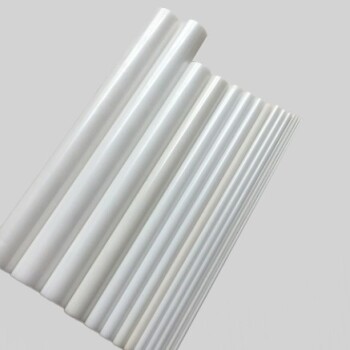
- Precision Machined Yttrium Stabilized Zirconia Ceramic Rod for Engineering Advanced Fine Ceramics
- Dental Porcelain Zirconia Sintering Ceramic Furnace Chairside with Transformer
- Dental Porcelain Zirconia Sintering Ceramic Vacuum Press Furnace
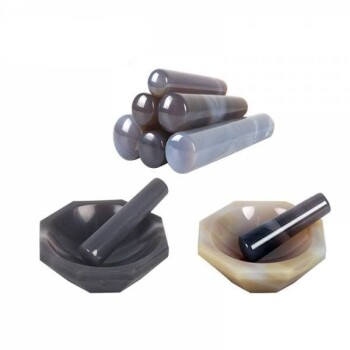
- Nature Agate Mortar and Pestle for Grinding and Mixing
People Also Ask
- What are the applications of zirconia ceramics? Unlock High-Performance Solutions for Extreme Environments
- What is the physical mechanism for selecting hard grinding media? Optimize Your ZrC-Al Matrix Composite Production
- Why are zirconia milling balls preferred for P2-type layered oxides? Ensure High Purity and Grinding Efficiency
- What is the purpose of using zirconia milling balls of different diameters? Optimize Solid Electrolyte Processing
- Why are zirconia grinding jars and balls required for solid-state electrolyte powders? Ensure High Purity & Performance