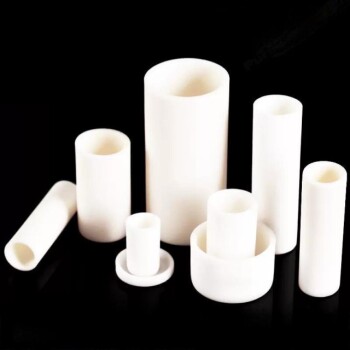
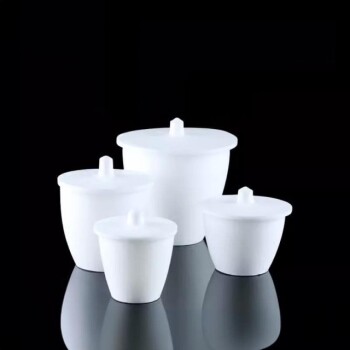
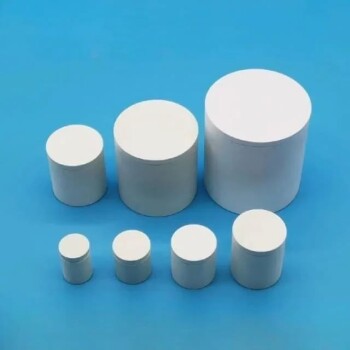
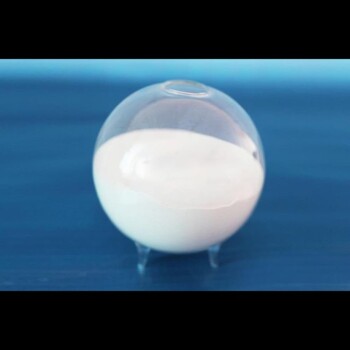
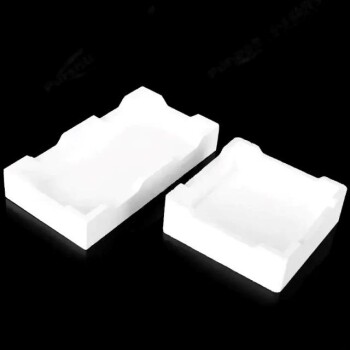
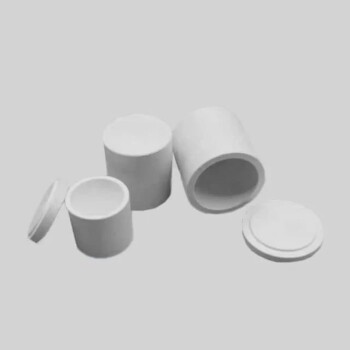
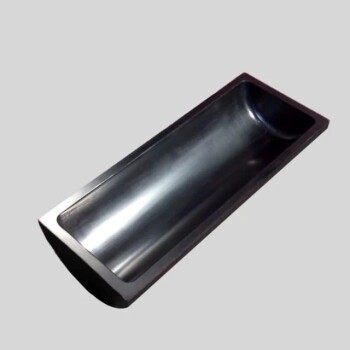
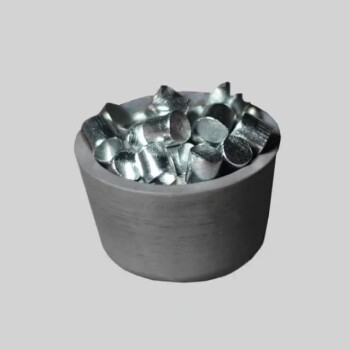
High-purity ceramic crucibles and liners act as the fundamental barrier protecting the validity of your data in high-temperature carbide experiments. When investigating materials with melting points approaching 4000 K, these components prevent chemical cross-contamination and provide the necessary physical containment to ensure that recorded thermodynamic properties reflect the intrinsic nature of the carbide, not a reaction with the apparatus.
In extreme-temperature research, the integrity of the containment vessel is as critical as the sample itself. High-purity ceramics provide the chemical inertness and structural stability required to isolate molten carbides, ensuring that experimental results are free from environmental artifacts.
The Critical Role of Chemical Inertness
Preserving Intrinsic Material Properties
The primary function of high-purity ceramics, such as zirconia or alumina, is to create a chemically neutral environment.
When a carbide melts, it becomes highly reactive; if the liner contains impurities, the melt will react with them.
By using high-purity liners, you ensure the thermodynamic data you capture represents the actual carbide, rather than a hybrid compound formed with the container.
Preventing Apparatus Interaction
At temperatures near 4000 K, the boundary between the sample and the experimental rig is under immense stress.
Ceramic liners serve as an insulation layer that prevents the molten carbide from chemically attacking the broader experimental apparatus.
This isolation is vital for maintaining the calibration and safety of sensitive thermal analysis equipment.
Structural Integrity at Extremes
Physical Containment of the Melt
Carbides possess some of the highest known melting points in materials science.
High-purity ceramics are selected for their ability to maintain structural rigidity even when the sample inside has transitioned to a liquid phase.
This stability prevents the vessel from collapsing or deforming, which would otherwise ruin the experiment and potentially damage the furnace.
Sample Support and Recovery
Beyond simple containment, these crucibles provide physical support for the sample throughout the heating and cooling cycle.
As noted in oxidation studies, high-quality crucibles also catch any material that may separate from the main sample, such as oxide scales.
This ensures that mass-change data remains accurate because every fraction of the sample is accounted for within the liner.
Common Pitfalls to Avoid
The Limits of Material Stability
While high-purity ceramics are robust, they are not invincible.
It is critical to match the specific ceramic material (e.g., alumina vs. zirconia) to the temperature range of your specific carbide.
Pushing a ceramic liner beyond its specific thermal limit will result in catastrophic failure, regardless of its purity level.
The Illusion of "Good Enough" Purity
Using standard-grade ceramics instead of high-purity options is a frequent source of experimental error.
Trace impurities in lower-grade crucibles can act as fluxes, lowering the melting point of the liner or catalyzing unwanted reactions.
Always verify the purity certification of your consumables; a 99.8% purity rating performs significantly differently than 95% in these extreme environments.
Making the Right Choice for Your Goal
To ensure the success of your high-temperature carbide experiments, align your equipment choice with your specific scientific objective:
- If your primary focus is Thermodynamic Accuracy: Prioritize maximum chemical purity to eliminate any risk of the crucible reacting with the molten carbide.
- If your primary focus is Mass Balance/Recovery: Ensure the crucible geometry and material stability are sufficient to capture all spallation or scale without physical degradation.
The reliability of your high-temperature data is directly proportional to the quality and inertness of the vessel you choose to contain it.
Summary Table:
| Feature | Importance in Carbide Melting Experiments |
|---|---|
| Chemical Inertness | Prevents reactions between the molten carbide and the vessel, ensuring data purity. |
| Structural Stability | Maintains physical containment at temperatures up to 4000 K without deformation. |
| Purity (99.8%+) | Eliminates trace impurities that act as fluxes and lower the melting point of the liner. |
| Thermal Insulation | Protects the experimental apparatus from chemical attack and extreme heat stress. |
| Sample Recovery | Captures all material fractions and oxide scales for accurate mass-change data. |
Elevate Your Materials Research with KINTEK Precision
Don't let vessel impurities compromise your data. At KINTEK, we specialize in high-performance laboratory equipment and consumables designed for extreme environments. From high-purity ceramic crucibles and PTFE products to advanced high-temperature muffle and vacuum furnaces, our solutions ensure the integrity of your thermodynamic analysis.
Whether you are conducting carbide melting studies or battery research, our comprehensive portfolio—including high-pressure reactors, crushing systems, and hydraulic presses—is engineered to meet the rigorous demands of modern science.
Ready to optimize your lab's performance? Contact us today to discuss your specific requirements!
References
- К. К. Маевский. Numerical modeling of carbides behavior under high-energy liading. DOI: 10.21883/tp.2022.01.52536.200-21
This article is also based on technical information from Kintek Solution Knowledge Base .
Related Products
- High Purity Pure Graphite Crucible for Evaporation
- High Purity Pure Graphite Crucible for Electron Beam Evaporation
- Arc-Shaped Alumina Ceramic Crucible High Temperature Resistant for Engineering Advanced Fine Ceramics
- Engineering Advanced Fine Alumina Al2O3 Ceramic Crucible for Laboratory Muffle Furnace
- Alumina Al2O3 Ceramic Crucible Semicircle Boat with Lid for Engineering Advanced Fine Ceramics
People Also Ask
- Why are high-purity graphite crucibles preferred for sulfide solid electrolytes? Achieve Superior Material Purity
- Why is a high-purity graphite crucible required for Chromel-TaC composites? Ensure Peak Purity at 1400°C
- What role do high-purity graphite crucibles play in molten salt corrosion research? Ensure Reactor-Grade Precision
- Why are high-purity graphite crucibles used for magnesium distillation? Ensure 3N8 Purity & Thermal Stability
- Why is a high-purity graphite crucible ideal for nitrogen-doped graphene at 1500 °C? Maximize Purity and Stability