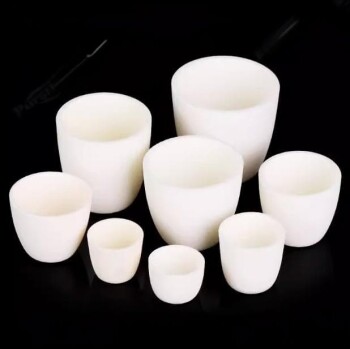
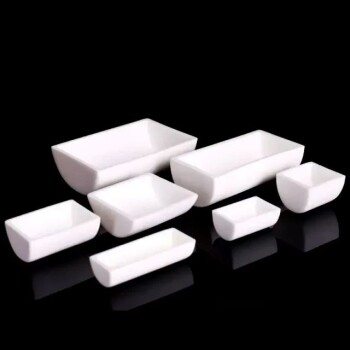
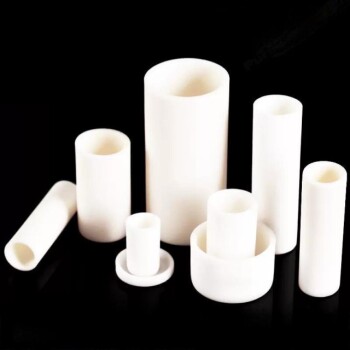
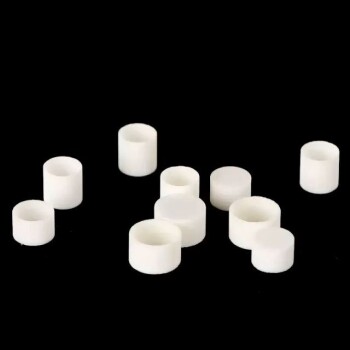
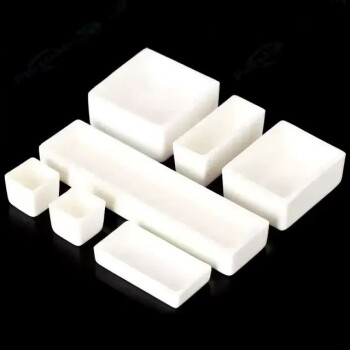
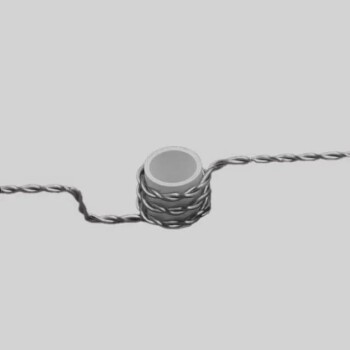
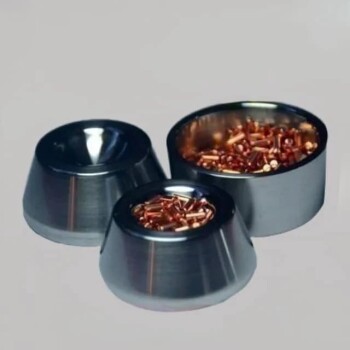
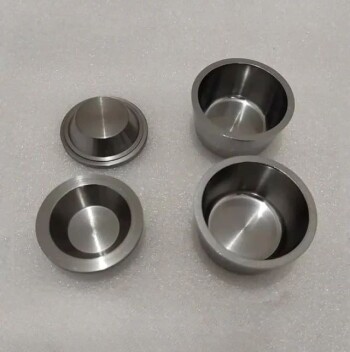
The use of alumina crucibles provides a critical baseline of neutrality for Thermogravimetric Analysis (TGA), ensuring that the resulting data reflects only the material's decomposition and not an interaction with the container. Specifically, when analyzing modified alkyd resins containing reactive components like phosphorus, alumina prevents chemical interference during high-temperature degradation.
Alumina crucibles offer exceptional chemical inertness and thermal stability up to 850 °C. By resisting reactions with corrosive byproducts like phosphides, they ensure the accuracy of weight percentage residue measurements, which is essential for evaluating flame retardant mechanisms.
Ensuring Data Integrity in High-Temperature Environments
Chemical Inertness Against Reactive Byproducts
When modified resins decompose, particularly those containing flame retardants, they often release reactive byproducts. Phosphorus-modified materials, for example, generate phosphides during high-temperature breakdown.
Alumina crucibles are distinct because they do not react with these generated phosphides. This lack of reactivity prevents the container from chemically altering the sample or gaining/losing artificial mass during the scan.
Thermal Stability
TGA requires exposing materials to aggressive heating ramps to define their degradation limits. Alumina crucibles maintain their structural and chemical integrity in test environments reaching up to 850 °C.
This stability ensures that the crucible itself remains a constant variable throughout the heating process, allowing the analyst to attribute all weight changes solely to the resin.
Analyzing Flame Retardancy Mechanisms
Accurate Residue Measurement
The effectiveness of a flame retardant is often judged by its ability to promote char formation in the condensed phase. To evaluate this, you must measure the weight percentage of the residue left behind after decomposition.
Because alumina does not react with the char or its precursors, it allows for high measurement accuracy of this residue.
Evaluating Component Performance
Precise residue data allows for a clear evaluation of how specific components, such as phosphorus-based modifiers, perform within the resin.
By ensuring the mass readings are not skewed by crucible interactions, you can confidently correlate the residual weight with the effectiveness of the flame retardant strategy.
Understanding the Operational Boundaries
Temperature Limitations
While alumina is highly robust, the referenced stability is specifically highlighted for environments up to 850 °C.
For analyses requiring temperatures significantly beyond this threshold, the inertness and stability profile should be re-verified to ensure no phase changes or softening occurs.
Specificity to Phosphorus Chemistry
The primary advantage highlighted is the resistance to phosphide reactions.
While alumina is generally inert, its specific benefit in this context is tied to preventing interference from phosphorus decomposition products. If your resin uses a different modification chemistry, you must verify that those specific byproducts are equally non-reactive with alumina.
Making the Right Choice for Your Goal
When configuring your TGA parameters for modified alkyd resins, consider your specific analytical objectives:
- If your primary focus is Flame Retardancy Evaluation: Choose alumina to prevent phosphide interactions and ensure the precise measurement of char yields.
- If your primary focus is High-Temperature Degradation: Verify that your maximum testing temperature does not exceed the validated 850 °C range for these crucibles.
Alumina crucibles provide the chemical silence necessary to "hear" the true thermal story of your material.
Summary Table:
| Feature | Benefit for TGA of Modified Alkyd Resins |
|---|---|
| Chemical Inertness | Resists reaction with phosphorus byproducts (phosphides) to prevent mass distortion. |
| Thermal Stability | Maintains integrity up to 850 °C, ensuring the crucible remains a constant variable. |
| Measurement Accuracy | Provides precise weight percentage residue data for evaluating flame retardant char. |
| Baseline Neutrality | Ensures observed decomposition behavior reflects the material, not the container interaction. |
Elevate Your Material Analysis with KINTEK
Precision in Thermogravimetric Analysis starts with the right consumables. KINTEK specializes in high-performance laboratory equipment, offering a comprehensive range of premium alumina crucibles and ceramics designed to withstand aggressive heating ramps and reactive chemistries.
Whether you are evaluating flame retardancy in modified resins or conducting advanced battery research, our portfolio includes everything from high-temperature furnaces and vacuum systems to crushing equipment and PTFE products. Ensure the integrity of your data and the efficiency of your lab with our industry-leading solutions.
Ready to optimize your thermal analysis? Contact us today to discover how KINTEK’s specialized consumables can bring chemical silence and precision to your research!
References
- Maxinne Denis, Claire Négrell. Triple Benefits of Cardanol as Chain Stopper, Flame Retardant and Reactive Diluent for Greener Alkyd Coating. DOI: 10.3390/org4010009
This article is also based on technical information from Kintek Solution Knowledge Base .
Related Products
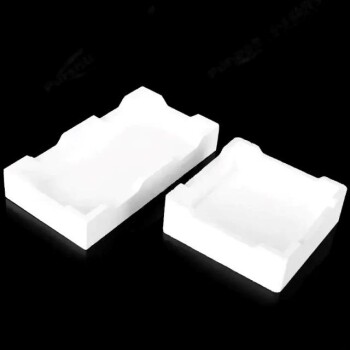
- Arc-Shaped Alumina Ceramic Crucible High Temperature Resistant for Engineering Advanced Fine Ceramics
- Alumina Al2O3 Ceramic Crucible Semicircle Boat with Lid for Engineering Advanced Fine Ceramics
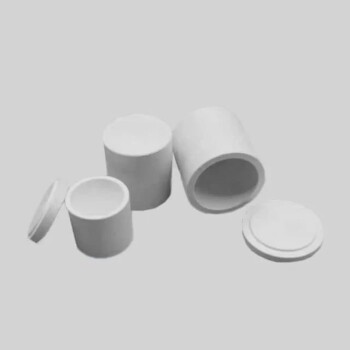
- Engineering Advanced Fine Ceramics Alumina Al2O3 Crucible With Lid Cylindrical Laboratory Crucible
- Engineering Advanced Fine Ceramics Alumina Crucibles (Al2O3) for Thermal Analysis TGA DTA
- Engineering Advanced Fine Alumina Al2O3 Ceramic Crucible for Laboratory Muffle Furnace
People Also Ask
- Why Use Alumina Crucibles & Powder Burial for NaSICON? Ensure Phase Purity and Prevent Elemental Volatilization
- What is the primary purpose of using alumina crucibles for LLTO ceramics? Optimize Your High-Temperature Sintering
- Why are alumina crucibles and mother powder essential for LATP sintering? Optimize Your Solid Electrolyte Performance
- Why are high-purity alumina crucibles used for liquid lead corrosion experiments? Ensure Data Accuracy at 550°C
- Primary considerations for choosing alumina crucibles and quartz tubes in indium intercalation: Ensure Material Purity