Fundamentally, sintering transforms zirconia from a porous, fragile state into a dense, solid material. This process, driven by heat and potentially pressure, forces the material to undergo three primary physical changes: a reduction in porosity, a substantial increase in density, and a significant amount of physical shrinkage.
Sintering is a process of densification, not just hardening. By fusing particles together, the material eliminates internal voids to achieve maximum strength, but this comes at the cost of a significant reduction in overall volume.
The Mechanics of Densification
Reduction of Porosity
Before sintering, the ceramic exists as a "green part"—a pressed shape full of microscopic voids and air pockets.
The application of heat causes individual particles to fuse.
As these particles bond, the empty spaces between them are eliminated. This reduction in porosity is the primary driver for the material's final structural integrity.
Increase in Density
As porosity decreases, density increases.
The mass of the material is compressed into a much smaller volume.
This transformation is critical for achieving the material's mechanical properties, such as high flexural strength (often exceeding 800 MPa). Without this density shift, the ceramic would remain brittle and unusable for load-bearing applications.
Dimensional Transformation
Significant Volume Shrinkage
The most visible physical change during sintering is a reduction in size.
Zirconia shrinks significantly as it densifies.
This is not a defect but a necessary by-product of closing the internal porosity. The volume of the final piece is markedly smaller than the pre-sintered "green" state.
Hardening of the Material
While the material shrinks, it simultaneously reaches its final hardness.
The fusion of particles creates a solid, cohesive mass capable of withstanding significant stress. This solid state is the direct result of the elimination of pore volume.
Understanding the Trade-offs
Precision vs. Shrinkage
The significant shrinkage inherent to sintering creates a challenge for dimensional accuracy.
You cannot sinter a part to the exact size of the green model; you must scale the green model up to account for the shrinkage.
If the shrinkage rate is not calculated perfectly, the final density will be correct, but the physical fit will fail.
Thermal Control Requirements
Achieving these physical changes requires aggressive thermal environments, often reaching 1,550°C.
There is a balance between speed and quality.
While high-speed sintering exists, standard protocols often require slow heat rises (e.g., 4°C to 10°C per minute) to ensure the physical changes occur uniformly throughout the material, preventing internal stress or warping.
Making the Right Choice for Your Goal
To navigate the sintering process effectively, consider your specific manufacturing priorities:
- If your primary focus is Structural Integrity: Prioritize achieving maximum density and low porosity, even if it requires longer cycle times to ensure complete particle fusion.
- If your primary focus is Dimensional Accuracy: Focus entirely on predicting the shrinkage factor; the "green part" must be scaled up precisely to match the volume loss that occurs during densification.
The success of your final component depends on accepting that high strength is inextricably linked to high shrinkage.
Summary Table:
| Physical Change | Mechanism | Impact on Material Properties |
|---|---|---|
| Porosity Reduction | Closure of microscopic voids and air pockets | Increases structural integrity and lifespan |
| Densification | Mass compression into smaller volume | Boosts flexural strength (often >800 MPa) |
| Volume Shrinkage | Elimination of internal pore volume | Causes significant reduction in physical dimensions |
| Material Hardening | Fusion of particles into a cohesive mass | Reaches final hardness and load-bearing capacity |
Elevate Your Ceramic Processing with KINTEK Precision
Achieving the perfect balance between density, strength, and dimensional accuracy requires high-performance thermal equipment. KINTEK specializes in advanced laboratory solutions designed for the rigorous demands of ceramic sintering.
Our extensive portfolio includes:
- High-Temperature Muffle & Tube Furnaces: Precision heating up to 1,700°C for uniform densification.
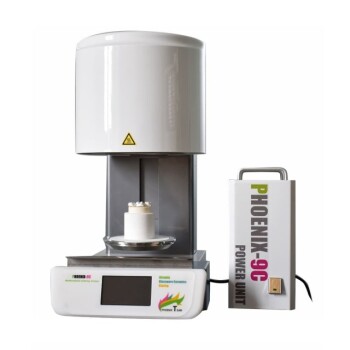
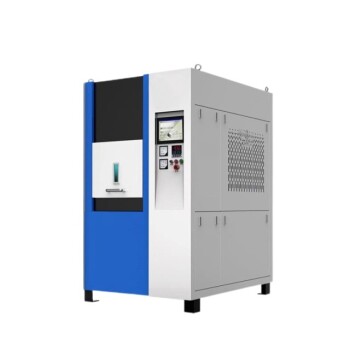
- Dental & Vacuum Furnaces: Specialized environments for zirconia and aesthetic ceramics.
- Crushing, Milling & Hydraulic Presses: Perfecting your "green part" preparation with pellet and isostatic presses.
- Cruisibles & Ceramics: Essential high-purity consumables for contamination-free sintering.
Whether you are scaling production or conducting advanced material research, KINTEK provides the expertise and tools to master shrinkage and ensure material excellence. Contact us today to optimize your sintering workflow!
Related Products
- Dental Porcelain Zirconia Sintering Ceramic Furnace Chairside with Transformer
- Dental Porcelain Zirconia Sintering Ceramic Vacuum Press Furnace
- Vacuum Dental Porcelain Sintering Furnace
- Vacuum Heat Treat and Sintering Furnace with 9MPa Air Pressure
- High Temperature Muffle Oven Furnace for Laboratory Debinding and Pre Sintering
People Also Ask
- What is the price of zirconia sintering furnace? Invest in Precision, Not Just a Price Tag
- What is the shrinkage of zirconia during sintering? Mastering the 20-25% Dimensional Change
- What is the sintering temperature of zirconia ceramic? Mastering the 1400°C-1600°C Thermal Profile
- What does sintering do to zirconia? Unlock Its Full Strength and Aesthetic Potential
- What is the effect of different sintering process on flexural strength of translucency monolithic zirconia? Optimize Strength vs. Efficiency