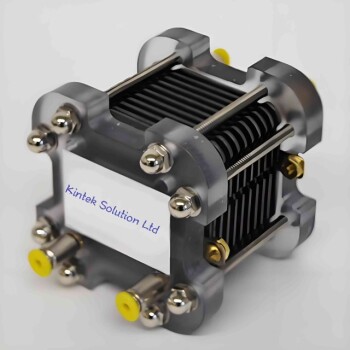
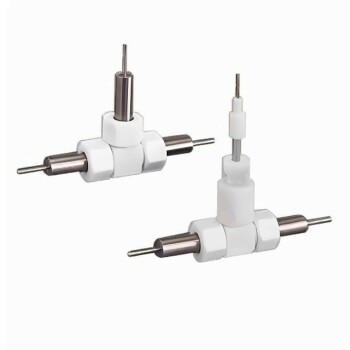
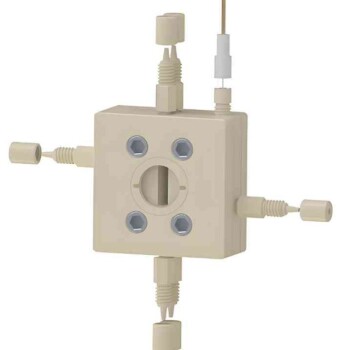
To ensure the longevity and accuracy of your thin-layer spectroelectrochemical cell, you must adhere to a strict decontamination and storage protocol immediately following your experiment. The process requires shutting off power to the workstation before disconnection, immediately draining the electrolyte, and rinsing the cell with distilled water. Finally, electrodes must be disassembled, cleaned individually, and stored with the dry cell body in a clean environment to prevent cross-contamination or corrosion.
Core Insight: The greatest threat to spectroelectrochemical data is not instrument failure, but residue accumulation. Post-experiment maintenance is not just about cleaning; it is about returning the cell to a neutral state to ensure that previous electrolytes or reaction products do not interfere with future measurements.
Immediate Post-Experiment Actions
Power Down and Disconnect
Safety and equipment integrity come first. Before touching the cell connections, you must shut off the power to the electrochemical workstation.
Once the power is off, disconnect the connecting wires from the cell. This prevents accidental short circuits or electrical damage to the sensitive electrode connections during handling.
Electrolyte Removal
Time is a critical factor. Do not allow the electrolyte to sit in the cell after the experiment concludes.
Drain the electrolyte immediately. Dispose of the waste fluid according to your local laboratory regulations to prevent environmental pollution and chemical safety hazards.
Cleaning and Drying Protocols
Rinsing the Cell Body
Thorough rinsing prevents salt crystallization. Rinse the cell body multiple times with distilled or deionized water to flush out all traces of the electrolyte.
If you utilized a non-aqueous system, you may need to use a suitable solvent compatible with the cell materials to remove organic impurities before the water rinse.
Drying Techniques
Moisture is the enemy of storage. After rinsing, the cell must be completely dried.
Use a stream of nitrogen or clean air to blow dry the components. For the sample holder and outer surfaces, you may use filter paper to absorb surface moisture, provided it does not leave lint or fibers behind.
Electrode and Component Care
Disassembly and Separation
Never store the cell fully assembled. You must carefully disassemble the working, counter, and reference electrodes from the cell body.
Cleaning these components separately ensures that no corrosive electrolytes are trapped in the threads or seals, which could lead to seized parts or rust.
Specific Electrode Preservation
Treat electrodes according to their material properties. Clean each electrode thoroughly to remove reaction byproducts.
If you are using electrodes susceptible to oxidation or corrosion, do not simply leave them out. Apply necessary protective measures, such as immersing them in a specific protective solution as dictated by the electrode type.
Storage Environment
Control the environment to prevent degradation. Store the dried cell body and the electrode holder in a clean, dust-free environment.
The storage area should be well-ventilated and dry to prevent moisture damage and rust formation on metallic components.
Common Pitfalls to Avoid
Avoiding "Chemical Memory"
Do not delay the cleaning process. Leaving the cell to sit "for a few hours" allows salts to crystallize and reaction products to adsorb strongly to the cell walls.
This creates a "memory effect" where residues from Experiment A contaminate the baseline of Experiment B, rendering your data unreliable.
Solvent Incompatibility
Be cautious with aggressive solvents. While the supplementary data suggests using "suitable solvents," always verify that the solvent matches the cell body material (e.g., PEEK, Teflon, Quartz).
Using an incompatible solvent (like acetone on certain plastics) can cause swelling, cracking, or clouding of the optical windows, permanently destroying the cell's utility.
Making the Right Choice for Your Goal
To maximize the lifespan of your equipment, tailor your shutdown procedure to your specific experimental conditions:
- If your primary focus is Standard Aqueous Experiments: Prioritize rinsing with copious amounts of distilled water and air-drying all components immediately to prevent salt buildup.
- If your primary focus is Sensitive or Non-Aqueous Chemistry: Focus on using a compatible solvent for the initial rinse and applying protective solutions to oxidation-prone electrodes before storage.
A clean cell is the baseline for credible science; treat your equipment with the same precision you apply to your data analysis.
Summary Table:
| Step | Action | Key Benefit |
|---|---|---|
| Power Down | Shut off workstation & disconnect wires | Protects equipment from electrical damage |
| Drainage | Remove electrolyte immediately | Prevents residue accumulation & crystallization |
| Rinsing | Flush with distilled water or compatible solvent | Removes contaminants and "chemical memory" |
| Drying | Use nitrogen stream or lint-free paper | Prevents corrosion and moisture-related damage |
| Storage | Disassemble and store in a dust-free area | Ensures component longevity and readiness |
Maximize Your Lab’s Precision with KINTEK
Reliable research starts with pristine equipment. At KINTEK, we specialize in high-performance laboratory solutions, including electrolytic cells and electrodes, high-temperature furnaces, and high-pressure reactors designed to meet the rigorous demands of modern electrochemistry.
Whether you need specialized consumables like PTFE products and crucibles or advanced battery research tools, our experts are here to support your scientific breakthroughs. Ensure your experiments remain uncontaminated and your results irreproachable.
Ready to upgrade your laboratory setup? Contact us today to explore our comprehensive portfolio!
Related Products
- Thin-Layer Spectral Electrolysis Electrochemical Cell
- Side Window Optical Electrolytic Electrochemical Cell
- H-Type Double-Layer Optical Electrolytic Electrochemical Cell with Water Bath
- Double Layer Five-Port Water Bath Electrolytic Electrochemical Cell
- Double-Layer Water Bath Electrolytic Electrochemical Cell
People Also Ask
- What preparation steps are required before initiating an experiment with the thin-layer spectroelectrochemical cell?
- What operational environments and sealing options are available for the thin-layer spectroelectrochemical cell?
- For what types of systems, temperature ranges, and sealing configurations is the thin-layer spectroelectrochemical cell designed? Ideal for Aqueous and Non-Aqueous Analysis
- What are the necessary preparation steps before using a thin-layer spectroelectrochemical cell? A Guide to Reliable Results
- What are the physical dimensions of the thin-layer spectroelectrochemical cell body and its slit? Key Specs for Your Lab