To successfully produce reticulated porous MAX phase ceramics via the replica method, the polymer foam template is required to have a highly interconnected open-pore structure. Typically composed of polyurethane, this foam serves as the sacrificial skeleton that defines the final ceramic geometry. The template must accommodate uniform coating by a shear-thinning slurry and undergo slow decomposition to maintain structural integrity.
The critical requirement for the polymer template is a fully interconnected open-pore network that ensures complete slurry impregnation. This sacrificial structure must support the ceramic coating during the initial phases and be removed slowly during pyrolysis to prevent the collapse of the green body.
Structural and Material Requirements
The Necessity of Interconnected Pores
The fundamental requirement for the template is a highly interconnected open-pore structure.
This specific architecture allows the ceramic slurry to penetrate the foam completely.
Without this interconnectivity, the slurry cannot access the inner volume of the template, leading to an incomplete ceramic structure.
Polymer Composition
The primary reference specifically identifies polyurethane foam as a suitable material for these templates.
This polymer acts as the initial skeleton, providing the physical shape and support for the ceramic slurry before heat treatment.
Interaction with the Ceramic Slurry
Enabling Full Impregnation
The template's structure must facilitate the entry of the ceramic slurry into all pores.
The slurry itself must exhibit shear-thinning properties to ensure it can flow easily into the intricate foam network during impregnation.
If the template resists this flow, voids will form, weakening the final product.
Ensuring Uniform Coating
Beyond simply filling the space, the template must allow the slurry to uniformly coat the skeleton.
This uniform coating is essential for replicating the foam's reticulated structure accurately in the final ceramic phase.
Critical Processing Constraints
Controlled Pyrolysis
The polymer template acts as a placeholder that must eventually be removed.
The removal process, known as pyrolysis, must be performed slowly.
A rapid removal would generate excessive gas or thermal stress, jeopardizing the delicate ceramic coating.
Maintaining Green Structure Integrity
The primary risk during the template removal phase is the collapse of the "green structure" (the unfired ceramic coating).
The template's decomposition characteristics must align with the ceramic's ability to support its own weight.
This slow removal ensures the mechanical stability of the final reticulated ceramic is preserved.
Understanding Process Risks
Risks of Structural Collapse
If the polymer template decomposes too quickly or unevenly, the ceramic coating loses its support before it fully hardens.
This results in the collapse of the green body, destroying the desired reticulated architecture.
Impact of Poor Connectivity
If the foam template contains closed pores or poor interconnectivity, the slurry cannot penetrate.
This leads to internal defects and a final ceramic that lacks the intended porosity and strength.
Making the Right Choice for Your Goal
To ensure the production of high-quality MAX phase ceramics, align your template selection with your specific processing needs:
- If your primary focus is complete infiltration: Prioritize foam templates with verified highly interconnected open-pore networks to ensure the shear-thinning slurry reaches every crevice.
- If your primary focus is structural integrity: Ensure the chosen polymer allows for a slow, controlled pyrolysis cycle to prevent the collapse of the green body during burnout.
Select a template that balances openness for impregnation with stability for processing.
Summary Table:
| Requirement | Specification | Purpose |
|---|---|---|
| Pore Structure | Highly Interconnected Open-Pore | Ensures complete slurry penetration and internal access. |
| Material Type | Typically Polyurethane Foam | Provides a sacrificial skeleton to define the final geometry. |
| Slurry Interaction | Uniform Coating Capability | Replicates the reticulated structure accurately using shear-thinning slurry. |
| Removal Process | Slow, Controlled Pyrolysis | Prevents the collapse of the green body and maintains mechanical stability. |
Optimize Your Advanced Ceramic Production with KINTEK
Precision is paramount when producing complex reticulated structures like MAX phase ceramics. KINTEK specializes in high-performance laboratory equipment and consumables designed to meet the rigorous demands of material science.
Our comprehensive portfolio includes:
- High-Temperature Furnaces: Atmosphere, vacuum, and CVD furnaces ideal for controlled pyrolysis and sintering.
- Material Processing: Advanced crushing and milling systems for optimal slurry preparation.
- Essential Consumables: High-quality ceramics, crucibles, and PTFE products to maintain purity.
Ensure your research achieves maximum structural integrity and porosity. Contact us today to discover how KINTEK’s specialized solutions can enhance your lab's efficiency and output!
References
- Jesús González‐Julián. Processing of MAX phases: From synthesis to applications. DOI: 10.1111/jace.17544
This article is also based on technical information from Kintek Solution Knowledge Base .
Related Products
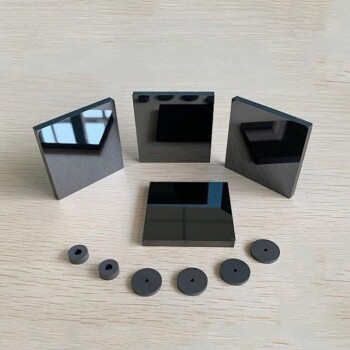
- Silicon Carbide (SIC) Ceramic Sheet Wear-Resistant Engineering Advanced Fine Ceramics
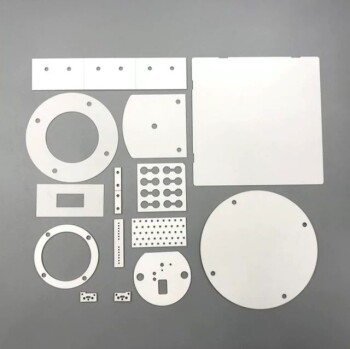
- Custom-Made Alumina Zirconia Special-Shaped Ceramic Plates for Engineering Advanced Fine Ceramics Processing
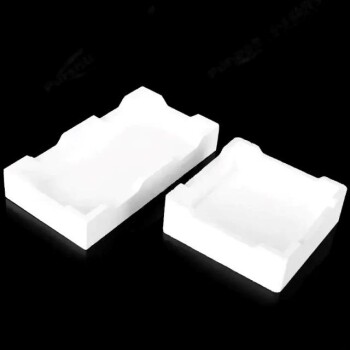
- Advanced Engineering Fine Ceramics Alumina Ceramic Saggar for Fine Corundum
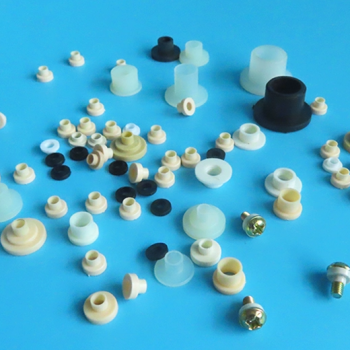
- Zirconia Ceramic Gasket Insulating Engineering Advanced Fine Ceramics
- Engineering Advanced Fine Ceramics Alumina Al2O3 Crucible With Lid Cylindrical Laboratory Crucible
People Also Ask
- What is the strongest ceramics? Silicon Carbide Leads in Hardness & Thermal Strength
- What are the properties and applications of silicon carbide ceramics? Solve Extreme Engineering Challenges
- What are the uses of silicon carbide ceramics in different industries? Master Extreme Performance in Aerospace, Semiconductors & More
- What are the properties of SiC? Unlock High-Temperature, High-Frequency Performance
- What are the applications of silicon carbide? From Abrasives to High-Tech Semiconductors