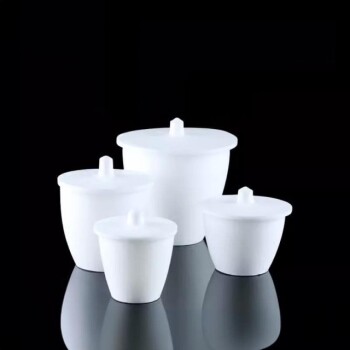
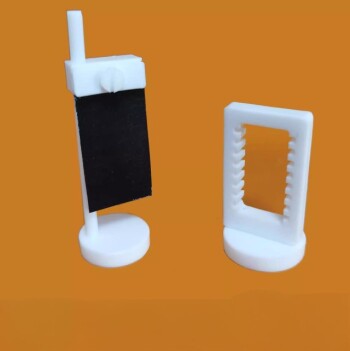
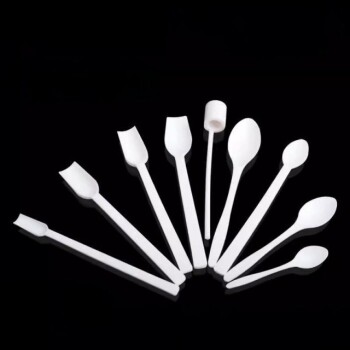
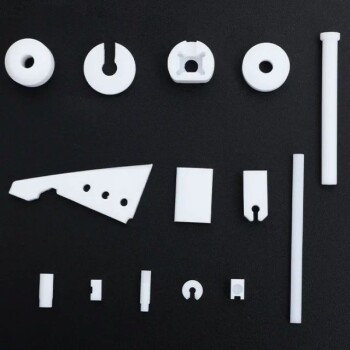
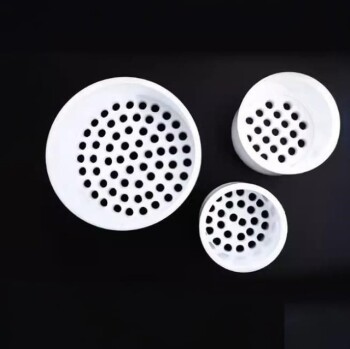
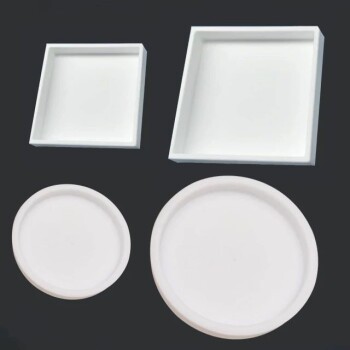
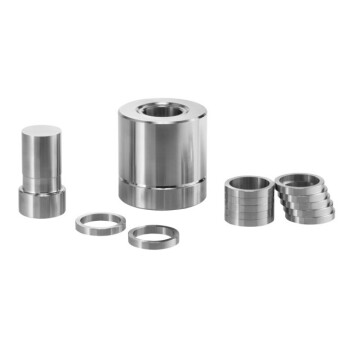
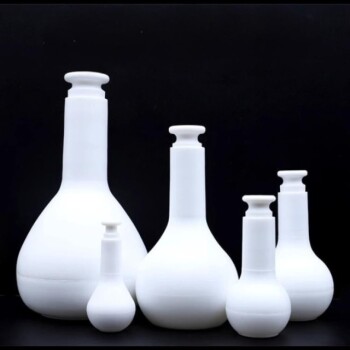
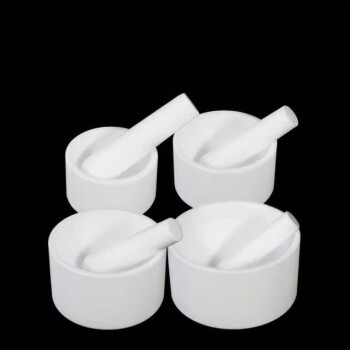
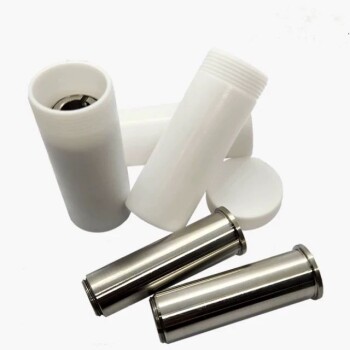
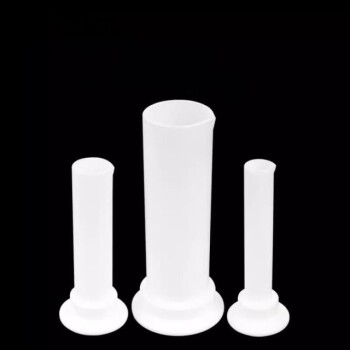
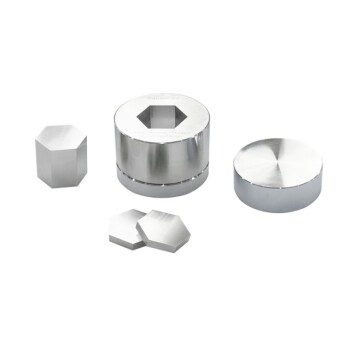
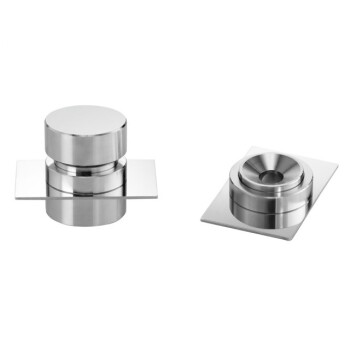
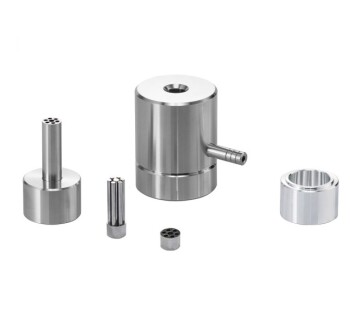
PTFE molds and accessories serve as essential chemical and electrical shields during the powder pressing process of all-solid-state batteries. These components function primarily to isolate reactive materials from metal surfaces, prevent internal short circuits, and ensure the clean formation of electrolyte pellets without contamination or adhesion issues.
While steel provides the structural strength for high-pressure pressing, PTFE accessories are the definitive solution for chemically isolating reactive sulfide electrolytes and ensuring clean, non-stick demolding.
Protecting Material Integrity
Preventing Chemical Contamination
The most critical role of Polytetrafluoroethylene (PTFE) is acting as a chemically inert barrier. This is particularly vital when working with sulfide electrolytes, which are highly reactive.
Direct contact with standard metal molds can trigger unwanted side reactions or introduce impurities into the battery chemistry. PTFE accessories effectively eliminate this risk by ensuring the active powder never touches reactive metal walls.
Ensuring Clean Demolding
PTFE is renowned for its extremely low friction coefficient. In the context of battery fabrication, this prevents electrolyte powder from sticking to the mold walls.
This "non-stick" property facilitates the easy removal of the pressed pellet. It ensures the final component retains its intended mass and structural integrity, rather than losing material due to adhesion.
Electrical and Structural Roles
Preventing Internal Short Circuits
Beyond chemical protection, PTFE sleeves often serve as electrical insulators within the mold assembly.
During pressing, the sleeve electrically isolates the positive and negative current collectors (plungers). This prevents accidental internal short circuits that could ruin the cell or create safety hazards during the fabrication process.
Defining Geometrical Shape
PTFE sleeves act as precise forming containers. They define the geometric boundaries of the compressed powder.
By containing the powder laterally while allowing vertical compression, they ensure the electrolyte layer achieves a uniform shape and thickness before it is integrated into the final cell stack.
Understanding the Trade-offs
Mechanical Strength Limitations
While PTFE is excellent for chemical and electrical isolation, it lacks the mechanical rigidity of hardened steel.
Under extremely high pressures, pure PTFE molds can deform or "creep." Therefore, PTFE is most effective when used as an auxiliary liner or sleeve encased within a stronger metal body, rather than as the primary pressure-bearing vessel for high-load applications.
Making the Right Choice for Your Goal
To maximize the quality of your all-solid-state battery cells, select your mold materials based on your specific electrolyte chemistry and pressure requirements.
- If your primary focus is processing sulfide electrolytes: Prioritize PTFE liners to prevent the distinct side reactions and contamination that occur with direct metal contact.
- If your primary focus is preventing assembly errors: Utilize PTFE sleeves to electrically isolate plungers, ensuring zero risk of short circuits during the compression phase.
By leveraging PTFE as a strategic interface material, you ensure that the chemical purity of your battery rivals its structural density.
Summary Table:
| Feature | Role of PTFE in Battery Pressing | Benefit for Solid-State Cells |
|---|---|---|
| Chemical Inertness | Barrier between reactive powder and metal | Prevents contamination and side reactions |
| Surface Friction | Low coefficient of friction / Non-stick | Ensures easy demolding without material loss |
| Electrical Property | Insulating sleeve/liner | Prevents internal short circuits during assembly |
| Geometrical Control | Lateral containment during compression | Ensures uniform electrolyte layer thickness |
| Material Synergy | Auxiliary liner within steel bodies | Combines chemical protection with high-pressure durability |
Optimize Your Battery Research with KINTEK Precision Solutions
Don't let chemical contamination or internal short circuits compromise your all-solid-state battery performance. KINTEK specializes in advanced laboratory equipment and high-quality consumables designed for the most demanding research environments.
From PTFE-lined molds and ceramic crucibles to high-precision hydraulic pellet presses and isostatic presses, we provide the tools you need for perfect material synthesis and cell assembly. Our portfolio also includes specialized high-temperature furnaces, battery research consumables, and electrolytic cells to support your entire workflow.
Ready to elevate your lab's output? Contact KINTEK today to discuss our range of PTFE accessories and powder pressing systems tailored to your specific electrolyte chemistry and pressure requirements.
Related Products
- Custom Machined and Molded PTFE Teflon Parts Manufacturer with PTFE Crucible and Lid
- Custom PTFE Teflon Parts Manufacturer for Hydrothermal Synthesis Reactor Polytetrafluoroethylene Carbon Paper and Carbon Cloth Nano-growth
- Custom PTFE Teflon Parts Manufacturer for Sampling Solution Sample and Dry Powder Spoons
- Custom PTFE Teflon Parts Manufacturer for Non-Standard Insulator Customization
- Custom PTFE Teflon Parts Manufacturer for PTFE Mesh F4 Sieve
People Also Ask
- Why is a PTFE crucible preferred for plasma etching? Ensure Chemical Integrity and Targeted Action
- What essential consumables are required for laboratory processes? Expert Guide to PTFE, Ceramics, and Crucibles
- Why are PTFE molds used for dental resin specimens? Ensure Pure Samples and Accurate Testing
- What are the advantages of using PTFE molds for preparing PUA hybrid films? Ensure High Purity and Easy Demolding
- What advantages do PTFE molds offer for composite polymer electrolyte casting? Ensure Defect-Free Membrane Fabrication