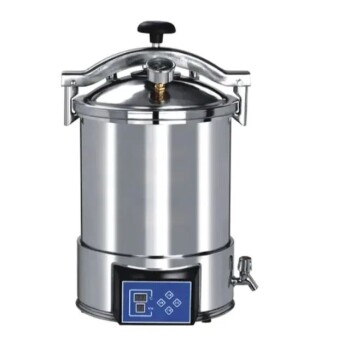
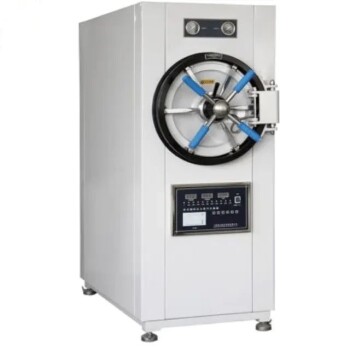
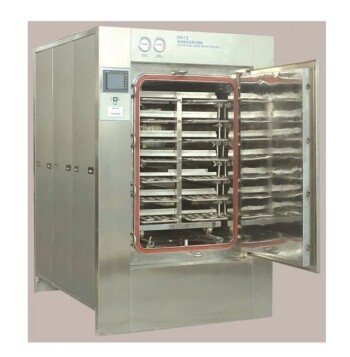
To accurately simulate a Pressurized Water Reactor (PWR) environment, a dynamic autoclave must generate a high-pressure (approximately 14 MPa) and high-temperature (approximately 310°C) water ecosystem. Crucially, it utilizes precision circulation systems to actively regulate water chemistry parameters—such as conductivity, pH, and electrochemical potential—rather than simply holding a static volume of liquid.
The dynamic autoclave distinguishes itself by coupling extreme thermodynamic conditions with active flow and chemical control. This capability is essential for evaluating not just the immediate survival of materials, but the long-term evolution of corrosion and coating integrity under realistic, compressive stress.
Reproducing the Thermodynamic Environment
To understand material degradation in a PWR, researchers must first replicate the reactor's physical state.
Extreme Pressure and Temperature
The autoclave creates a closed environment capable of sustaining 14 MPa of pressure and temperatures around 310°C.
These specific parameters are necessary to maintain water in a liquid state at temperatures far exceeding the standard boiling point.
Simulating Compressive Stress
The high-pressure environment naturally subjects test specimens to compressive stress.
This allows researchers to observe how coatings and base materials behave when mechanical forces and thermal expansion act simultaneously.
The Critical Role of Active Chemistry Control
The "dynamic" aspect of the autoclave refers to its ability to circulate fluid and control its chemical composition in real-time.
Regulating Bulk Solution Stability
Unlike static vessels, a dynamic autoclave uses pumps to ensure constant chemical composition circulation.
This prevents the local depletion of reactants near the material surface, ensuring the bulk solution remains stable and representative of a flowing reactor coolant.
Precise Chemical Parameters
The system integrates control loops to maintain low conductivity and specific pH levels.
It also strictly manages dissolved gases, including oxygen content and hydrogen levels, to control the electrochemical potential (ECP) of the environment.
Controlling the Redox Environment
By adjusting dissolved gases, the autoclave can simulate specific reducing conditions.
This is vital for observing the formation and stability of passivation films (such as extremely thin chromia layers) that protect alloys from rapid degradation.
Understanding the Trade-offs
While dynamic autoclaves provide high-fidelity data, they introduce complexities that static testing does not.
System Complexity and Maintenance
Achieving precise control over temperature, pressure, and flow simultaneously requires intricate systems of pumps, heating elements, and sensors.
Any failure in the circulation loop can lead to stagnant zones, resulting in inaccurate corrosion data that does not reflect the dynamic flow of a reactor.
The Challenge of Localized Chemistry
While the bulk solution is controlled, the environment within a crack or crevice (the occluded zone) can evolve differently.
Researchers must interpret data carefully, recognizing that autocatalytic processes inside a crack tip may create extreme acidic or alkaline conditions that differ from the measured bulk chemistry.
Making the Right Choice for Your Goal
When designing your corrosion testing protocol, align the autoclave's capabilities with your specific research objectives.
- If your primary focus is Coating Integrity: Ensure the autoclave can sustain the 14 MPa pressure over long durations to test adhesion under compressive stress.
- If your primary focus is Passivation Layer Stability: Prioritize systems with high-precision dissolved gas control to maintain the specific electrochemical potential required for oxide film analysis.
The dynamic autoclave is the definitive tool for bridging the gap between theoretical material science and the harsh operational reality of nuclear power generation.
Summary Table:
| Feature | PWR Simulation Requirement | Dynamic Autoclave Capability |
|---|---|---|
| Pressure | ~14 MPa | Maintains high-pressure compressive stress |
| Temperature | ~310°C | Sustains liquid state above boiling point |
| Chemistry | Active Flow/Circulation | Precision pumps prevent reactant depletion |
| Redox Control | Dissolved O2/H2 regulation | Manages ECP for passivation film stability |
| Monitoring | Real-time pH & Conductivity | Integrated sensors for bulk solution stability |
Elevate your nuclear and materials research with KINTEK’s advanced thermal solutions. KINTEK specializes in laboratory equipment and consumables, offering a comprehensive range of high-temperature high-pressure reactors and autoclaves specifically engineered to withstand the rigors of PWR simulation. From maintaining precise electrochemical potentials to ensuring long-term mechanical integrity under 14 MPa of pressure, our systems provide the reliability researchers need. Beyond autoclaves, we offer a full suite of muffle and vacuum furnaces, hydraulic presses, and essential consumables like ceramics and crucibles. Contact KINTEK today to discuss your custom testing requirements and discover how our precision-engineered systems can accelerate your materials science breakthroughs.
References
- Martin Ševeček, Koroush Shirvan. Development of Cr cold spray–coated fuel cladding with enhanced accident tolerance. DOI: 10.1016/j.net.2017.12.011
This article is also based on technical information from Kintek Solution Knowledge Base .
Related Products
- Portable Digital Display Automatic Laboratory Sterilizer Lab Autoclave for Sterilization Pressure
- Laboratory Sterilizer Lab Autoclave Vertical Pressure Steam Sterilizer for Liquid Crystal Display Automatic Type
- Laboratory Sterilizer Lab Autoclave Pulsating Vacuum Desktop Steam Sterilizer
- Laboratory Horizontal Autoclave Steam Sterilizer Lab Microcomputer Sterilizer
- Desktop Fast Laboratory Autoclave Sterilizer 35L 50L 90L for Lab Use
People Also Ask
- What is the primary function of a laboratory sterilization autoclave? Master the Physics of Wet Heat Sterilization
- What are the two types of autoclave used in the laboratory? Gravity vs. Pre-Vacuum Explained
- What is the autoclave temperature for sterilization? Master the 121°C Standard for Guaranteed Sterility
- What precautions should be taken during autoclave in laboratory? A Complete Safety Guide to Prevent Burns and Explosions
- What extreme conditions does a laboratory autoclave simulate? Testing Wear Resistance of Nuclear Fuel Cladding