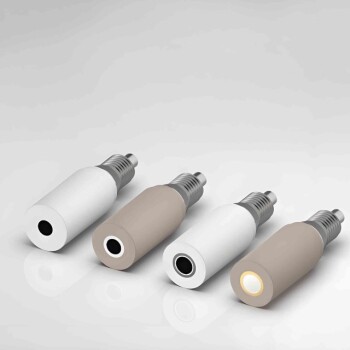
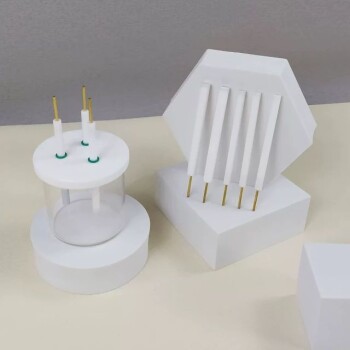
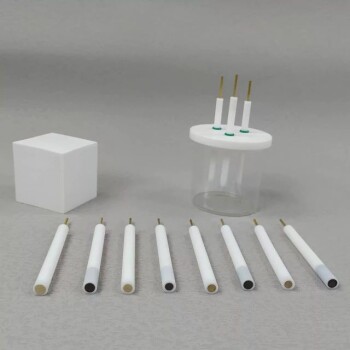
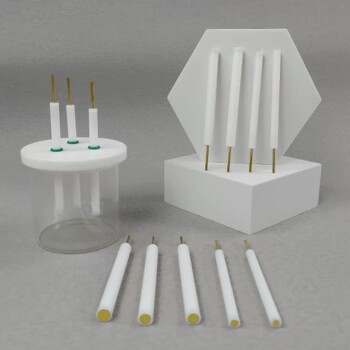
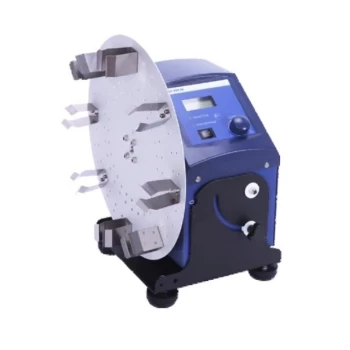
Unlocking catalytic precision. A Rotating Ring-Disk Electrode (RRDE) and an electrochemical workstation are essential for isolating the intrinsic electrocatalytic activity of aerogels from mass transfer limitations while simultaneously detecting reaction intermediates. By controlling rotation speed and monitoring synchronized current responses, researchers can definitively determine the electron transfer pathway (2e⁻ vs. 4e⁻) and the peroxide yield, which are critical metrics for evaluating aerogel performance in energy applications like fuel cells.
The combination of RRDE and electrochemical workstations transforms a static measurement into a dynamic, quantitative analysis of reaction kinetics. This setup allows researchers to distinguish between high-efficiency pathways and undesirable side reactions by monitoring the spatial transfer of chemical species across the electrode surface.
Eliminating Mass Transfer Limitations
The Power of Forced Convection
In a static electrolyte, reactants are often depleted near the electrode surface, leading to measurements that reflect the speed of diffusion rather than the catalytic performance of the aerogel. The RRDE uses high-speed rotation (often up to 1600 rpm) to generate forced convection, ensuring a rapid and uniform supply of reactants to the catalyst layer.
Bubble Removal and Surface Uniformity
The centrifugal force created by the rotation effectively removes gas bubbles, such as oxygen or hydrogen, produced during the reaction. This maintains a clean active surface and allows for the measurement of overpotential and current density that truly reflect the intrinsic properties of the aerogel material.
Deciphering the Reaction Mechanism
Quantifying the Electron Transfer Number
The electrochemical workstation monitors the oxygen reduction current on the disk electrode while simultaneously capturing the peroxide oxidation current on the outer ring. By comparing these values, researchers can calculate the electron transfer number, determining if the aerogel facilitates a high-efficiency four-electron reduction or a less efficient two-electron pathway.
Detection of Intermediate Products
As the solution is driven outward from the center of the disk toward the ring by laminar flow, intermediate products like hydrogen peroxide are captured and oxidized. This spatial separation allows for the precise calculation of peroxide yield, which is a direct indicator of the catalyst's selectivity and industrial potential.
The Role of the Multi-Channel Workstation
Precision Potential Control
The workstation acts as the "brain" of the operation, utilizing a three-electrode cell—comprising the RRDE working electrode, a reference electrode (e.g., Ag/AgCl), and an auxiliary electrode (e.g., platinum wire). It provides the high-precision potential control necessary for Cyclic Voltammetry (CV) and Electrochemical Impedance Spectroscopy (EIS).
Comprehensive Material Characterization
Beyond simple current measurements, the workstation enables the calculation of specific capacitance and charge transfer resistance. These data points help researchers understand the internal conductivity and ionic accessibility of the aerogel's porous structure in electrolytes like 1 M KOH.
Understanding the Trade-offs
Material Compatibility and Interference
For accurate results, the underlying electrode material of the RRDE must have significantly lower electrocatalytic activity than the aerogel being tested. If the substrate itself is catalytic or tends to corrode in the specific potential region of interest, the data will be skewed and unreliable.
Limits of Laminar Flow
The mathematical models used to calculate reaction kinetics depend on maintaining laminar flow across the disk and ring. If rotation speeds are too high or the aerogel coating is too thick and irregular, turbulence can occur, rendering the standard equations for peroxide yield and electron transfer inaccurate.
How to Apply This to Your Project
When assessing aerogel catalysts, your choice of testing parameters should align with your specific performance targets:
- If your primary focus is energy efficiency: Use the RRDE to confirm a four-electron pathway, which maximizes power output by reducing oxygen directly to water.
- If your primary focus is catalyst durability: Leverage the electrochemical workstation to monitor charge transfer resistance via EIS over multiple CV cycles to detect degradation.
- If your primary focus is chemical production: Optimize your aerogel for a two-electron pathway if your goal is the efficient synthesis of hydrogen peroxide as a final product.
Utilizing these advanced tools ensures that your aerogel development is guided by rigorous, mechanistic data rather than surface-level observations.
Summary Table:
| Component | Key Function | Research Benefit |
|---|---|---|
| RRDE | Forced Convection & Intermediate Capture | Eliminates mass transfer limits and detects peroxide yield (2e⁻ vs 4e⁻). |
| Workstation | Precision Potential Control (CV/EIS) | Quantifies intrinsic kinetics, overpotential, and charge transfer resistance. |
| Rotation Control | Centrifugal Bubble Removal | Maintains a clean, uniform catalyst surface for stable and accurate measurements. |
| Disk-Ring Setup | Spatial Transfer Monitoring | Distinguishes between high-efficiency pathways and undesirable side reactions. |
Elevate Your Electrocatalytic Research with KINTEK
Precise data is the foundation of breakthrough material science. KINTEK specializes in providing high-performance laboratory equipment tailored for advanced electrochemistry. From precision Rotating Ring-Disk Electrodes (RRDE) and high-quality electrolytic cells and electrodes to versatile electrochemical workstations, we offer the tools necessary to quantify reaction kinetics with confidence.
Whether you are characterizing aerogels in high-temperature high-pressure reactors, optimizing battery research with our specialized consumables, or conducting rigorous CV/EIS analysis, KINTEK delivers the reliability and technical support your lab demands.
Ready to unlock the intrinsic activity of your catalysts? Contact our technical experts today to find the perfect equipment solution for your research goals.
References
- Leigh Peles‐Strahl, Lior Elbaz. Modular Iron–Bipyridine-Based Conjugated Aerogels as Catalysts for Oxygen Reduction Reaction. DOI: 10.1021/acscatal.3c03998
This article is also based on technical information from Kintek Solution Knowledge Base .
Related Products
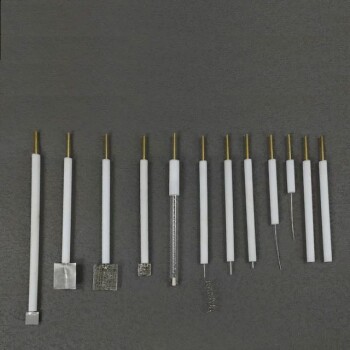
- RRDE rotating disk (ring disk) electrode / compatible with PINE, Japanese ALS, Swiss Metrohm glassy carbon platinum
- Rotating Platinum Disk Electrode for Electrochemical Applications
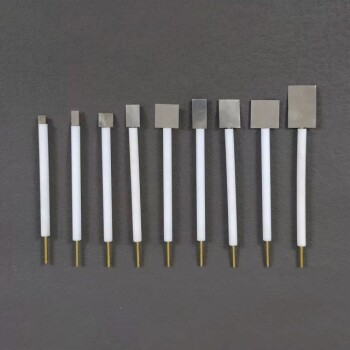
- Metal Disc Electrode Electrochemical Electrode
- Graphite Disc Rod and Sheet Electrode Electrochemical Graphite Electrode
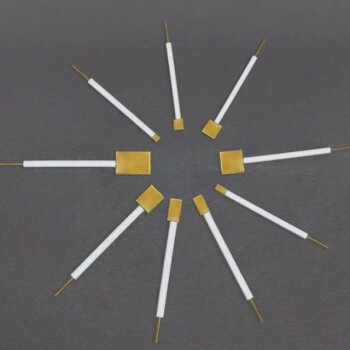
- Gold Disc Electrode
People Also Ask
- What is the rotating ring disk electrode method? Unlock Real-Time Reaction Analysis
- What role does the RRDE play in catalyst evaluation for H2O2 synthesis? Enhance Selectivity and Kinetic Precision
- What is the RRDE in electrochemistry? Unlock Detailed Reaction Pathways with Dual-Electrode Analysis
- What is the application of RRDE? Unlock Quantitative Catalyst and Reaction Insights
- What is the difference between RDE and RRDE? Unlock Advanced Electrochemical Reaction Analysis