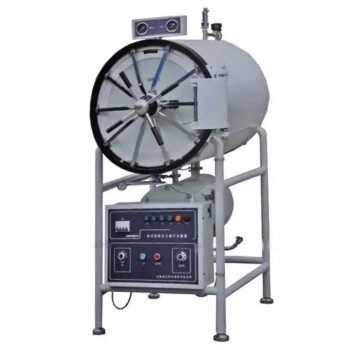
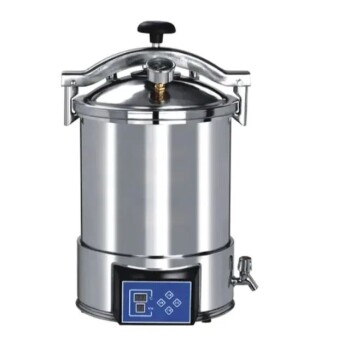
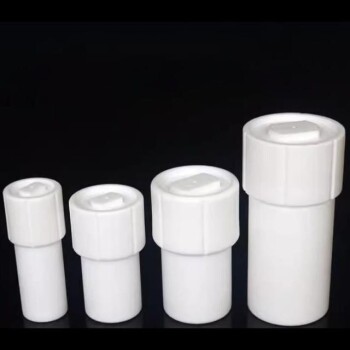
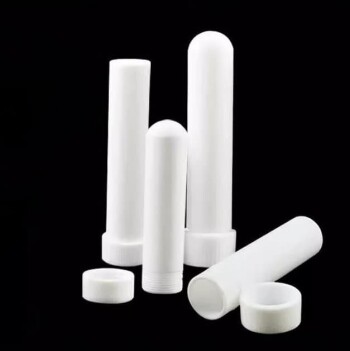
A PTFE-lined stainless steel high-pressure autoclave creates a sealed, high-temperature, and high-pressure reaction environment. This specific isolation allows for the superheating of solvents, which significantly enhances the solubility of precursors involved in the synthesis. Crucially, this environment drives the physical crystallization of TiO2 while simultaneously forcing the chemical bonding required to integrate Graphene Quantum Dots (GQDs).
Core Takeaway By maintaining a closed system under extreme heat and pressure, the autoclave enables a dissolution-recrystallization process that is impossible at standard ambient conditions. This facilitates the formation of stable heterojunctions and robust interfacial contact between TiO2 nanostructures and GQDs.
The Physical Environment
A Controlled, Closed System
The fundamental role of the autoclave is to provide a hermetically sealed environment. Unlike open-air synthesis, this prevents the loss of solvents and volatile reaction products, ensuring the stoichiometry of the mixture remains constant throughout the process.
High Pressure and Temperature
As the autoclave is heated, the internal pressure rises significantly because the sealed vessel prevents expansion. This creates metastable conditions where water (or other solvents) exists as a liquid well above its normal boiling point.
Chemical Inertness
The Polytetrafluoroethylene (PTFE) lining serves a critical protective role. It offers high chemical resistance, preventing the corrosive precursors from reacting with the outer stainless steel shell and ensuring the synthesized nanomaterials remain free of metallic impurities.
The Impact on Material Synthesis
Enhancing Precursor Solubility
The high-pressure environment drastically alters the properties of the solvent. It significantly enhances the solubility of the titanium and graphene precursors, ensuring they are fully dissolved and uniformly distributed in the solution before reaction.
Facilitating Crystallization
The thermal energy and pressure within the vessel drive the crystallization of TiO2 nanostructures. The environment allows for a controlled dissolution and recrystallization process, resulting in highly crystalline structures rather than amorphous solids.
Establishing Interfacial Contact
For nanocomposites, the connection between materials is vital. The autoclave environment aids in establishing stable interfacial contact between the distinct phases of the material.
Forming Effective Heterojunctions
The ultimate goal of this environment is the creation of effective heterojunctions. The hydrothermal conditions force the GQDs and TiO2 particles to bond chemically, creating a composite capable of efficient charge transfer.
Understanding the Trade-offs
Process Scalability
While excellent for high-quality lab synthesis, hydrothermal autoclaves are inherently batch-process tools. Scaling up requires larger vessels or multiple units, which can be less efficient than continuous flow methods used in industrial manufacturing.
Lack of Visual Monitoring
The stainless steel shell makes the process a "black box." You cannot visually monitor the reaction progress or precipitation in real-time, relying instead on precise control of time and temperature parameters to predict the outcome.
Safety Constraints
The combination of high pressure and thermal expansion creates significant potential energy. Overfilling the PTFE liner (typically beyond 80% capacity) or exceeding temperature limits can lead to structural failure or rupture, necessitating strict safety protocols.
Making the Right Choice for Your Goal
To maximize the quality of your TiO2-GQD nanocomposites, consider how you utilize the autoclave's features:
- If your primary focus is Crystallinity: Ensure your temperature profile is sufficiently high to drive the full transition of TiO2 precursors into ordered nanostructures.
- If your primary focus is Electronic Performance: Prioritize the duration of the synthesis to allow ample time for the formation of robust heterojunctions between the GQDs and TiO2.
The autoclave is not just a heating vessel; it is a pressure chamber designed to force chemically distinct materials to integrate into a unified, high-performance composite.
Summary Table:
| Feature | Environmental Impact on Synthesis |
|---|---|
| Sealed System | Prevents solvent loss; maintains constant stoichiometry. |
| PTFE Lining | Provides chemical inertness; prevents metallic contamination. |
| High Pressure | Enhances precursor solubility and drives dissolution-recrystallization. |
| High Temperature | Enables superheating of solvents for superior TiO2 crystallinity. |
| Reaction Type | Facilitates chemical bonding and robust interfacial contact. |
Elevate Your Nanomaterial Synthesis with KINTEK
Precision is the key to developing high-performance TiO2-Graphene Quantum Dot composites. KINTEK specializes in providing the high-end laboratory equipment required for demanding hydrothermal processes. Our PTFE-lined stainless steel high-pressure autoclaves and reactors are engineered to withstand extreme conditions while ensuring chemical purity and operator safety.
From high-temperature furnaces and vacuum systems to advanced crushing, milling, and hydraulic presses, KINTEK offers a comprehensive portfolio for material research. Whether you are focusing on battery research, catalysis, or dental materials, our high-quality consumables and cooling solutions are designed to optimize your lab's workflow.
Ready to achieve stable heterojunctions and superior crystallinity?
Contact KINTEK Experts Today to find the perfect autoclave solution for your research goals.
References
- Anuja Bokare, Folarin Erogbogbo. TiO2-Graphene Quantum Dots Nanocomposites for Photocatalysis in Energy and Biomedical Applications. DOI: 10.3390/catal11030319
This article is also based on technical information from Kintek Solution Knowledge Base .
Related Products
- Stainless High Pressure Autoclave Reactor Laboratory Pressure Reactor
- Mini SS High Pressure Autoclave Reactor for Laboratory Use
- Laboratory High Pressure Horizontal Autoclave Steam Sterilizer for Lab Use
- Desktop Fast High Pressure Laboratory Autoclave Sterilizer 16L 24L for Lab Use
- Portable High Pressure Laboratory Autoclave Steam Sterilizer for Lab Use
People Also Ask
- Why is a laboratory high-pressure reactor used in the hydrothermal synthesis of hydroxyapatite catalysts?
- What role does a laboratory high-pressure reactor play in the leaching process of spent cathode materials? Optimize Recovery
- Why is a laboratory high-pressure reactor necessary for synthesizing fly ash-based zeolite? Achieve Pure Crystallization
- What conditions do laboratory high-pressure reactors provide for HTC? Optimize Your Biochar Production Processes
- What is the function of a high-pressure reactor autoclave? Enhancing Cu/N Co-Doped Carbon Catalyst Synthesis