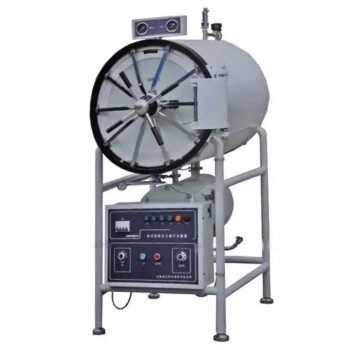
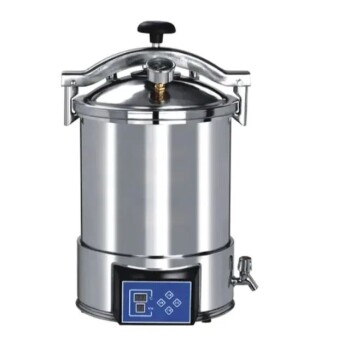
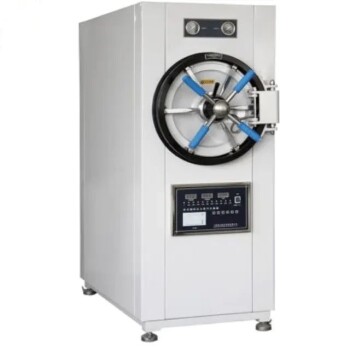
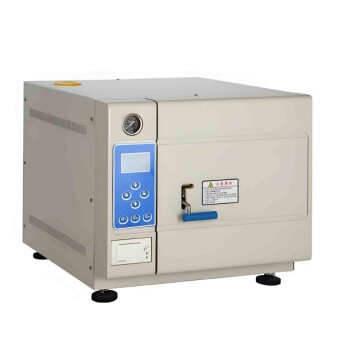
In the modification of activated carbon, a high-pressure reactor serves as the essential vessel for forcing metal precursor solutions into dense, hydrophobic nanopore structures. By creating a hydrothermal environment—typically around 200°C and high pressure—the reactor ensures that metal species like nickel nitrate penetrate deeply and uniformly throughout the carbon matrix, rather than just coating the exterior surface.
The core function of a high-pressure reactor is to utilize subcritical fluid conditions to overcome the natural surface tension and hydrophobicity of activated carbon. This enables precise control over metal loading, dispersion, and chemical functionalization that is impossible under standard atmospheric conditions.
Overcoming Physical and Chemical Barriers
Penetrating Hydrophobic Nanopores
Activated carbon is naturally hydrophobic, which often causes aqueous precursor solutions to bead on the surface rather than entering the pores. The high-pressure environment of an autoclave physically forces the liquid phase into complex nanoporous channels. This ensures that the internal surface area of the carbon is fully utilized for metal deposition.
Leveraging Subcritical Fluid Properties
In a sealed reactor, solvents reach temperatures well above their atmospheric boiling points while remaining in a liquid or subcritical state. These conditions significantly lower the viscosity of the solvent and increase the solubility of metal precursors. This state facilitates faster mass transfer and deeper diffusion of metal ions into the carbon’s deep layers.
Facilitating Chemical Synthesis and Bonding
Promoting Surface Functionalization
High-pressure reactors provide the energy required for chemical interactions between the carbon support and modifiers. For example, during nitrogen-doping, the reactor enables nitrogen sources like dicyandiamide to chemically bond with the carbon surface. These newly formed nitrogen groups then act as anchoring sites for the uniform nucleation of metal nanoparticles.
Controlling Nucleation and Crystal Growth
The sealed, high-temperature environment allows for precise control over the kinetics of crystal growth. By adjusting the pressure and duration, researchers can direct the formation of specific morphologies, such as nanosheets or nanoflowers. These structures maximize the exposure of electrochemical active sites and improve the material's overall stability.
Enhancing Material Performance
Ensuring Uniform Metal Loading
Because the reactor forces precursors into every accessible channel, the resulting material achieves a highly uniform distribution of metal species. This prevents the "clumping" or agglomeration of metals on the carbon surface, which would otherwise reduce the catalyst's effectiveness.
Maintaining High Surface Area
The reactor's controlled environment helps inhibit the excessive growth of metal grains. By keeping metal nanoparticles small and highly dispersed, the modified activated carbon retains a high active surface area, which is critical for applications in catalysis and energy storage.
Understanding the Trade-offs
Equipment Complexity and Safety
Operating a high-pressure reactor requires specialized training and robust safety protocols to manage the risks associated with high temperatures and pressurized vessels. The need for specialized alloys and sealing mechanisms increases the capital cost compared to simple impregnation or precipitation methods.
Scalability and Processing Time
While autoclaves provide superior material quality, they are often used in batch processing, which can limit throughput. The requirement for several hours of treatment at constant temperature means that the energy consumption and cycle times must be carefully balanced against the performance gains of the final material.
How to Apply This to Your Project
Making the Right Choice for Your Goal
- If your primary focus is maximizing catalytic activity: Use a high-pressure reactor to ensure the highest possible dispersion of metal nanoparticles across all internal pore surfaces.
- If your primary focus is structural customization: Leverage hydrothermal conditions to grow specific crystal morphologies, such as nanofibers or sheets, that offer unique electrochemical properties.
- If your primary focus is surface modification: Utilize the reactor to introduce functional groups (like nitrogen or phosphorus) that create stable, high-affinity sites for metal bonding.
The high-pressure reactor is the definitive tool for transforming inert carbon into a high-performance, metal-functionalized material through superior penetration and controlled chemical synthesis.
Summary Table:
| Core Function | Mechanism | Key Outcome |
|---|---|---|
| Pore Penetration | Overcomes surface tension/hydrophobicity via high pressure | Uniform precursor distribution in nanopores |
| Mass Transfer | Subcritical fluid state lowers solvent viscosity | Deeper diffusion of metal ions into carbon matrix |
| Chemical Bonding | High energy facilitates surface functionalization (e.g., N-doping) | Stable anchoring sites for metal nanoparticles |
| Growth Control | Precise T/P control over nucleation kinetics | Tailored morphologies (nanosheets, flowers) |
Elevate Your Material Synthesis with KINTEK Precision
Unlock the full potential of your activated carbon research with KINTEK’s advanced high-temperature high-pressure reactors and autoclaves. Specifically engineered for rigorous hydrothermal and solvothermal modifications, our equipment ensures uniform metal loading and precise morphology control for superior catalytic performance.
Whether you are scaling up battery research or developing high-efficiency catalysts, KINTEK provides the reliability and safety you need. Our portfolio also features high-temperature furnaces, crushing systems, and essential lab consumables like PTFE and ceramics to support your entire workflow.
Ready to transform your material performance? Contact our laboratory specialists today to find the perfect reactor for your application!
References
- Bakhytzhan Lesbayev, Aidos Tolynbekov. Modification of Biomass-Derived Nanoporous Carbon with Nickel Oxide Nanoparticles for Supercapacitor Application. DOI: 10.3390/jcs7010020
This article is also based on technical information from Kintek Solution Knowledge Base .
Related Products
- High Pressure Laboratory Autoclave Reactor for Hydrothermal Synthesis
- Stainless High Pressure Autoclave Reactor Laboratory Pressure Reactor
- Mini SS High Pressure Autoclave Reactor for Laboratory Use
- Customizable High Pressure Reactors for Advanced Scientific and Industrial Applications
- Portable High Pressure Laboratory Autoclave Steam Sterilizer for Lab Use
People Also Ask
- What role does a high-pressure reactor (autoclave) play in the synthesis of NiCuFe-LDH? Master Hydrothermal Growth
- What Role Does a High-Pressure Reactor or Autoclave Play in HA Catalyst Synthesis? Achieve High Surface Area Materials
- What equipment is required for hydrothermal synthesis of Ga0.25Zn4.67S5.08? Optimize Your Semiconductor Production
- What is the function of a high-pressure reactor in the hydrothermal synthesis of boehmite? Expert Process Insights
- What role does an autoclave play in the synthesis of MnO2 nanofibers? Mastering Hydrothermal Growth