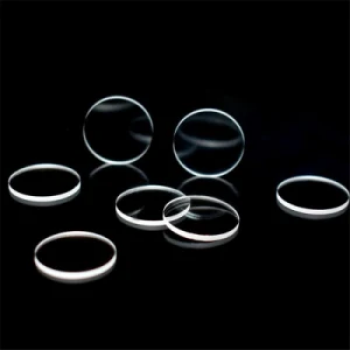
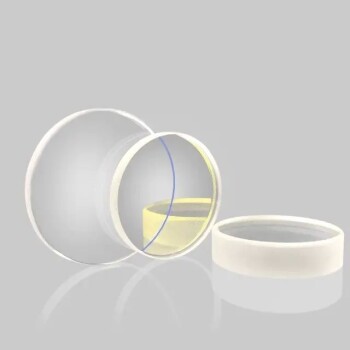
High-purity quartz windows serve as the critical interface in direct-irradiation solar thermochemical reactors, functioning as a transparent pressure boundary. They are engineered to permit the entry of high-intensity concentrated solar energy while simultaneously isolating the internal reaction environment from the outside atmosphere.
In this specific application, the quartz window is not merely a viewing port; it is an active structural component that enables the reactor to maintain a vacuum or inert atmosphere while transmitting the thermal energy required to drive chemical processes.
The Role of the Transparent Pressure Boundary
Facilitating Maximum Energy Transfer
The primary function of the window is to act as a high-efficiency optical conduit. It leverages superior light transmittance to allow concentrated solar flux to pass into the chamber with minimal absorption or reflection losses. This ensures that the energy collected is delivered directly to the reactants inside.
Maintaining Atmospheric Control
While admitting light, the window must physically seal the reactor. It maintains the necessary vacuum or inert atmosphere required for specific thermochemical cycles. This isolation is essential for controlling the pressure conditions under which the reaction occurs.
Protection and Process Integrity
Preventing Chemical Re-oxidation
During the high-temperature reduction phase, the chemical products are highly reactive. The quartz window acts as a shield, preventing ambient air from entering the chamber. By blocking oxygen ingress, it prevents the re-oxidation of reactants, ensuring the chemical work achieved by the solar energy is not reversed.
Withstanding Thermal Extremes
The environment within a direct-irradiation reactor involves extreme heat. High-purity quartz provides the necessary high-temperature resistance to survive continuous exposure to concentrated solar radiation. It maintains structural integrity where other transparent materials would melt or degrade.
Understanding the Trade-offs
The Balance of Pressure and Brittleness
While high-purity quartz offers excellent optical and thermal properties, it acts as a pressure boundary under stress. The material must be thick enough to withstand the pressure differential between the internal vacuum and the external atmosphere without fracturing.
Operational Cleanliness
The window's effectiveness is entirely dependent on its transparency. Because it is a physical barrier, any condensation or deposition of reactants on the inner surface will block energy input. Maintaining the window's clarity is a constant operational challenge in these systems.
Making the Right Choice for Your Reactor Design
When integrating high-purity quartz windows into a solar thermochemical system, consider your primary operational constraints:
- If your primary focus is process efficiency: Prioritize the highest grade of optical purity to maximize light transmittance and ensure continuous energy input.
- If your primary focus is product yield: Ensure the window mounting and sealing mechanisms are robust enough to maintain a strict vacuum, preventing re-oxidation by ambient air.
The quartz window is the linchpin of the direct-irradiation reactor, bridging the gap between external solar supply and internal chemical demand.
Summary Table:
| Feature | Primary Function | Operational Benefit |
|---|---|---|
| Optical Transmittance | Maximizes energy transfer | Higher efficiency in solar flux delivery |
| Pressure Boundary | Maintains vacuum/inert seal | Precise control over reaction atmosphere |
| Chemical Isolation | Prevents oxygen ingress | Protects reactants from unwanted re-oxidation |
| Thermal Stability | Resists high-intensity heat | Ensures structural integrity under solar radiation |
Maximize Your Reactor Performance with KINTEK Precision
Elevate your research with high-purity quartz components and advanced high-temperature high-pressure reactors from KINTEK. Whether you are developing complex thermochemical cycles or scaling up battery research, we provide the specialized laboratory equipment and consumables—including ceramics, crucibles, and customized autoclaves—needed to withstand extreme environments. Our team excels in supporting laboratories with high-performance solutions from CVD systems to cooling solutions like ULT freezers.
Ready to optimize your solar thermochemical reactor design? Contact KINTEK today to discover how our high-purity materials and engineering expertise can drive your next breakthrough!
References
- Chen Chen, Hongguang Jin. Challenges and perspectives for solar fuel production from water/carbon dioxide with thermochemical cycles. DOI: 10.1007/s43979-023-00048-6
This article is also based on technical information from Kintek Solution Knowledge Base .
Related Products
- High Temperature Resistant Optical Quartz Glass Sheet
- KF Ultra-High Vacuum Observation Window 304 Stainless Steel Flange High Borosilicate Glass Sight Glass
- Optical Window Glass Substrate Wafer Quartz Plate JGS1 JGS2 JGS3
- Visual High-Pressure Reactor for In-Situ Observation
- KF Ultra-High Vacuum Observation Window Stainless Steel Flange Sapphire Glass Sight Glass
People Also Ask
- What is the high temperature of quartz? Key Thresholds for Crystalline vs. Fused Silica
- What is high temperature quartz? A Guide to Unmatched Thermal Stability & Purity
- What is the high temperature variety of quartz? Unlock the Secrets of Beta-Quartz & Fused Quartz
- Which materials are used as high temperature resistance materials? A Guide to Superalloys, Ceramics & Composites
- What is optical quartz? The Ultimate Material for UV and High-Temp Optics