In the context of autoclave validation, a "standard load" is not an average run, but a specific configuration representing a realistic "worst-case scenario." It defines the maximum density, mass, and quantity of items—such as the degree of compression for garments or the exact volume of liquids—that you intend to sterilize in a single cycle. By validating this upper limit, you scientifically prove that the autoclave can sterilize the most difficult load, thereby ensuring all smaller or less complex loads of the same type are also safe.
A standard load establishes the operational ceiling for your sterilization process. Once you validate this maximum configuration, you are authorized to process lighter or smaller loads, but never anything larger, denser, or more compressed than the validated standard.
Defining the Parameters of a Standard Load
To establish a standard load, you must quantify the physical characteristics that challenge the sterilization process. This definition creates a strict profile for your routine operations.
Quantity and Mass
You must define the maximum number of goods to be autoclaved in a single process.
This specification extends to the total size and mass of the items. You are setting a boundary that routine cycles must not exceed.
Density and Compression
For soft goods, such as garments or waste bags, the degree of compression is a critical variable.
Tightly packed items resist steam penetration. Your standard load must represent the most compressed state you intend to process to ensure steam can reach the center of the load.
Material and Arrangement
The definition includes the specific material of liquid containers and their volumes.
For biological waste, such as carcasses, you must specify the size and the placement geometry within the chamber. The arrangement affects airflow and heat distribution.
The Operational Logic
The concept of the standard load is designed to maximize operational efficiency while maintaining strict safety compliance.
The "Umbrella" of Validation
Once a process is validated with the standard load, it covers a range of operational scenarios.
You can safely process routine loads that are fewer or smaller than the standard load. The validation of the "worst case" implies the safety of easier, lighter cases.
The Hard Limit
The standard load acts as a ceiling, not a floor.
You cannot process loads that are larger, bigger, or more compressed than the standard load without performing a new validation.
Common Pitfalls in Load Definition
When defining and validating your standard load, there are critical trade-offs and risks that must be managed to ensure sterilization assurance.
Inconsistent Load Geometry
Simply having the correct mass is not enough; the placement of items matters.
If routine operators stack items differently than the validated configuration, steam pockets may form. Taking pictures of the validated arrangement is a recommended best practice to ensure consistency.
Misidentifying the "Worst Case"
There is a risk of underestimating the challenge of a specific load type.
To counteract this, validation requires placing Biological Indicators (BIs) and temperature sensors in the most challenging locations, such as the center of bags or the middle of a carcass.
Ignoring Process Drift
A standard load validation is not a one-time event.
If you suspect a malfunction or after an autoclave repair, the standard load must be re-validated. Furthermore, validation should be repeated at least monthly to account for potential drift in machine performance.
Establishing a Robust Validation Protocol
To utilize the standard load concept effectively, you must align your validation procedures with your operational realities.
- If your primary focus is operational flexibility: Define your standard load with the maximum realistic density and mass you ever expect to encounter, so you don't have to re-validate for heavy days.
- If your primary focus is compliance and safety: Ensure your validation process includes three consecutive successful runs where all BIs show negative growth, confirming the load definition is robust.
Treat your standard load as a strict boundary, ensuring every routine cycle falls within the safety limits you have scientifically proven.
Summary Table:
| Parameter | Description | Validation Impact |
|---|---|---|
| Quantity & Mass | Maximum number and total weight of items per cycle. | Establishes the upper capacity limit for sterilization. |
| Density | Degree of compression for soft goods/garments. | Ensures steam penetration through the most packed materials. |
| Geometry | Specific arrangement and placement of items. | Prevents cold spots and ensures uniform heat distribution. |
| Material | Type of containers (plastic, glass) and liquid volumes. | Determines thermal lag and necessary exposure time. |
Optimize Your Sterilization Compliance with KINTEK
Defining a standard load is critical for laboratory safety, but having the right equipment is what makes validation seamless. KINTEK specializes in precision laboratory solutions, offering a comprehensive range of high-temperature high-pressure reactors and autoclaves designed to meet the most rigorous validation protocols.
Whether you are processing biological waste, glassware, or specialized research tools, our equipment ensures consistent heat distribution and reliable performance. Beyond autoclaves, we provide essential consumables like PTFE products, ceramics, and crucibles, as well as advanced cooling solutions (ULT freezers, freeze dryers) to support your entire workflow.
Ready to elevate your lab's efficiency and safety standards?
Contact KINTEK Today to Find Your Perfect Solution
Related Products
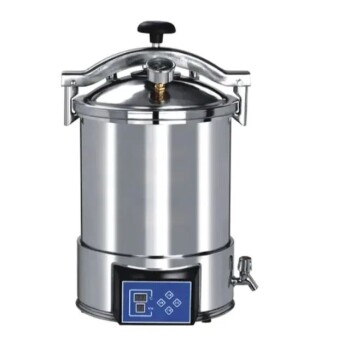
- Portable High Pressure Laboratory Autoclave Steam Sterilizer for Lab Use
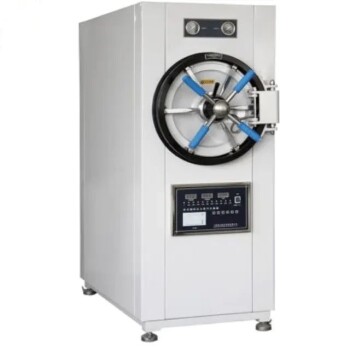
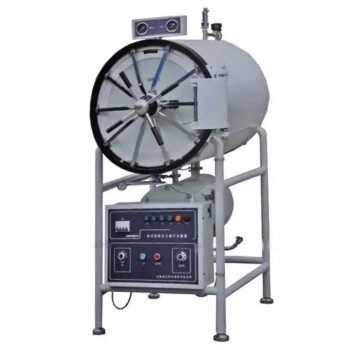
- Laboratory Horizontal Autoclave Steam Sterilizer Lab Microcomputer Sterilizer
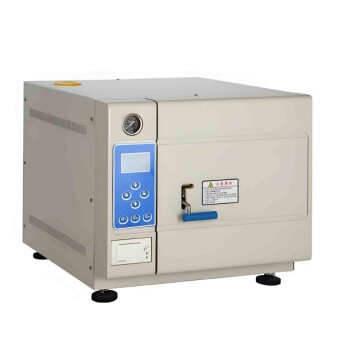
- Desktop Fast High Pressure Laboratory Autoclave Sterilizer 16L 24L for Lab Use
- Portable Digital Display Automatic Laboratory Sterilizer Lab Autoclave for Sterilization Pressure
- Desktop Fast Laboratory Autoclave Sterilizer 35L 50L 90L for Lab Use
People Also Ask
- Why is a laboratory high-pressure autoclave sterilizer necessary? Ensure Accuracy in Antibacterial Research
- What is the role of a laboratory high-pressure autoclave in the conversion of furfural to piperidine? Optimize Yields
- What are the two types of autoclave used in the laboratory? Gravity vs. Pre-Vacuum Explained
- What precautions should be taken during autoclave in laboratory? A Complete Safety Guide to Prevent Burns and Explosions
- What extreme conditions does a laboratory autoclave simulate? Testing Wear Resistance of Nuclear Fuel Cladding