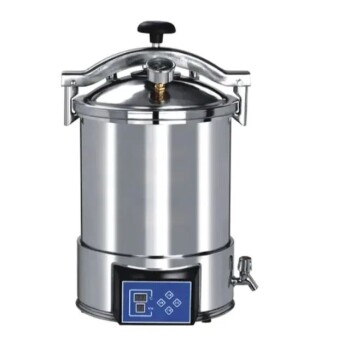
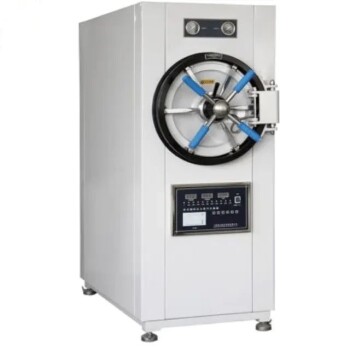
The primary benefit of a laboratory high-pressure autoclave equipped with a sampling outlet is the ability to extract micro-samples at specific time intervals without interrupting the reaction conditions. By maintaining the system's elevated temperature and pressure during extraction, you preserve the integrity of the kinetic data.
By enabling real-time analysis without stopping the reaction, this setup allows researchers to map the precise formation and consumption of short-lived intermediates, providing a true window into the reaction mechanism rather than just the final result.
The Critical Importance of In-Situ Sampling
Preserving Reaction Continuity
In standard batch processes, analyzing the reaction progress often requires cooling the reactor and releasing pressure.
This disruption halts the reaction, effectively destroying the timeline of events you are trying to study.
A dedicated sampling outlet allows the reaction to proceed under constant conditions (e.g., 13 bar hydrogen pressure), ensuring that every data point reflects the true state of the system at that exact moment.
Capturing Transient Intermediates
Furfural hydrogenation is a complex, multi-step process. It does not simply jump from reactant to product.
To understand the kinetics, you must observe the "middle steps"—the transient intermediates that appear and disappear quickly.
The sampling outlet enables the detection of specific compounds mentioned in kinetic studies, such as furfuryl alcohol, 4-hydroxycyclopent-2-enone (4-HCP), and cyclopentenone.
Monitoring Carbon Balance
High-pressure reactions often suffer from side reactions that result in mass loss, such as polymerization.
By taking samples throughout the run, rather than just at the end, you can track carbon balance losses in real time.
This helps pinpoint exactly when and why efficiency is dropping, allowing for more targeted process optimization.
The Role of the Reactor Environment
Ensuring Representative Sampling
The data collected via the outlet is only as good as the homogeneity of the mixture inside the vessel.
These autoclaves utilize precision stirring systems, often operating at speeds around 800 rpm, to ensure efficient mass transfer between liquid reactants, hydrogen gas, and solid catalysts.
This vigorous mixing guarantees that the micro-sample withdrawn from the outlet is statistically representative of the entire bulk fluid, preventing data skew caused by local concentration imbalances.
Understanding the Trade-offs
Managing Dead Volume
Sampling outlets usually have a "dead volume"—the small amount of liquid trapped in the tube between the reactor and the valve.
If this line is not properly purged before taking a sample, you may analyze old fluid that does not represent the current reaction time.
Pressure Disturbances
While the goal is to maintain pressure, the physical act of removing liquid can cause minor fluctuations.
If the sample volume is too large relative to the reactor volume, the pressure drop could alter the reaction kinetics you are trying to measure.
Making the Right Choice for Your Goal
To determine if a sampling-equipped autoclave is necessary for your specific application, consider the following:
- If your primary focus is Mechanistic Insight: You must use a reactor with a sampling outlet to capture the evolution of intermediates like 4-HCP and accurately model the reaction kinetics.
- If your primary focus is Final Yield Production: You may not need real-time sampling; a standard high-pressure autoclave that runs to completion is sufficient and simplifies operation.
True kinetic understanding requires observing the journey of the molecules, not just the destination.
Summary Table:
| Feature | Advantage for Kinetic Studies |
|---|---|
| In-situ Sampling | Extracts micro-samples without interrupting temperature or pressure (e.g., 13 bar). |
| Real-time Monitoring | Captures transient intermediates like furfuryl alcohol and 4-HCP in real-time. |
| Precision Stirring | Ensures sample homogeneity and representative data via high-speed mixing (800+ rpm). |
| Carbon Balance | Tracks mass loss and side reactions continuously to optimize process efficiency. |
Accelerate your chemical research with KINTEK’s precision-engineered laboratory solutions. Whether you are conducting complex kinetic studies with our high-temperature high-pressure reactors and autoclaves or scaling up with our advanced crushing, milling, and thermal systems, we provide the reliability your data demands. KINTEK specializes in laboratory equipment and consumables, offering a comprehensive range including muffle and vacuum furnaces, hydraulic presses, and specialized battery research tools. Contact us today to discover how our sampling-ready reactors and expert technical support can enhance your lab's efficiency and deliver the mechanistic insights you need for your next breakthrough.
References
- Christian A. M. R. van Slagmaat. The Cascade Transformation of Furfural to Cyclopentanone: A Critical Evaluation Concerning Feasible Process Development. DOI: 10.3390/chemengineering9040074
This article is also based on technical information from Kintek Solution Knowledge Base .
Related Products
- Mini SS High Pressure Autoclave Reactor for Laboratory Use
- Stainless High Pressure Autoclave Reactor Laboratory Pressure Reactor
- High Pressure Laboratory Autoclave Reactor for Hydrothermal Synthesis
- Laboratory High Pressure Horizontal Autoclave Steam Sterilizer for Lab Use
- Portable High Pressure Laboratory Autoclave Steam Sterilizer for Lab Use
People Also Ask
- Why use high-pressure reactors for molecular sieve synthesis? Unlock Superior Crystallinity and Framework Control
- What is the function of a high-pressure reactor autoclave? Enhancing Cu/N Co-Doped Carbon Catalyst Synthesis
- What are the advantages of using a high-pressure reactor like an autoclave? Maximize Liquefaction Speed & Yield
- Why are high-pressure reactors or autoclaves necessary for the synthesis of new functional materials? Unlock Precision.
- How are high-pressure reactors used to prepare metaphosphate electrocatalysts? Master In-Situ Precursor Growth