The critical application of a vacuum pump system during the pre-treatment phase is to exhaust the reaction chamber to an extremely low base pressure prior to the formal treatment. This deep evacuation creates the necessary environment to eliminate atmospheric contaminants that would otherwise inhibit the chemical interaction between the ion source and the substrate.
Core Insight: The vacuum pump does not act alone; it serves as the foundational enabler for hydrogen plasma cleaning. Together, these processes strip away residual moisture and impurities to ensure the active atoms can bond effectively with the stainless steel substrate, guaranteeing a uniform surface diffusion layer.
The Mechanics of Decontamination
Achieving Low Base Pressure
The primary function of the vacuum pump is to reduce the pressure within the reaction chamber to near-vacuum levels.
This removes the bulk of the air and prevents atmospheric gases from interfering with the subsequent chemical reactions. It establishes a "clean slate" environment required for high-precision surface modification.
Synergizing with Hydrogen Plasma
Once the low base pressure is achieved, the process introduces a hydrogen plasma cleaning step.
The vacuum system facilitates this plasma generation, which actively attacks contaminants. This combination is far more effective than vacuum evacuation alone.
The Impact on Surface Integrity
Removing Adsorbed Impurities
Surface contaminants are not just on the sample; they are often adsorbed into the inner walls of the vacuum reactor itself.
The pumping system, aiding the plasma process, thoroughly removes these impurities. It also targets residual moisture, which is a common antagonist in thermochemical treatments.
Ensuring Active Atom Bonding
For the treatment to be successful, active atoms must bond directly with the stainless steel substrate.
By removing the interference of moisture and dirt, the vacuum pre-treatment exposes the "true" surface of the metal. This allows for unobstructed atomic interaction.
Improving Layer Uniformity
The ultimate metric of success in this phase is the consistency of the resulting surface diffusion layer.
A clean, moisture-free environment ensures that the diffusion process occurs evenly across the entire geometry of the part. This results in superior uniformity and predictable mechanical properties.
Risks of Inadequate Pre-Treatment
The Moisture Barrier
If the vacuum pump fails to reach the required base pressure, residual moisture will remain in the chamber.
This moisture acts as a chemical barrier. It prevents the active atoms from reaching the substrate surface, leading to weak or non-existent bonding.
Compromised Uniformity
Skipping or rushing the vacuum and plasma cleaning phase leads to "patchy" treatment results.
Impurities left on the surface create localized resistance to diffusion. This results in a surface layer with varying thickness and hardness, rendering the treatment unreliable.
Optimizing the Pre-Treatment Phase
To ensure the highest quality results in ion thermochemical treatments, consider the following based on your specific objectives:
- If your primary focus is Adhesion Strength: Ensure the vacuum system is capable of sustaining the low pressure required for a prolonged hydrogen plasma cleaning cycle to fully expose the substrate lattice.
- If your primary focus is Layer Consistency: Prioritize the removal of impurities from the reactor walls as much as the sample itself to prevent cross-contamination during the diffusion process.
The success of the entire thermochemical treatment relies on the purity of the environment established in these first few critical minutes.
Summary Table:
| Feature | Role in Pre-Treatment | Impact on Final Result |
|---|---|---|
| Base Pressure Achievement | Removes atmospheric gases and air bulk | Creates a "clean slate" for chemical reactions |
| Plasma Synergy | Facilitates hydrogen plasma generation | Actively strips away moisture and adsorbed impurities |
| Contaminant Removal | Cleans reactor walls and substrate surface | Exposes the metal lattice for direct atomic bonding |
| Environment Control | Eliminates moisture barriers | Ensures uniform surface diffusion and layer consistency |
Maximize Your Surface Treatment Precision with KINTEK
Don't let residual moisture or atmospheric contaminants compromise your ion thermochemical treatments. KINTEK specializes in high-performance vacuum systems and laboratory equipment designed for the most demanding research environments. Whether you are performing high-precision surface modification or advanced battery research, our comprehensive range of vacuum reactors, high-temperature furnaces, and CVD systems provides the foundational purity your processes require.
From high-temperature high-pressure reactors to specialized PTFE and ceramic consumables, KINTEK delivers the tools to ensure uniform diffusion layers and superior material integrity. Our experts are ready to help you optimize your laboratory workflow.
Contact KINTEK Today to Upgrade Your Lab's Capabilities
References
- Javier García Molleja, J. Feugeas. Stability of expanded austenite, generated by ion carburizing and ion nitriding of AISI 316L SS, under high temperature and high energy pulsed ion beam irradiation. DOI: 10.1016/j.surfcoat.2012.12.043
This article is also based on technical information from Kintek Solution Knowledge Base .
Related Products
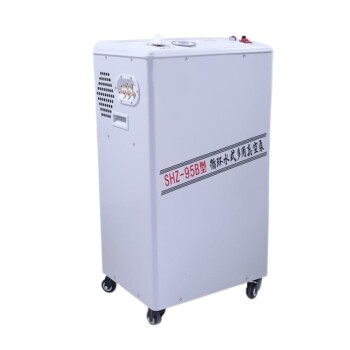
- Circulating Water Vacuum Pump for Laboratory and Industrial Use
- Laboratory Vertical Water Circulating Vacuum Pump for Lab Use
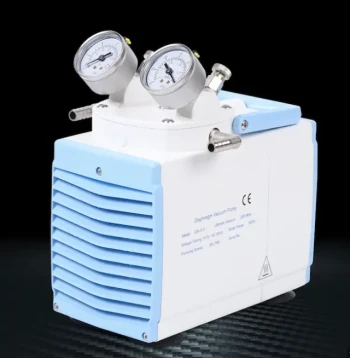
- Oil Free Diaphragm Vacuum Pump for Laboratory and Industrial Use
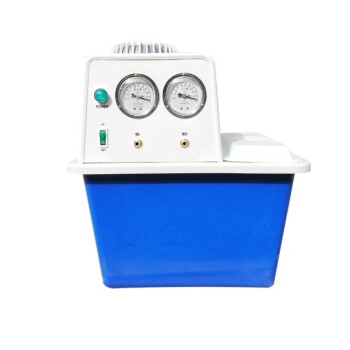
- Laboratory Benchtop Water Circulating Vacuum Pump for Lab Use
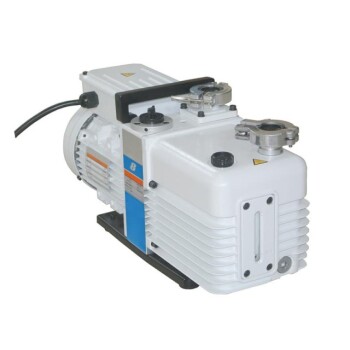
- Laboratory Rotary Vane Vacuum Pump for Lab Use
People Also Ask
- How is a circulating water vacuum pump utilized for hydrogen production residues? Optimize Your Solid-Liquid Separation
- How does the impeller rotation affect the gas flow in a water circulating vacuum pump? A Guide to the Liquid Ring Principle
- What determines the vacuum degree achievable by a water circulating vacuum pump? Unlock the Physics of Its Limits
- What are the advantages of a water circulating vacuum pump? Superior Durability for Demanding Lab Environments
- How does a water circulating vacuum pump operate? Discover the Efficient Liquid Piston Principle