The primary function of a constant temperature drying oven is to provide a stable, controlled thermal environment for the gradual elimination of liquid components from the titanium dioxide gel. Specifically, it ensures the gentle removal of free water and solvents from the gel network, typically operating at a moderate temperature of around 80°C.
Core Takeaway Drying is not merely about dehydration; it is a structural stabilization process. By maintaining a uniform and mild temperature, this equipment facilitates solvent evaporation without triggering the violent structural stress that leads to material failure.
Preserving Structural Integrity
Controlled Solvent Removal
The process relies on a strictly regulated thermal environment. The oven targets the evaporation of free water and organic solvents trapped within the gel.
By holding the temperature steady (often at 80°C), the rate of evaporation is kept consistent. This prevents the volatile components from exiting the material too aggressively.
Preventing Pore Collapse
The microscopic architecture of the gel is fragile. If the liquid inside evaporates too quickly, the resulting capillary forces can crush the internal structure.
A constant temperature oven ensures the heating is mild enough to maintain the integrity of the gel’s pore network. This prevents the collapse of the internal voids that are critical to the material's properties.
Avoiding Cracks and Defects
Rapid or uneven heating inevitably leads to differential shrinkage. This physical stress manifests as macroscopic cracks in the dried gel.
Uniform heating surrounds the sample, ensuring that drying occurs evenly throughout the material volume. This uniformity minimizes stress concentrations that would otherwise fracture the solid.
The Impact on Material Performance
Maximizing Specific Surface Area
The utility of titanium dioxide, particularly in catalysis, depends heavily on its specific surface area. The more surface area available, the more reactive the material.
By preventing pore collapse during the drying phase, the oven preserves the high specific surface area established during the gelation process.
Ensuring Catalytic Activity
The physical structure directly dictates chemical performance. A collapsed or cracked structure reduces the number of active sites available for chemical reactions.
Therefore, the gentle drying provided by the oven is a prerequisite for achieving high catalytic activity in the final nanopowder.
Understanding the Trade-offs
Process Time vs. Structural Quality
The main trade-off in using a constant temperature oven at moderate heat (80°C) is time. It is a slower process compared to high-heat drying methods.
However, attempting to accelerate the process with higher temperatures introduces a high risk of "gasification." This sudden phase change can rupture the material, negating any time saved.
Atmospheric Considerations
Unlike vacuum drying, which utilizes negative pressure to remove solvents, a standard constant temperature oven operates at atmospheric pressure.
While effective for general solvent removal, it does not offer the same level of protection against atmospheric impurities or oxidation that a vacuum environment provides.
Making the Right Choice for Your Goal
To maximize the quality of your titanium dioxide gel, align your drying parameters with your specific performance metrics:
- If your primary focus is Structural Integrity: Maintain the temperature strictly around 80°C to prevent pore collapse and cracking caused by rapid evaporation.
- If your primary focus is Catalytic Performance: Prioritize a slower, milder drying cycle to maximize the specific surface area and preserve active sites.
Controlled patience during the drying phase is the defining factor between a high-performance catalyst and a defective powder.
Summary Table:
| Function | Key Mechanism | Impact on TiO2 Gel |
|---|---|---|
| Thermal Stability | Constant 80°C environment | Prevents violent evaporation and gasification |
| Solvent Removal | Controlled evaporation | Eliminates free water and organic solvents gently |
| Structural Preservation | Low capillary stress | Prevents pore collapse and maintains surface area |
| Quality Control | Uniform heat distribution | Minimizes differential shrinkage and physical cracking |
Elevate Your Material Synthesis with KINTEK Precision
Don't let improper drying compromise your research. KINTEK specializes in high-performance laboratory equipment designed to meet the rigorous demands of material science. Whether you are drying sensitive titanium dioxide gels, preparing nanopowders, or conducting advanced battery research, our solutions ensure consistency and excellence.
Our comprehensive range includes:
- Constant Temperature & Vacuum Ovens for precise moisture removal.
- High-Temperature Muffle & Tube Furnaces for subsequent calcination.
- Crushing & Milling Systems for uniform particle size distribution.
- PTFE & Ceramic Consumables to prevent contamination.
Contact KINTEK today to find the perfect drying solution or furnace for your laboratory and ensure the structural integrity of your high-performance catalysts!
References
- H.R. Khan. Sol-Gel Synthesis of TiO2 from TiOSO4 (Part 2): Kinetics and Photocatalytic Efficiency of Methylene Blue Degradation Under UV Irradiation. DOI: 10.3390/catal15010064
This article is also based on technical information from Kintek Solution Knowledge Base .
Related Products
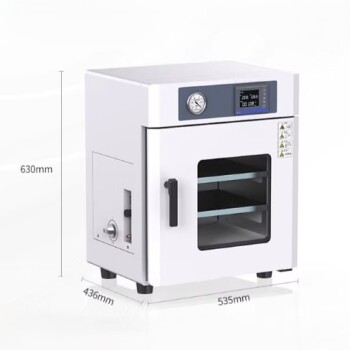
- 23L Laboratory Vacuum Drying Oven
- Laboratory Scientific Electric Heating Blast Drying Oven
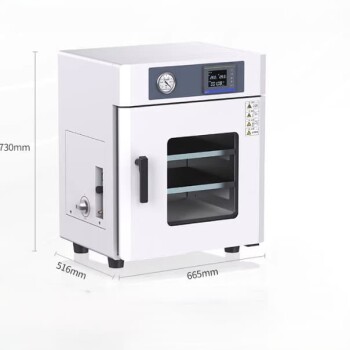
- 56L Vertical Laboratory Vacuum Drying Oven
- High Temperature Muffle Oven Furnace for Laboratory Debinding and Pre Sintering
- 10L Chilling Circulator Cooling Water Bath Low Temperature Constant Temperature Reaction Bath
People Also Ask
- Why is a laboratory vacuum drying oven recommended for rice straw residues? Protect Your Biomass Integrity
- What role does a laboratory vacuum drying oven play in the preparation of modified multi-walled carbon nanotubes?
- What is the importance of using a laboratory vacuum drying oven? Preserving Slow-Release Microcapsule Integrity
- Why is a Laboratory Vacuum Drying Oven recommended for PBAT microspheres? Protect Sensitive Polymer Integrity
- What role does a laboratory vacuum drying oven play in processing nanoparticle powder samples? Protect Sample Integrity