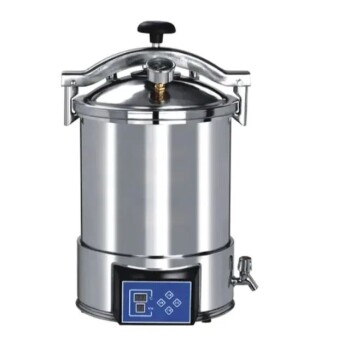
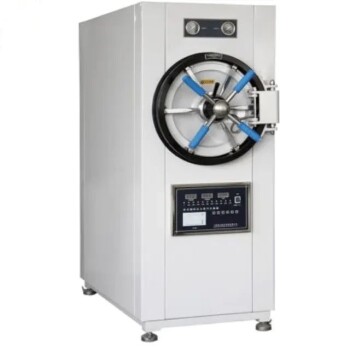
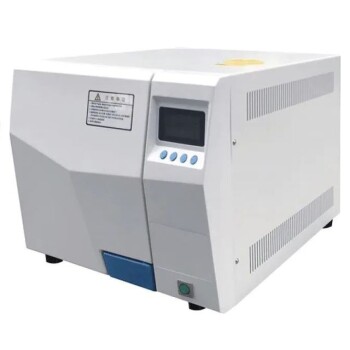
A high-pressure reactor, or autoclave, functions as a critical processing vessel that creates the specific thermodynamic conditions required to separate lignin from lignocellulosic biomass. By maintaining a sealed, pressurized environment, the reactor allows solvents to remain liquid at temperatures significantly above their atmospheric boiling points. This accelerates the chemical breakdown of the biomass matrix and enhances the solubility of lignin, which is the first step in converting it into a usable bio-adhesive.
Core Takeaway Lignin is naturally resistant to chemical breakdown. The high-pressure reactor overcomes this recalcitrance by enabling higher reaction temperatures and solvent efficiency, producing the high-purity, uniform lignin required to manufacture reliable textile and industrial adhesives.
The Mechanics of Extraction
Accelerating Bond Cleavage
The primary function of the reactor is to drive reaction kinetics. Lignin is tightly bound to cellulose and hemicellulose within plant matter.
The high-temperature environment created within the autoclave accelerates the breakage of these chemical bonds. This is essential for various extraction methods, including organosolv extraction, sulfonation, and alkaline hydrolysis.
Enhancing Solvent Efficiency
Pressure is the tool that unlocks solubility. Under atmospheric conditions, water and organic solvents boil off before they can effectively dissolve lignin.
The reactor's sealing function maintains pressure that keeps these solvents in a liquid state at temperatures often between 120°C and 180°C. In the case of water, this environment creates a "subcritical state" where the fluid behaves more like an organic solvent, dissolving hemicellulose and extractives without requiring toxic additives.
Homogeneity Through Agitation
Mere heat and pressure are often insufficient for uniform extraction. Most high-pressure reactors incorporate stirring functions.
This mechanical agitation ensures consistent contact between the biomass and the solvent. This improves the overall solubility of the lignin, ensuring the batch is processed intimately rather than leaving unreacted material in the center of the vessel.
Impact on Adhesive Quality
Achieving High Purity
For a bio-based adhesive to function correctly, the lignin precursor must be free of contaminants.
The reactor’s ability to use specific organic solvents (organosolv process) or subcritical water facilitates the production of high-purity lignin. By effectively separating the lignin from the cellulose structure, the reactor provides a clean baseline material for adhesive formulation.
Controlling Molecular Structure
The most critical factor for adhesive performance is consistency.
The controlled environment of the autoclave yields lignin with a narrow molecular weight distribution. This uniformity is essential for downstream applications, particularly in textile adhesives, where inconsistent molecular weights would lead to unpredictable bonding strengths and material failure.
Understanding the Trade-offs
Managing Thermal Degradation
While high temperatures are necessary for extraction, they also pose a risk to the organic material.
Excessive exposure to high heat without precise control can lead to "coking" (the formation of solid carbon deposits) or catalyst deactivation. The reactor mitigates this by allowing for high pressures—such as hydrogen pressure exceeding 10 MPa in hydrodeoxygenation processes—which stabilizes the reaction and inhibits the charring of the bio-oil or lignin phase.
Making the Right Choice for Your Goal
To maximize the utility of a high-pressure reactor for your specific application, consider the following:
- If your primary focus is high-performance adhesives: Prioritize reaction conditions that favor organosolv extraction to ensure a narrow molecular weight distribution and high purity.
- If your primary focus is green chemistry: Utilize the reactor to maintain subcritical water conditions (120–180°C), allowing you to extract hemicellulose and lignin without toxic organic solvents or catalysts.
By leveraging the pressure and temperature capabilities of the autoclave, you transform lignin from a waste byproduct into a precise, high-value chemical building block.
Summary Table:
| Feature | Function in Lignin Extraction | Benefit for Bio-Adhesives |
|---|---|---|
| High Temperature | Accelerates chemical bond cleavage | Increases reaction kinetics and yield |
| Pressure Control | Keeps solvents liquid above boiling point | Enhances solubility of recalcitrant lignin |
| Mechanical Agitation | Ensures consistent biomass-solvent contact | Produces high-purity, uniform materials |
| Sealed Environment | Enables subcritical water/organosolv states | Eliminates toxic additives; narrows molecular weight |
Elevate Your Bio-Material Research with KINTEK
Maximize the purity and performance of your lignin-based products with KINTEK’s high-precision laboratory solutions. Whether you are developing next-generation bio-adhesives or exploring green chemistry, our specialized equipment provides the reliability you need for complex thermochemical processes.
Our comprehensive range includes:
- High-Temperature & High-Pressure Reactors and Autoclaves for precise extraction conditions.
- Crushing, Milling, and Sieving Systems to prepare biomass feedstocks.
- Advanced Thermal Solutions, including muffle and vacuum furnaces.
- Precision Processing Tools like hydraulic pellet presses and homogenizers.
Ready to optimize your lab's efficiency? Contact us today to discover how KINTEK’s expert-grade equipment can transform your research into scalable industrial results.
References
- J.C. Dias, Carla Silva. Biopolymers Derived from Forest Biomass for the Sustainable Textile Industry. DOI: 10.3390/f16010163
This article is also based on technical information from Kintek Solution Knowledge Base .
Related Products
- Stainless High Pressure Autoclave Reactor Laboratory Pressure Reactor
- Customizable High Pressure Reactors for Advanced Scientific and Industrial Applications
- Mini SS High Pressure Autoclave Reactor for Laboratory Use
- High Pressure Laboratory Autoclave Reactor for Hydrothermal Synthesis
- Desktop Fast High Pressure Laboratory Autoclave Sterilizer 16L 24L for Lab Use
People Also Ask
- Why is a laboratory high-pressure reactor used in the hydrothermal synthesis of hydroxyapatite catalysts?
- Why is a laboratory high-pressure reactor necessary for synthesizing fly ash-based zeolite? Achieve Pure Crystallization
- What role does a laboratory high-pressure reactor play in the leaching process of spent cathode materials? Optimize Recovery
- What conditions do laboratory high-pressure reactors provide for HTC? Optimize Your Biochar Production Processes
- How are high-pressure reactors used to prepare metaphosphate electrocatalysts? Master In-Situ Precursor Growth