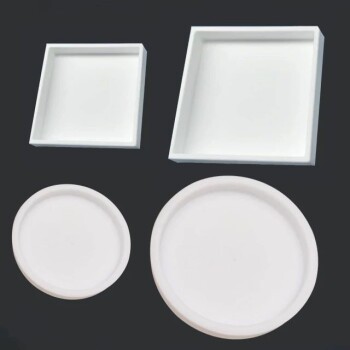
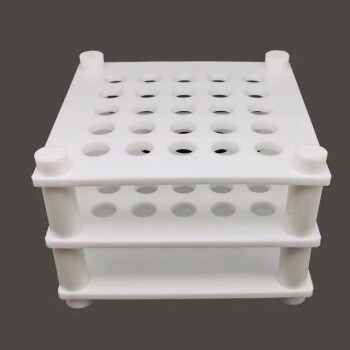
The high-pressure reactor with a PTFE liner is the critical vessel that enables the hydrothermal synthesis of Titanium Dioxide (TiO2) by providing a sealed, chemically inert environment. This setup allows precursors to react under elevated temperatures and pressures that exceed normal boiling points, facilitating the formation of crystal nuclei and the controlled growth of nanoparticles with specific morphologies and crystalline phases.
Core Takeaway: The reactor functions as a precision thermodynamic chamber that forces chemical precursors to overcome energy barriers, allowing for the synthesis of high-purity TiO2 nanostructures—such as nanotubes and nanorod arrays—that are impossible to produce under ambient conditions.
Establishing the Necessary Thermodynamic Environment
Creating High-Temperature and High-Pressure Conditions
The primary function of the stainless steel autoclave is to maintain a sealed environment where the internal pressure increases as the temperature rises. This "hydrothermal" or "solvothermal" condition allows liquid solvents to remain in a liquid state well above their standard boiling points, dramatically increasing the solubility and reactivity of the titanium precursors.
Overcoming Reaction Energy Barriers
Under these specific thermodynamic conditions, reactants gain the kinetic energy required to undergo complex transformations. This energy is essential for reorganizing the anatase crystal structure, facilitating the change from simple granular particles into high-aspect-ratio structures like nanotubes or nanoneedles.
Precision Control of Morphology and Phase
Selective Phase Induction
High-pressure reactors enable researchers to precisely manage the transition from an amorphous phase to specific crystalline phases. By adjusting the temperature and duration within the reactor, the synthesis can be tuned to produce the anatase phase, which is often preferred for its superior photocatalytic properties.
Oriented and Anisotropic Growth
The closed system allows precursors to grow anisotropically, meaning they grow faster along specific crystal planes than others. This results in the formation of well-aligned nanorod arrays or nanoneedles on substrates like FTO glass or nickel mesh, providing a high specific surface area for subsequent chemical reactions.
In-Situ Deposition and Coupling
The reactor facilitates in-situ growth, where TiO2 structures are anchored directly onto substrates or coupled with other materials, such as chitosan or iron sulfides. This creates a tight molecular bond and high-performance composite heterojunctions that are vital for advanced electronics and energy storage.
The Role of the PTFE Liner and Steel Shell
Ensuring Chemical Stability and Purity
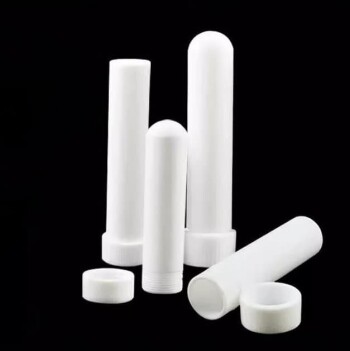
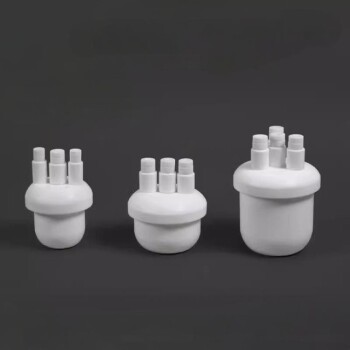
The Polytetrafluoroethylene (PTFE) liner—commonly known as Teflon—is used for its exceptional chemical resistance. It prevents the highly alkaline or acidic reaction solutions from corroding the stainless steel reactor body, which ensures that no metallic impurities leach into the sample, preserving the purity of the TiO2 nanoparticles.
Maintaining Structural Integrity
While the PTFE liner provides chemical protection, the external stainless steel shell provides the mechanical strength necessary to contain the high internal pressures. This dual-layer design ensures the structural safety of the system, allowing the reaction to proceed at temperatures often reaching 180 °C without the risk of vessel failure.
Understanding the Trade-offs and Limitations
Temperature Constraints of PTFE
While PTFE is highly resistant to chemicals, it has a physical limit regarding heat. Most PTFE liners are restricted to operating temperatures below 250 °C, as the material can begin to soften or release toxic fumes if overheated, potentially compromising the seal.
Pressure Safety Hazards
Operating a sealed vessel creates significant stored energy. If the reaction produces unexpected gaseous byproducts or if the vessel is overfilled (reducing the "headspace"), the internal pressure can exceed the safety rating of the autoclave, leading to equipment failure.
How to Apply This to Your Project
Making the Right Choice for Your Goal
To achieve the best results in TiO2 synthesis, your reactor parameters should align with your structural objectives:
- If your primary focus is high-purity crystalline phases: Ensure your reactor is equipped with a clean PTFE liner to prevent iron or chrome contamination from the steel shell.
- If your primary focus is nanotube or nanowire morphology: Use the reactor to maintain a steady temperature (typically 180 °C) for extended periods to allow for the slow, oriented growth of crystal planes.
- If your primary focus is substrate coating: Utilize the high-pressure environment for in-situ growth to achieve superior mechanical anchoring compared to simple dip-coating methods.
By mastering the thermodynamic environment of the high-pressure reactor, you can precisely dictate the physical and chemical properties of the resulting Titanium Dioxide nanostructures.
Summary Table:
| Component | Primary Function | Key Advantage in TiO2 Synthesis |
|---|---|---|
| Stainless Steel Shell | Mechanical pressure containment | Ensures safety at high temperatures and pressures. |
| PTFE (Teflon) Liner | Chemical inertness & insulation | Prevents metallic contamination and acidic corrosion. |
| Sealed Environment | Thermodynamic control | Enables phase transition (e.g., Anatase) and anisotropic growth. |
| Thermodynamic Chamber | Energy barrier reduction | Facilitates formation of complex nanostructures like nanotubes. |
Elevate Your Nanomaterial Synthesis with KINTEK Precision
Achieving high-purity Titanium Dioxide (TiO2) nanostructures requires more than just chemistry—it requires a perfectly controlled thermodynamic environment. KINTEK specializes in high-performance laboratory equipment designed to meet the rigorous demands of advanced research.
Our specialized portfolio includes:
- High-Temperature High-Pressure Reactors & Autoclaves: Engineered for safety and precision in hydrothermal and solvothermal synthesis.
- Premium Consumables: High-quality PTFE products, ceramics, and crucibles to ensure zero-contamination environments.
- Comprehensive Lab Solutions: From crushing and milling systems to high-temperature furnaces (CVD, PECVD, vacuum) and cooling solutions.
Whether you are a researcher focused on photocatalytic phases or a laboratory manager seeking reliable, high-purity results, KINTEK provides the tools to push the boundaries of material science.
Ready to optimize your hydrothermal setup? Contact our technical experts today to find the ideal reactor for your specific application!
References
- Geraldine Durango-Giraldo, Robison Buitrago‐Sierra. Evaluation of Bactericidal Activity of Electrochemical GO Modified with TiO2 Nanoparticles. DOI: 10.22430/22565337.2765
This article is also based on technical information from Kintek Solution Knowledge Base .
Related Products
- Custom PTFE Teflon Parts Manufacturer for Hydrothermal Synthesis Reactor Polytetrafluoroethylene Carbon Paper and Carbon Cloth Nano-growth
- Custom PTFE Teflon Parts Manufacturer for Reagent Wide Mouth Fine Mouth Sample High Temperature Bottles
- Stainless High Pressure Autoclave Reactor Laboratory Pressure Reactor
- Customizable High Pressure Reactors for Advanced Scientific and Industrial Applications
- Custom PTFE Teflon Parts Manufacturer for Microwave Digestion Tank
People Also Ask
- What is the function of a PTFE reactor in MXene etching? Ensure Safe, High-Purity MAX Phase Conversion
- Why is a PTFE reactor required for titanium-based nano-ceramic coating solutions? Ensure Chemical Inertness & Purity
- Why must a Polytetrafluoroethylene (PTFE) reactor be used for Ti3C2TX MXene etching? Ensure Safety and Purity
- Why are PTFE reactors preferred for silver phosphate glass testing? Ensure Purity and Kinetic Accuracy
- What are the advantages of using polytetrafluoroethylene (PTFE) liners in hydrothermal synthesis reactors? High Purity