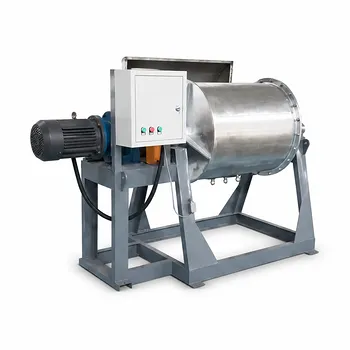
The function of a planetary ball mill in this context is to act as a high-energy mechanical alloying reactor. Specifically for Nb-15W and Nb-15W-10Cr powders, it utilizes high-speed collisions and friction to force the uniform microscopic mixing of metals with vastly different densities and high melting points. Beyond mixing, it refines the grain size and introduces lattice distortions, which increases the powder's internal energy and reaction activity to ensure successful sintering later.
Core Insight By subjecting the powders to intense mechanical forces, the planetary ball mill overcomes the physical segregation tendencies of Niobium, Tungsten, and Chromium. It transforms a simple mixture of distinct elements into a highly active, homogeneous precursor that is chemically primed for high-quality densification.
The Mechanism of Mechanical Alloying
Overcoming Physical Disparities
The primary challenge with Niobium (Nb), Tungsten (W), and Chromium (Cr) is that they possess high melting points and significantly different densities.
Without high-energy intervention, these elements tend to segregate. The planetary ball mill solves this by generating high-energy mechanical forces through the rapid rotation of the mill and the counter-rotation of the jars.
Microscopic Homogenization
Inside the jars, the grinding balls collide with the powder and the jar walls at high speeds.
This creates intense friction and impact forces. These forces drive mechanical alloying, a solid-state process that ensures the metal elements are mixed uniformly at a microscopic level, effectively blending the distinct metallic phases into a cohesive composite powder.
Enhancing Reactivity for Sintering
Grain Refinement
The continuous impact during milling fractures the powder particles.
This process significantly refines the grains of the alloy. Smaller grain sizes reduce the diffusion distance required during subsequent processing steps, which is critical for achieving a consistent microstructure.
Increasing Reaction Activity
Perhaps the most critical function for the sintering stage is the introduction of lattice distortions.
The intense mechanical energy deforms the crystal structure of the metal powders. This stored energy increases the "reaction activity" of the material. Highly active powders sinter more readily, establishing a necessary foundation for achieving high density and structural integrity in the final alloy.
Understanding the Trade-offs
Risk of Contamination
While high-energy collision is necessary for alloying, it causes wear on the grinding media (balls and jars).
This can introduce impurities into the alloy powder. For high-performance materials like Nb-15W, selecting the correct jar and ball material (to match hardness or chemical compatibility) is essential to minimize cross-contamination.
Oxidation Sensitivity
The process of fracturing and refining exposes fresh, reactive metal surfaces.
While this increases sintering activity, it also makes the powder highly susceptible to oxidation. Although not explicitly detailed in the primary text for this specific alloy, standard practice (supported by supplementary data on similar refractory alloys) suggests this process often requires a protective atmosphere to prevent oxygen pickup, which would degrade the alloy's mechanical properties.
Making the Right Choice for Your Goal
When configuring your pretreatment process for Nb-15W or Nb-15W-10Cr, consider the specific outcome you need to prioritize:
- If your primary focus is Compositional Uniformity: Prioritize sufficient milling time to overcome the density differences between Tungsten and Niobium to ensure a homogeneous mix.
- If your primary focus is Sintering Density: Focus on the energy input to maximize lattice distortion and grain refinement, as this stored energy drives the densification process.
Success in this stage is defined by balancing mechanical activation with the preservation of material purity.
Summary Table:
| Function | Primary Mechanism | Impact on Nb-W-Cr Alloys |
|---|---|---|
| Mechanical Alloying | High-energy collision/friction | Overcomes density disparities for uniform microscopic mixing. |
| Grain Refinement | Continuous particle fracturing | Reduces diffusion distance for superior sintering consistency. |
| Lattice Distortion | Crystal structure deformation | Increases internal energy and reaction activity for densification. |
| Phase Control | Solid-state processing | Blends distinct metallic phases into a cohesive composite powder. |
Optimize Your Refractory Alloy Production with KINTEK
Precision in the pretreatment of high-melting-point alloys like Nb-15W requires equipment that balances high energy with material purity. KINTEK specializes in advanced crushing and milling systems, providing the high-performance planetary ball mills and specialized grinding media (jars and balls) necessary to achieve perfect mechanical alloying and grain refinement.
From high-temperature vacuum furnaces for sintering to hydraulic presses and precision consumables, KINTEK offers a comprehensive ecosystem for material scientists and industrial manufacturers. Boost your powder reactivity and ensure uniform densification—contact our experts today to find the right equipment for your lab!
Related Products
- High Energy Planetary Ball Mill for Laboratory Horizontal Tank Type Milling Machine
- Laboratory Planetary Ball Mill Rotating Ball Milling Machine
- High-Energy Omnidirectional Planetary Ball Mill Milling Machine for Laboratory
- High Energy Planetary Ball Mill Milling Machine for Laboratory
- Laboratory Horizontal Planetary Ball Mill Milling Machine
People Also Ask
- What is the role of a planetary ball mill in sulfide-based solid-state batteries? Engineer High-Performance Cathodes
- What are the parameters of a planetary ball mill? Master Speed, Time, and Media for Perfect Grinding
- What is the function of a planetary ball mill for nanostructured eutectic steel? Essential Prep for High-Strength Alloys
- What role does a planetary ball mill play in the preparation of NASICON-type solid electrolytes like LATP and LAGP?
- What is the function of a planetary ball mill in solid-state electrolyte prep? Milling vs. SDS Methods Explained