The primary function of a precursor source bottle heating system is to facilitate the vaporization of high-viscosity liquid precursors like Aluminum tri-sec-butoxide (ATSB). Because ATSB remains in a liquid state at room temperature, the heating system raises the source bottle temperature—often to approximately 120 °C—to generate the necessary vapor pressure. This allows a carrier gas to effectively pick up the vaporized aluminum precursor and transport it into the reaction chamber.
Core Takeaway The heating system transforms the precursor from a viscous liquid into a transportable vapor by precisely controlling vapor pressure. This thermal regulation is the defining factor in ensuring a stable, consistent dosage of metal precursor reaches the substrate during every pulse cycle.
The Mechanics of Vapor Generation
Overcoming High Viscosity
ATSB is characterized by high viscosity at standard room temperatures. Without thermal intervention, the chemical is too thick and volatile to be moved efficiently through the system.
The heating system provides the thermal energy required to lower this viscosity. By heating the liquid, the system increases the kinetic energy of the molecules, allowing them to escape the liquid phase.
Achieving Specific Vapor Pressure
For a carrier gas to transport a chemical, the chemical must exist at a specific vapor pressure. The heating system is responsible for reaching and maintaining this pressure threshold.
If the vapor pressure is too low, the carrier gas will flow through the bubbler without picking up enough precursor. The heater ensures the "concentration" of the precursor in the gas line is sufficient for the reaction.
Ensuring Process Stability and Consistency
Stabilizing the Pulse Cycle
In thin film synthesis, specifically involving pulse cycles, repeatability is paramount. The heating system ensures that the amount of precursor delivered is identical in every single pulse.
If the source bottle temperature fluctuates, the vapor pressure changes immediately. This results in erratic dosing, where some pulses contain too much precursor and others too little.
Maintaining Film Growth Rates
The growth rate of the aluminum oxide film is directly tied to the availability of the precursor. A precisely heated source bottle guarantees a constant supply of aluminum atoms.
Consistency in the source temperature leads to consistency in the film thickness. This prevents defects or uneven layers caused by "starving" the reaction surface of necessary reactants.
Understanding the Trade-offs
The Necessity of Precision
While heating is essential, the reference emphasizes precise control. There is a narrow operating window for optimal performance.
Temperature Stability vs. Fluctuation
The system must do more than just "get hot"; it must remain thermally stable. Even minor drops in temperature can crash the vapor pressure, leading to a failed deposition cycle or non-uniform film properties.
Optimizing Your Heating Strategy
To ensure high-quality aluminum oxide thin films, your thermal strategy should focus on stability and precise set-points.
- If your primary focus is Film Uniformity: Prioritize a heating system with tight feedback loops to prevent temperature drift during long deposition runs.
- If your primary focus is Deposition Efficiency: Ensure the source temperature (e.g., 120 °C) is sufficient to fully saturate the carrier gas without overheating the precursor.
Process reliability begins with the thermal stability of your source material.
Summary Table:
| Feature | Function in ATSB Synthesis |
|---|---|
| Precursor State | Transforms high-viscosity liquid to transportable vapor |
| Vapor Pressure | Maintains threshold for carrier gas saturation |
| Temp. Control | Typically set to ~120 °C for optimal volatility |
| Process Impact | Ensures repeatable pulse dosing and uniform film growth |
Elevate Your Thin Film Deposition with KINTEK Precision
Achieving consistent aluminum oxide growth requires precise thermal control of your precursor sources. KINTEK specializes in advanced laboratory solutions designed to optimize your synthesis workflows. From high-performance CVD and PECVD systems to specialized high-temperature reactors, we provide the tools necessary to maintain stable vapor pressure and eliminate deposition erraticism.
Whether you are refining battery research or developing advanced ceramics, our team offers the expertise and high-quality equipment—including muffle furnaces, vacuum systems, and essential consumables—to ensure your lab achieves superior results.
Ready to stabilize your research outcomes? Contact KINTEK today for expert equipment solutions!
References
- Xueming Xia, Christopher S. Blackman. Use of a New Non-Pyrophoric Liquid Aluminum Precursor for Atomic Layer Deposition. DOI: 10.3390/ma12091429
This article is also based on technical information from Kintek Solution Knowledge Base .
Related Products
- Multi Heating Zones CVD Tube Furnace Machine Chemical Vapor Deposition Chamber System Equipment
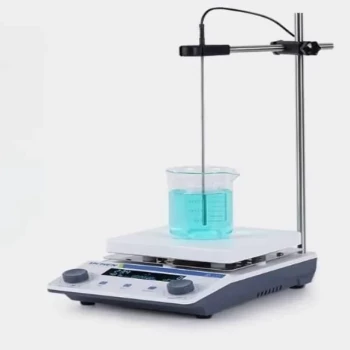
- Laboratory Small Constant Temperature Heated Magnetic Stirrer Heater and Stirrer
People Also Ask
- What are the advantages of a multi-zone tube furnace for Sb2S3? Unlock Superior Semiconductor Thin Film Purity
- What are the advantages of using a Multi-zone Tube Furnace? Enhanced Thermal Uniformity for Diffusion Research
- What is a CVD tube furnace? A Complete Guide to Thin-Film Deposition
- What are the technical advantages of using a CVD tube furnace? Optimize Silicon-Carbon Battery Anodes
- What is the function of a high-temperature CVD tube furnace in 3D graphene foam prep? Master 3D Nanomaterial Growth