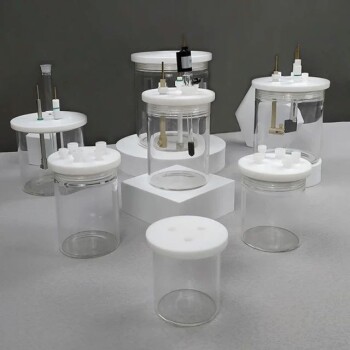
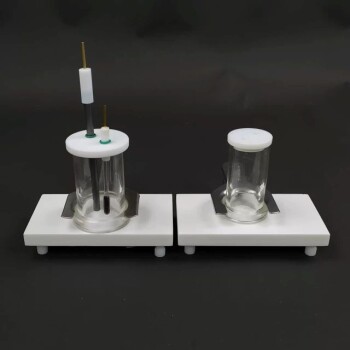
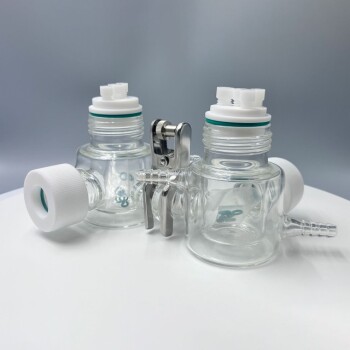
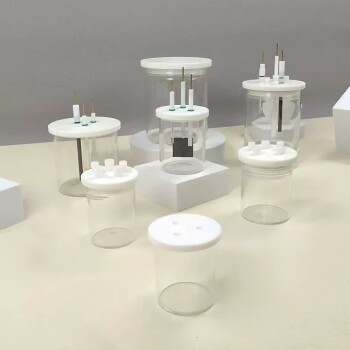
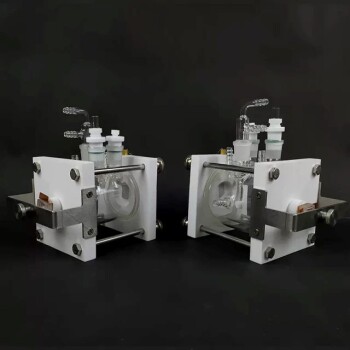
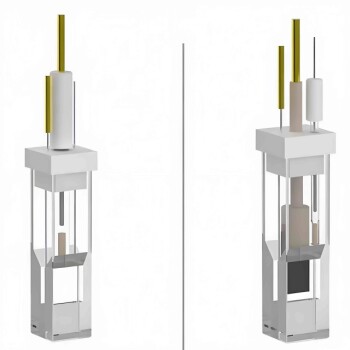
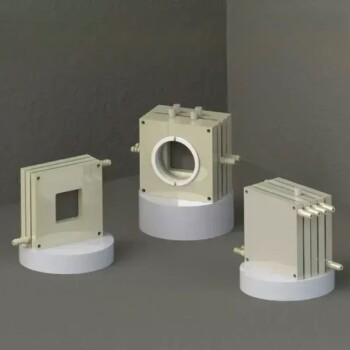
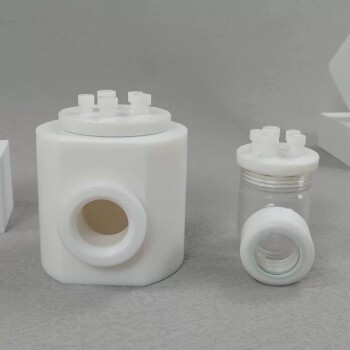
To facilitate in-situ Raman spectroscopy, a specialized electrochemical cell acts as a bridge that enables simultaneous electrical control and optical observation of a catalyst. It integrates a three-electrode system with a transparent optical window, allowing a laser to illuminate the catalyst surface while it is under an active electrical potential. This configuration captures the real-time vibrational spectra of surface species, phase transitions, and adsorbed intermediates during reactions like water or urea electrolysis.
The core function of the in-situ cell is to maintain the electrochemical environment while providing an unobstructed optical path for the laser. This allows researchers to correlate specific electrical potentials with the molecular-level behavior of the catalyst in its active state.
The Architecture of Real-Time Observation
Integrating Optical and Electrochemical Control
The primary design requirement of the cell is the inclusion of a transparent window, typically made of quartz glass. This window allows the Raman laser to penetrate the cell casing and reach the working electrode without being blocked by the battery or cell housing.
By housing a three-electrode system within this optical-access chamber, the cell ensures the catalyst is subjected to precise voltage and current. This setup is essential for observing how the chemical structure of the catalyst responds to dynamic electrochemical stress.
Minimizing Signal Interference
Specialized cells often utilize water-immersion objectives or ultra-thin quartz windows to minimize the distance the laser must travel through the electrolyte. Reducing this path length is critical to limit solvent interference and prevent the attenuation of the Raman signal.
In many advanced applications, the cell is designed to work with Surface-Enhanced Raman Scattering (SERS) active substrates. This design significantly amplifies the vibrational signals of adsorbed intermediates, making it possible to detect species that exist only for fractions of a second.
Decoding Catalyst Mechanisms
Identifying Transient Intermediates
The cell allows researchers to capture the "fingerprints" of intermediate products such as *COOH, *CO, or *OOH radicals. These species are often unstable and disappear once the electrical potential is removed, making in-situ detection the only way to verify their presence.
By monitoring the evolution of these vibrational peaks, scientists can determine the actual reaction pathways occurring at the catalyst interface. This level of detail helps identify whether a surface modification effectively reduces energy barriers for the reaction.
Mapping Phase Transitions and Surface Evolution
Beyond intermediates, the cell tracks the structural evolution of the catalyst itself, such as the transition from a metal to a metal oxide/hydroxide. Observing these phase transitions in real-time reveals which version of the material is truly responsible for the catalytic activity.
This is particularly useful in studying metal electrodeposition or lithium-polysulfide redox reactions. The cell provides a window into the reduction of metal ions and the formation of deposition layers as they happen.
Understanding the Trade-offs
The Challenge of Signal-to-Noise Ratios
While in-situ cells provide invaluable data, the presence of the liquid electrolyte can often overwhelm the weak Raman signals from the catalyst surface. Researchers must often balance the electrolyte volume—needed for stable electrochemical performance—against the need for a thin liquid layer to improve optical clarity.
Material Compatibility and Fouling
The materials used in the cell, particularly the optical window and seals, must be chemically resistant to harsh electrolytes like concentrated acids or bases. Over time, the window can become fouled by reaction products or bubbles, which can distort the laser path and degrade the quality of the collected spectra.
How to Apply This to Your Research
Making the Right Choice for Your Goal
The design of your in-situ cell should be dictated by the specific requirements of your catalyst and the reaction you are studying.
- If your primary focus is detecting low-concentration intermediates: Prioritize a cell design that supports SERS-active substrates and minimizes the electrolyte path length to maximize signal enhancement.
- If your primary focus is long-term stability or phase transitions: Choose a cell with a larger electrolyte reservoir and robust sealing to ensure stable electrochemical conditions over extended cycles.
- If your primary focus is gas-evolving reactions (OER/HER): Opt for a configuration that facilitates bubble removal from the optical path to prevent signal loss during high-current operations.
By matching the cell architecture to the specific demands of the electrochemical environment, you can unlock a definitive understanding of how catalysts function at the molecular level.
Summary Table:
| Feature | Core Function | Benefit to Research |
|---|---|---|
| Transparent Window | Provides an unobstructed optical path for Raman lasers | Enables real-time molecular-level observation |
| 3-Electrode System | Maintains precise electrical potential and current control | Correlates voltage changes with chemical behavior |
| Optimized Path Length | Minimizes distance through liquid electrolyte | Reduces signal interference and solvent attenuation |
| SERS Compatibility | Supports Surface-Enhanced Raman Scattering substrates | Facilitates detection of transient reaction intermediates |
Elevate Your Molecular Research with KINTEK
Unlock deeper insights into catalytic mechanisms and material transformations with KINTEK’s precision-engineered laboratory solutions. We specialize in providing researchers with the high-performance tools necessary for cutting-edge electrochemistry and material science.
Our comprehensive portfolio includes:
- Electrochemical Excellence: Specialized electrolytic cells and electrodes, battery research tools, and consumables.
- Precision Sample Prep: Hydraulic presses (pellet, hot, isostatic) and advanced crushing and milling systems.
- Thermal Processing: A full range of high-temperature furnaces (muffle, tube, vacuum, CVD, PECVD, atmosphere).
- Essential Lab Gear: High-pressure reactors, autoclaves, ceramics, and PTFE consumables.
Ready to optimize your in-situ Raman setup or upgrade your lab’s capabilities? Contact KINTEK today to discuss your specific application and discover how our equipment ensures the accuracy and reliability your research demands.
References
- Liling Liao, Yu Fang. Multi-site trifunctional hydrangea-like electrocatalysts for efficient industrial-level water/urea electrolysis with current density exceeding 1000 mA cm−2. DOI: 10.1007/s40843-023-2544-5
This article is also based on technical information from Kintek Solution Knowledge Base .
Related Products
- Electrolytic Electrochemical Cell with Five-Port
- Electrolytic Electrochemical Cell for Coating Evaluation
- H-Type Double-Layer Optical Electrolytic Electrochemical Cell with Water Bath
- Super Sealed Electrolytic Electrochemical Cell
- PTFE Electrolytic Cell Electrochemical Cell Corrosion-Resistant Sealed and Non-Sealed
People Also Ask
- How does the design of an electrochemical electrolytic cell influence the coating uniformity? Optimize Your Catalysts
- What is the correct shutdown and disassembly procedure after an experiment? Ensure Safety and Protect Your Equipment
- What are the three essential components that comprise an electrolytic cell? Key Elements of Chemical Synthesis
- How does the design of an electrolytic cell affect the production yield of ferrate(VI)? Optimize Efficiency & Purity
- What is galvanic cell or electrolytic cell? Unlock the Secrets of Electrochemical Power