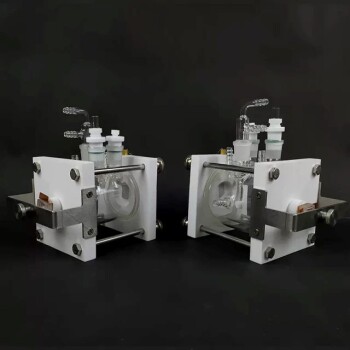
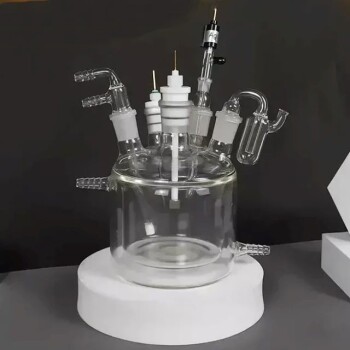
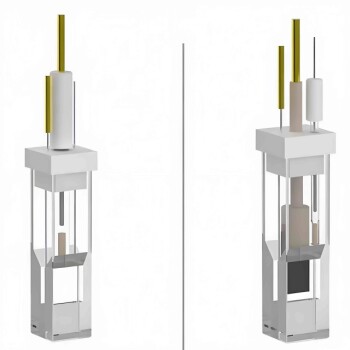
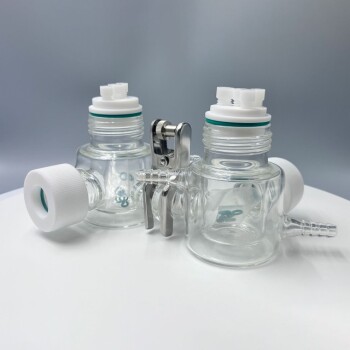
The primary function of a three-electrode electrolytic cell is to isolate the electrochemical response of the coating from external electrical noise. By employing a specific configuration—a coated sample, an Ag/AgCl reference, and a stainless steel counter electrode—this setup removes the influence of contact resistance found in the test circuit. This ensures the data captured represents only the behavior of the polyester coating itself.
In electrochemical impedance testing, the three-electrode configuration is essential for eliminating contact resistance interference. This ensures that the measured impedance strictly reflects the electrochemical processes at the coating-electrolyte interface, allowing for precise evaluation of anti-corrosion efficiency.
The Architecture of Accurate Measurement
To understand the function of this cell, one must understand how the specific components defined in your reference material interact to create a controlled testing environment.
The Working Electrode
The working electrode consists of the polyester-coated sample you are evaluating.
This is the subject of the investigation. The entire system is designed to measure how this specific surface interacts with the electrolyte without interference from the hardware driving the test.
The Reference Electrode
An Ag/AgCl electrode serves as the reference point.
This electrode provides a stable, known potential against which the working electrode is measured. It does not carry current, which prevents it from polarizing and maintains the accuracy of the voltage measurement.
The Counter Electrode
A stainless steel electrode acts as the counter electrode.
This component completes the electrical circuit, allowing current to flow between itself and the working electrode. It ensures that the current necessary for impedance testing can pass through the cell without disturbing the reference measurement.
Why Isolation is Critical
The deep need in corrosion testing is determining exactly how well a coating acts as a barrier. The three-electrode cell is designed to solve specific measurement challenges.
Eliminating Contact Resistance
In simpler setups, resistance from wires and contact points is included in the final data.
The three-electrode cell effectively subtracts this contact resistance from the results. It separates the current-carrying loop from the voltage-measuring loop.
Targeting the Interface
The goal is to analyze the electrochemical processes specifically at the interface between the coating and the electrolyte.
By removing circuit noise, researchers can attribute changes in impedance directly to the coating's performance. This provides a true picture of the polyester's ability to resist corrosion.
Understanding the Trade-offs
While the three-electrode cell is the standard for accuracy, it relies on the strict integration of its components to function correctly.
Material Specificity
The system relies on the specific properties of the auxiliary electrodes.
Using an Ag/AgCl reference and a stainless steel counter electrode is not arbitrary. Deviating from these standard materials without understanding the electrochemical consequences can reintroduce errors or instability into the reading.
Setup Complexity
This configuration is more complex than a two-electrode measurement.
It requires precise positioning and management of three distinct components rather than just connecting two leads. However, this added complexity is the necessary price for obtaining valid anti-corrosion data.
Ensuring Reliable Data
To get the most out of electrochemical impedance spectroscopy (EIS) for polyester coatings, apply these principles to your testing strategy.
- If your primary focus is Data Purity: Prioritize the use of a three-electrode cell to completely eliminate contact resistance from your impedance readings.
- If your primary focus is Equipment Validation: Verify that your counter electrode is stainless steel and your reference is Ag/AgCl to match standard testing protocols.
Ultimately, the accuracy of your anti-corrosion evaluation depends entirely on your ability to isolate the coating's response from the rest of the testing hardware.
Summary Table:
| Component | Material Example | Primary Function |
|---|---|---|
| Working Electrode | Polyester-Coated Sample | The subject of the corrosion investigation |
| Reference Electrode | Ag/AgCl | Provides a stable potential; eliminates voltage measurement errors |
| Counter Electrode | Stainless Steel | Completes the circuit; prevents current from disturbing the reference |
| Target Result | N/A | Isolates electrochemical response and removes circuit noise |
Elevate Your Electrochemical Research with KINTEK
Precision in anti-corrosion testing starts with the right equipment. At KINTEK, we specialize in high-performance electrolytic cells and electrodes designed to eliminate contact resistance and deliver pure, reliable data. Whether you are conducting EIS on polyester coatings or developing advanced energy storage solutions, our comprehensive range of laboratory equipment—including high-temperature high-pressure reactors, potentiostat-compatible cells, and precision crushing systems—is engineered to meet the strictest research standards.
Ready to optimize your testing accuracy? Contact us today to discover how KINTEK's premium consumables and hardware can empower your next breakthrough.
References
- Nicoleta Pleşu, Dorin Jurcău. Polyester-Based Coatings with a Metal Organic Framework: An Experimental Study for Corrosion Protection. DOI: 10.3390/jcs7100422
This article is also based on technical information from Kintek Solution Knowledge Base .
Related Products
- H Type Electrolytic Cell Triple Electrochemical Cell
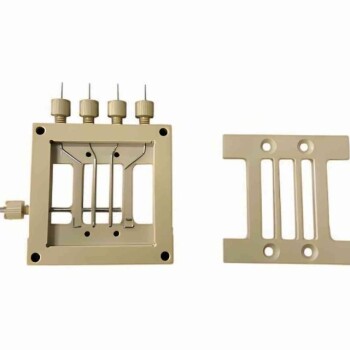
- Electrolytic Electrochemical Cell Gas Diffusion Liquid Flow Reaction Cell
- Electrolytic Electrochemical Cell with Five-Port
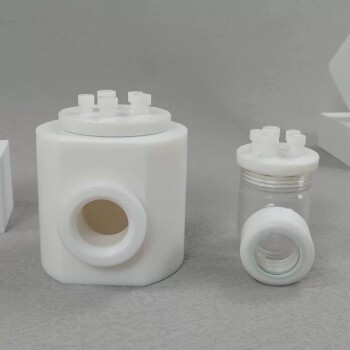
- PTFE Electrolytic Cell Electrochemical Cell Corrosion-Resistant Sealed and Non-Sealed
- Super Sealed Electrolytic Electrochemical Cell
People Also Ask
- What is a H type cell? A Guide to Divided Electrochemical Cells for Accurate Experiments
- How should the electrolyte be prepared and added to the H-type electrolytic cell? Best Practices for Purity and Safety
- What is the technical necessity of using an H-type electrolytic cell for NO3RR tests? Protect Your Ammonia Yields
- How does the design of an H-type electrolytic cell benefit the neutral water electrolysis process for metal recovery?
- What is the primary function of an H-type electrolytic cell in NitRR? Ensure Accurate Product Yields