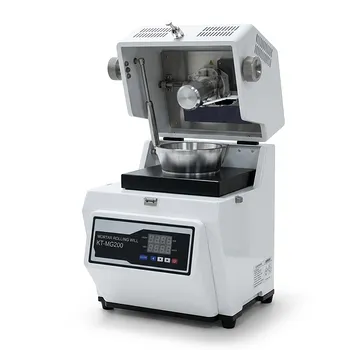
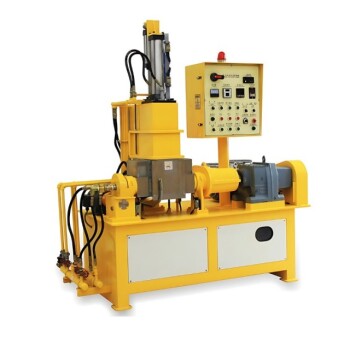
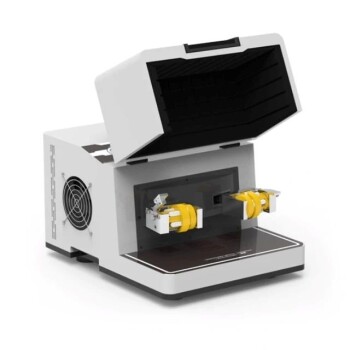
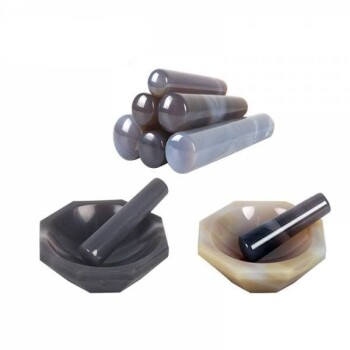
The primary function of laboratory mixing equipment or manual grinding tools is to ensure the creation of a chemically homogeneous reaction feed.
By forcibly blending Electric Arc Furnace (EAF) dust with polymer waste (such as powdered PVC), these tools ensure that both components are distributed at precise, predetermined ratios. This level of uniformity is a critical prerequisite for successful thermochemical treatment, as it guarantees that the chlorinating agent is consistently available throughout the entire volume of the material.
Core Takeaway: Mixing and grinding tools transform separate waste streams into a uniform composite, preventing localized reaction failures and ensuring the chlorinating agents within the polymer can effectively interact with the metallic oxides in the dust.
The Role of Forced Homogenization
Ensuring Stoichiometric Precision
Mixing tools allow operators to maintain strict mass ratios, such as the 1:1 blend often required for experimental consistency. This precision ensures that the available chlorine or carbon in the polymer waste is sufficient to react with the heavy metals present in the EAF dust.
Facilitating Molecular Contact
Manual grinding and mechanical mixing increase the surface-to-surface contact between the dust particles and the polymer powder. This high degree of intimacy is required for the chemical reaction to proceed efficiently once the heat is applied in the furnace.
Preventing Localized Reaction Failure
Eliminating Concentration Gradients
Incomplete mixing creates "dead zones" where there is either too much polymer or too much dust. These concentration gradients lead to incomplete local reactions, where some dust remains untreated while polymer is wasted in other areas.
Optimizing the Thermochemical Environment
A uniform mixture ensures a consistent chemical environment across the entire feed. This consistency is vital for achieving predictable zinc recovery and iron metallization rates during the recovery process.
Understanding the Trade-offs
Energy Intensity vs. Uniformity
While high-intensity mixing produces a superior reaction feed, it requires significant energy input. Researchers must balance the need for perfect homogeneity with the operational costs of prolonged grinding or high-speed mixing.
Impact of Particle Size on Reactivity
Extensive grinding reduces particle size, which generally improves reactivity but can also lead to dusting issues during handling. If the particles become too fine, they may be carried away by the furnace off-gas before the reaction is complete.
How to Apply This to Your Process
Success in recycling EAF dust depends on the transition from a simple physical mixture to a highly reactive composite material.
- If your primary focus is maximizing metal recovery: Prioritize high-shear mixing to ensure the chlorinating agent is perfectly distributed, minimizing the risk of unprocessed oxides.
- If your primary focus is process throughput: Determine the minimum mixing duration required to eliminate "cold spots" to reduce the energy footprint of the preparation stage.
- If your primary focus is reaction kinetics: Follow the mixing stage with pelletization to create controlled porosity, which facilitates gas diffusion and speeds up the reduction process.
Mastering the mixing stage is the fundamental step in transforming hazardous industrial waste into a consistent, high-value resource for metallic recovery.
Summary Table:
| Key Function | Benefit to Process | Impact on Recovery |
|---|---|---|
| Forced Homogenization | Ensures stoichiometric precision (e.g., 1:1 ratios) | Prevents localized reaction failures and "dead zones." |
| Increased Surface Contact | Facilitates molecular intimacy between dust and polymer | Accelerates chemical reaction efficiency and kinetics. |
| Particle Size Control | Optimizes reactivity through grinding | Improves recovery rates but requires balance to avoid dusting. |
| Elimination of Gradients | Provides a uniform chemical environment | Ensures predictable zinc recovery and iron metallization. |
Optimize Your Material Recovery with KINTEK Precision
Success in recycling Electric Arc Furnace (EAF) dust begins with a perfectly homogeneous feed. KINTEK specializes in the high-performance laboratory equipment you need to transform waste into resources.
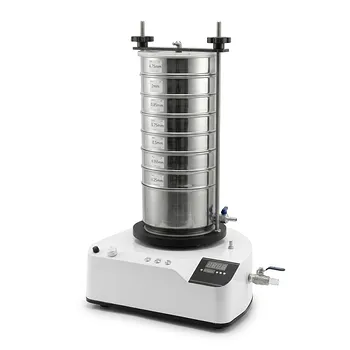
From advanced crushing and milling systems that ensure maximum surface contact to high-precision sieving equipment and hydraulic presses, we provide the tools necessary for rigorous experimental consistency. Complement your preparation stage with our industry-leading high-temperature furnaces (tube, muffle, and vacuum) and high-pressure reactors to achieve superior metal recovery and iron metallization results.
Ready to elevate your lab's efficiency and research accuracy? Contact KINTEK today for a customized solution and let our experts help you select the ideal tools for your specific waste treatment and material science applications.
References
- D. I. Bludova, S. V. Mamyachenkov. Zinc extraction during recycling of electric arc furnace dust by chlorine-containing polymer wastes. DOI: 10.17580/nfm.2023.02.05
This article is also based on technical information from Kintek Solution Knowledge Base .
Related Products
- Laboratory Grinding Mill Mortar Grinder for Sample Preparation
- Vibrating Disc Mill Small Laboratory Grinding Machine
- Lab Internal Rubber Mixer Rubber Kneader Machine for Mixing and Kneading
- Laboratory Ball Mill Jar Mill with Metal Alloy Grinding Jar and Balls
- Laboratory Hybrid Tissue Grinding Mill
People Also Ask
- What laboratory apparatus is used for grinding? Match the Right Mill to Your Sample Material
- What is the function of a laboratory grinding mill? Achieve Precise Sample Preparation for Accurate Results
- What is the purpose of using a laboratory grinder and standard sieves? Unlock Precise Rice Husk Pretreatment
- What is the role of laboratory-grade grinders and sieves in sample prep? Ensure High-Precision Corrosion Analysis
- What is the purpose of using a laboratory grinder with specific mesh sieves for oat straw? Optimize Pellet Quality