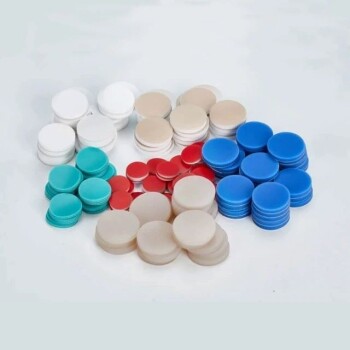
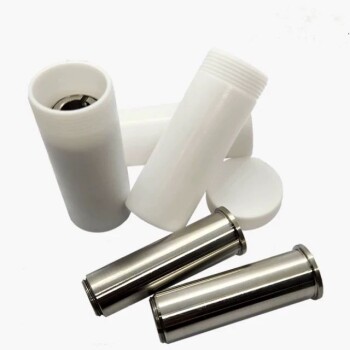
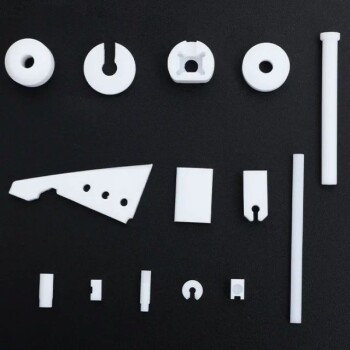
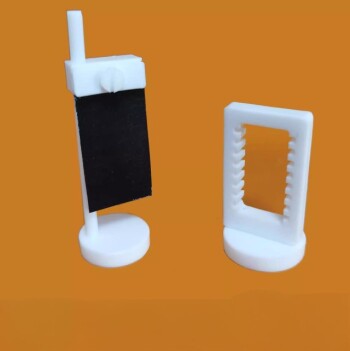
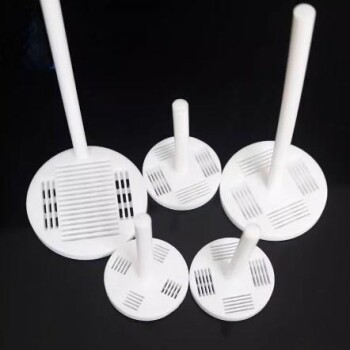
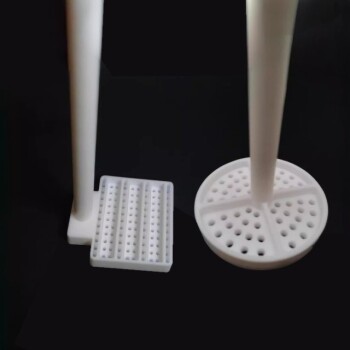
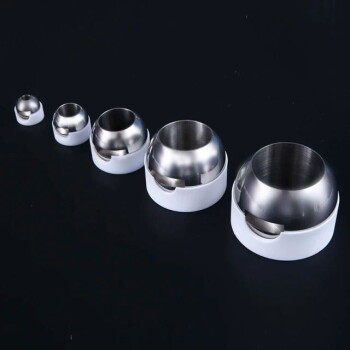
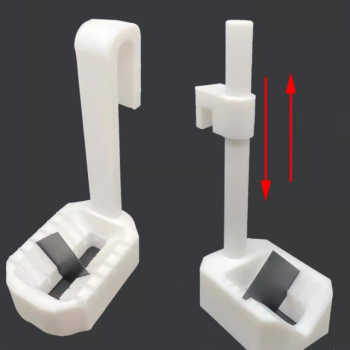
The primary function of Polytetrafluoroethylene (PTFE) sleeves and gaskets is to provide complete electrical insulation between stainless steel test specimens and the mounting hardware. By physically separating the specimen from the autoclave body and support racks, these components prevent direct metallic contact that would otherwise invalidate the test results.
Core Takeaway In corrosion testing, reliability relies on isolation. PTFE sleeves and gaskets eliminate the formation of galvanic cells between dissimilar metals, ensuring that measured corrosion rates reflect only the interaction between the material and the environment, not electrochemical interference from the test rig itself.
The Critical Role of Electrical Insulation
Eliminating the Galvanic Cell
When a stainless steel specimen comes into direct contact with a metallic support rack, a galvanic couple is formed. This creates an unintentional battery effect where one metal accelerates the corrosion of the other.
PTFE sleeves act as a circuit breaker. By placing a non-conductive barrier between the specimen and the rack, the electrical path is severed, preventing this artificial acceleration of corrosion.
Isolating the Test Variable
The goal of a corrosion test is to analyze how a specific material reacts to a specific process environment. External electrical interference introduces a "noisy" variable that distorts this data.
Gaskets ensure the environment is the only active variable. They ensure that weight-loss data and electrochemical measurements are derived exclusively from the specimen's reaction to the fluid, rather than its interaction with the mounting hardware.
Material Properties in Harsh Environments
Chemical Inertness Under Pressure
Test environments, such as multiphase liquefaction reactions in high-pressure autoclaves, are aggressive by design. The mounting material must withstand these conditions without degrading or contaminating the solution.
PTFE is selected for its chemical inertness. It remains stable in corrosive, high-pressure, or bacteria-containing media, ensuring the seal itself does not become a source of chemical interference.
Preventing Crevice Corrosion at Mount Points
Mechanical mounting points are susceptible to crevice corrosion, where stagnant solution continually attacks the metal under the fastener.
Gaskets function as a physical seal. By compressing against the specimen, they can help define the exposed surface area and minimize the crevice effect at the mounting holes, ensuring the analysis focuses on the intended surface area.
Common Pitfalls in Assembly
The Consequence of Partial Contact
Effective isolation is binary: it is either total, or it has failed. Even a microscopic point of contact between the stainless steel specimen and the support rack can re-establish the galvanic circuit.
Sleeve integrity is paramount. If a sleeve is cracked, too short, or improperly seated, the "insulation" is voided, and the resulting corrosion data will likely be skewed by galvanic coupling.
Misinterpreting Stress Corrosion Results
In stress corrosion analyses, external electrochemical factors can mask or mimic stress cracking behaviors.
Galvanic interference can look like material failure. Without the total isolation provided by PTFE components, researchers may falsely attribute corrosion damage to material susceptibility when it was actually caused by the test rig setup.
Making the Right Choice for Your Goal
To ensure the validity of your corrosion testing program, consider the following objectives:
- If your primary focus is General Corrosion Rates: Ensure your PTFE gaskets fully isolate the specimen from the rack to prevent galvanic acceleration of weight loss.
- If your primary focus is Stress Corrosion Cracking: Verify that PTFE sleeves are intact and rated for the autoclave pressure to prevent electrical contact during thermal expansion.
Ultimately, the value of your data depends not just on the quality of the steel, but on the integrity of the insulation that supports it.
Summary Table:
| Feature | Function in Corrosion Testing | Primary Benefit |
|---|---|---|
| Electrical Insulation | Severs the electrical path between specimen and rack | Eliminates galvanic cell formation |
| Chemical Inertness | Resists degradation in aggressive/high-pressure media | Prevents contamination of the test environment |
| Physical Sealing | Compresses against the specimen at mounting points | Minimizes crevice corrosion at the fastener |
| Variable Isolation | Blocks electrochemical interference from the test rig | Ensures data reflects only material-environment interaction |
Ensure the Integrity of Your Corrosion Research with KINTEK
In high-stakes corrosion testing, even the smallest electrical contact can invalidate months of research. KINTEK specializes in providing the high-precision laboratory equipment and consumables required to maintain total isolation and accuracy.
Beyond our premium PTFE products, ceramics, and crucibles, KINTEK offers a comprehensive range of solutions for demanding environments, including:
- High-Temperature & High-Pressure Reactors & Autoclaves for aggressive reaction testing.
- Electrolytic Cells & Electrodes for precise electrochemical analysis.
- Crushing, Milling, and Sieving Equipment for material preparation.
- Advanced Thermal Solutions from muffle and tube furnaces to ULT freezers.
Don't let galvanic interference compromise your data. Contact KINTEK today to equip your lab with the industry's most reliable consumables and high-pressure hardware designed for peak performance.
References
- Marina Cabrini, Roberta Miglio. Study of the Corrosion Resistance of Austenitic Stainless Steels during Conversion of Waste to Biofuel. DOI: 10.3390/ma10030325
This article is also based on technical information from Kintek Solution Knowledge Base .
Related Products
- Custom PTFE Teflon Parts Manufacturer for Gaskets and More
- Custom PTFE Teflon Parts Manufacturer for Centrifuge Tubes
- Custom PTFE Teflon Parts Manufacturer for PTFE Bottle Oil Fume Sampling Tube
- Custom PTFE Teflon Parts Manufacturer for Non-Standard Insulator Customization
- Custom PTFE Teflon Parts Manufacturer for Hollow Cleaning Basket and Rack Carrier
People Also Ask
- What technical advantages do PTFE seals provide in high-pressure CO2? Optimize Your Seal Integrity
- What are the critical functions of Polytetrafluoroethylene (PTFE) gaskets within a glow discharge unit? Enhance Precision
- How are PTFE gaskets utilized for POEGMA electrolyte conductivity? Ensure Precision in Electrochemical Measurements
- What is the purpose of using PTFE gaskets in fuel cell test fixtures? Ensure Seal Purity and Data Integrity
- What protective roles do Sealing Gaskets and Support Grids play in oil-water separation? Ensure High-Pressure Integrity