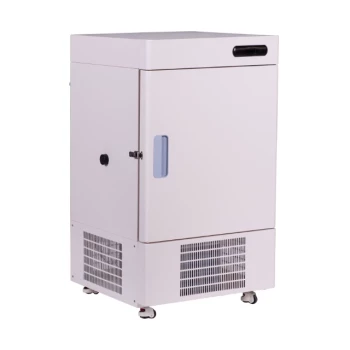
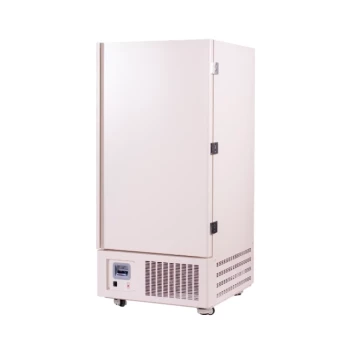
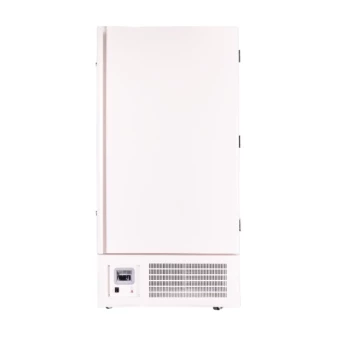
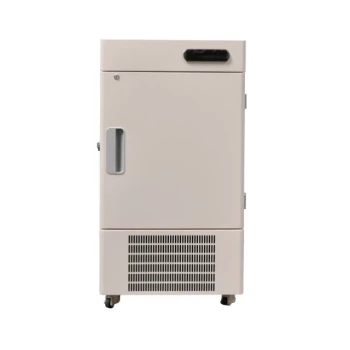
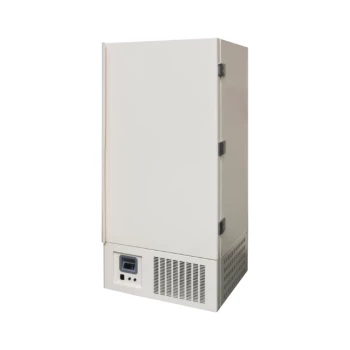
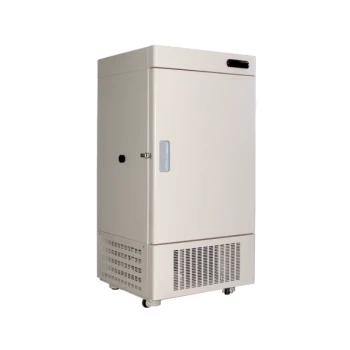
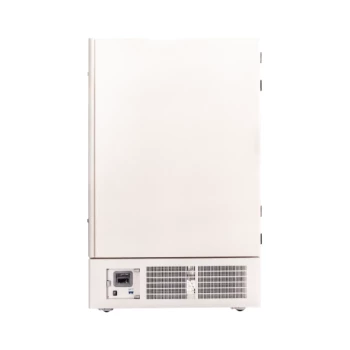
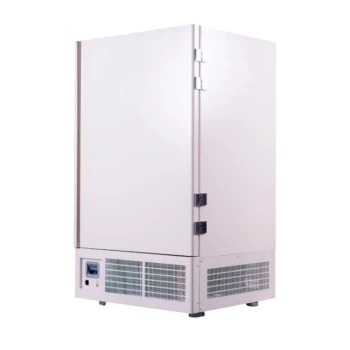
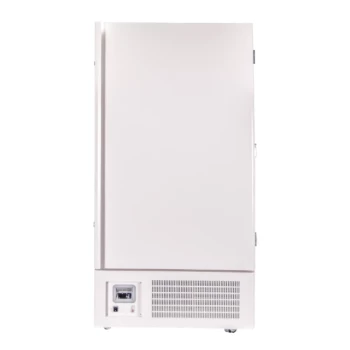
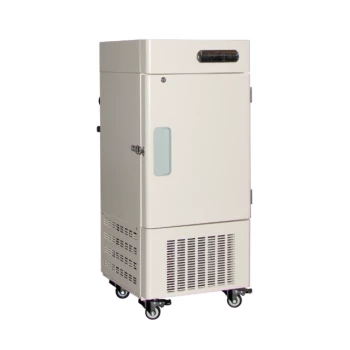
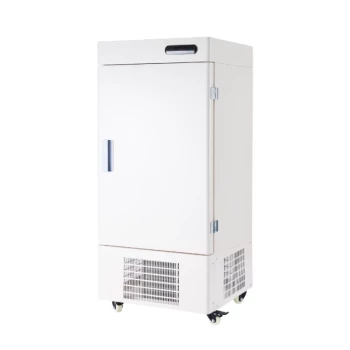
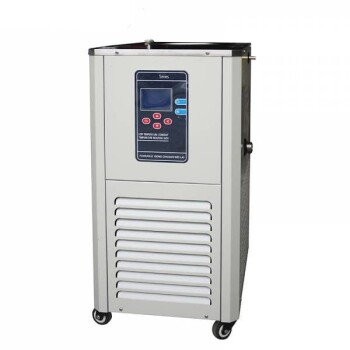
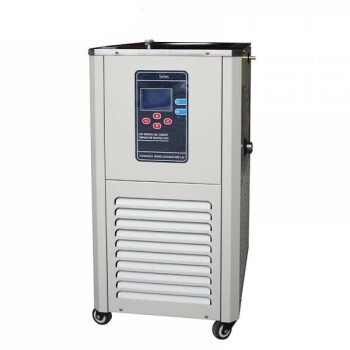
Ultra-low temperature (ULT) cooling equipment serves as the critical enabler for the development of superconducting nanowire devices by generating an environment near absolute zero. Its primary function is to transition materials into a superconducting state, a physical prerequisite for testing device functionality.
To function as intended, superconducting nanowires require an environment where electrical resistance effectively disappears. ULT cooling equipment provides the thermal stability necessary to validate logic operations and ensure the reliability of complex circuits.
Enabling the Physics of Superconductivity
Reaching the Critical State
Superconducting nanowire devices cannot function at standard ambient temperatures. They require specialized refrigeration systems to lower the temperature to near absolute zero.
Sustaining Zero Resistance
The cooling equipment does more than just lower the temperature; it must sustain it. This continuous extreme cold allows the nanowire materials to reach and maintain their superconducting state, which is the foundational requirement for the device's operation.
Validating Circuit Logic and Stability
Testing Logic Flipping
Once the superconducting state is achieved, developers use this environment to test the device's logic capabilities. The cooling allows for the observation and verification of logic flipping, a core mechanism for digital processing in these devices.
Verifying Complex Circuits
Advanced testing involves more than just single components. The stable environment provided by ULT equipment is essential for testing integrated circuits, such as binary shift registers.
Ensuring Operational Stability
For these circuits to operate reliably, thermal fluctuations must be minimized. The cooling equipment ensures the stability required to prove that the logic circuits can function consistently over time.
Understanding the Operational Dependencies
Total Reliance on Thermal Environment
The primary constraint of this technology is its absolute dependence on the cooling infrastructure. Without active, specialized refrigeration, the superconducting state collapses immediately.
The "Quench" Risk
If the temperature rises even slightly above the critical threshold, the device reverts to a resistive state. This means the testing of logic and stability is entirely bound by the reliability of the ULT equipment.
Making the Right Choice for Your Goal
To effectively develop superconducting nanowire devices, you must match your cooling strategy to your testing objectives.
- If your primary focus is fundamental material analysis: Ensure your equipment can reach temperatures sufficiently below the critical point to guarantee a sustained superconducting state.
- If your primary focus is circuit logic verification: Prioritize refrigeration stability to prevent thermal noise from interfering with sensitive tests on logic flipping and binary shift registers.
The success of superconducting nanowire development is inextricably linked to the precision and reliability of your ultra-low temperature cooling environment.
Summary Table:
| Key Function | Role in Development | Impact on Device |
|---|---|---|
| Critical State Achievement | Reaching temperatures near absolute zero | Transitions materials to a zero-resistance superconducting state |
| Thermal Stability | Minimizing temperature fluctuations | Ensures reliable logic flipping and prevents circuit "quenching" |
| Logic Verification | Providing a stable testing environment | Validates complex circuits like binary shift registers |
| Operational Integrity | Sustaining continuous extreme cold | Maintains the physical prerequisites for digital processing |
Elevate Your Superconductivity Research with KINTEK Precision
Precision is the backbone of superconducting nanowire development. At KINTEK, we specialize in high-performance laboratory solutions designed to meet the rigorous demands of absolute-zero research. From advanced ULT freezers and cooling solutions to essential high-temperature furnaces and vacuum systems, we provide the infrastructure necessary for both material synthesis and cryogenic testing.
Whether you are verifying complex circuit logic or engineering the next generation of superconducting devices, our expert team is ready to equip your lab with reliable, state-of-the-art technology. Contact us today to find the perfect cooling solution for your research!
References
- Puteri Nurain Syahirah Megat Muhammad Kamal, Amin Safwan Alikasturi. Cellulose conversion to levulinic acid using sulphuric acid on silica-alumina support (SSA). DOI: 10.1063/5.0195510
This article is also based on technical information from Kintek Solution Knowledge Base .
Related Products
- 108L Vertical Ultra Low Temperature ULT Freezer
- 408L Advanced Vertical Laboratory Ultra Low Temperature Freezer for Critical Research Material Preservation
- 508L Advanced Vertical Ultra Low Temperature Freezer for Critical Laboratory Storage
- 58L Precision Laboratory Ultra Low Temperature Upright Freezer for Critical Sample Storage
- 608L Essential Laboratory Ultra Low Temperature Freezer For Critical Sample Preservation
People Also Ask
- What are the common applications of ultra-low temperature freezers? Preserve Your Most Valuable Samples
- What are the different types of ultra-low temperature freezers available? Choose the Right ULT Freezer for Your Lab
- What are some key features of ultra-low temperature freezers? Essential Guide to Reliable Sample Storage
- Have other labs successfully stored samples at -70°C? Proven Long-Term Preservation for Biological Materials
- What features should be considered when choosing an ultra low temperature freezer? Secure Your Samples with Precision