The optimal temperature for THC extraction is not a single number, but a carefully chosen range that depends entirely on your method and desired outcome. While higher temperatures can increase yield, they do so at the cost of destroying the delicate aromatic compounds that define a high-quality product. The art of extraction lies in finding the precise thermal balance for your specific goal.
Temperature in cannabis extraction is the primary control for a fundamental trade-off: yield versus quality. Lower temperatures are used to preserve volatile terpenes and create a premium, full-spectrum product, while higher temperatures are used to maximize the quantity of cannabinoids extracted, often at the expense of aroma and flavor.
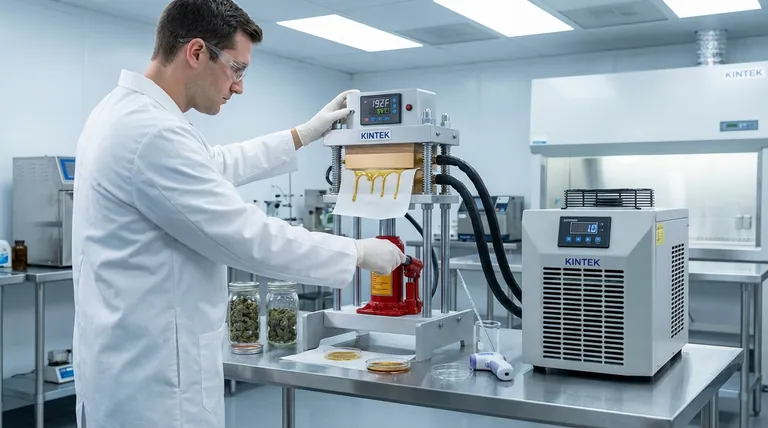
The Dual Role of Heat in Extraction
Temperature is a powerful tool because it influences cannabis compounds in two distinct ways. Understanding these effects is the key to mastering your extraction process.
Phase 1: Cannabinoid Activation (Decarboxylation)
Raw cannabis flower contains THCA (tetrahydrocannabinolic acid), a non-psychoactive precursor. To become the psychoactive THC you want, it must be heated in a process called decarboxylation.
This process typically occurs between 220-240°F (105-115°C). While sometimes a separate step before extraction, this temperature range is a critical upper limit—exceeding it significantly during the extraction itself can degrade your final product.
Phase 2: Solubility and Volatility
Heat makes cannabinoids more soluble, allowing them to be separated from the plant material more easily. However, it also affects terpenes—the highly volatile compounds responsible for the extract's aroma and flavor.
Most terpenes have very low boiling points, some beginning to vaporize away at temperatures as low as 70°F (21°C). This creates the central conflict of extraction: you need enough energy to pull out the THC, but not so much that you boil off the valuable terpenes.
Optimal Temperatures by Extraction Method
The "best" temperature is defined by the extraction technique you are using. Each method leverages temperature in a unique way.
Solvent-Based: BHO and Ethanol
For butane (BHO) and ethanol extractions, the process is often cryogenic. The goal is to make the solvent extremely cold, sometimes below -40°F (-40°C).
At these frigid temperatures, the desired cannabinoids and terpenes readily dissolve into the solvent. Meanwhile, undesirable compounds like fats, waxes, and chlorophyll remain frozen and solid, preventing them from contaminating the extract. The "heat" in this process is applied later, during the purge, where a gentle warmth (typically 90-115°F / 32-46°C) and vacuum are used to evaporate the solvent without damaging the terpenes.
Supercritical CO2 Extraction
CO2 extraction uses both temperature and pressure to turn carbon dioxide into a solvent. The temperature directly impacts which compounds are targeted.
- Subcritical (Low Temp): Using lower temperatures (around 88°F / 31°C) and lower pressure keeps the CO2 in a subcritical state. This is excellent for gently stripping volatile terpenes from the plant material but is less effective at extracting THC, resulting in lower yields.
- Supercritical (High Temp): Higher temperatures (120°F / 49°C or higher) and intense pressure put the CO2 into a supercritical state. This is highly effective for dissolving THC and maximizing yield but often destroys most terpenes in the process. Many operators perform a subcritical "terpene run" first, then a supercritical THC run, and combine the results.
Solventless: Rosin Pressing
Rosin pressing is the most direct application of heat and pressure. Here, the temperature choice has an immediate and obvious effect on the final product.
- Low Temperature (160-190°F / 71-88°C): This range is used for creating premium "live rosin" or high-quality budder. It preserves a maximum number of terpenes, resulting in a flavorful, aromatic, and often creamy or saucy consistency. The trade-off is a significantly lower yield.
- High Temperature (190-220°F / 88-104°C): Pushing the temperature higher dramatically increases the yield from each press. However, this comes at the cost of terpene preservation, leading to a less aromatic product that is often more stable and glassy, like shatter.
Understanding the Trade-offs
Choosing a temperature is never about finding one "perfect" number. It's about making an informed decision based on the compromises you are willing to make.
Yield vs. Terpene Preservation
This is the primary trade-off. Every degree you increase the temperature, you are potentially increasing your THC yield while simultaneously degrading or destroying the most volatile terpenes. A high-yield extract with no aroma is often considered a low-quality product.
Degradation to CBN
Excessive heat is not just bad for terpenes; it's bad for THC. If temperatures get too high (well above 250°F / 121°C), the THC molecule itself will begin to degrade into CBN (Cannabinol). CBN has different properties, most notably causing sedation and sleepiness, which is an undesirable outcome for most THC extracts.
Time and Pressure as Variables
Remember that temperature does not act alone. A lower temperature can often be compensated for with a longer extraction time or, in the case of rosin, increased pressure. Fine-tuning these three variables is the hallmark of a skilled extraction technician.
Making the Right Choice for Your Goal
Your ideal temperature is dictated by what you want to create. Use these guidelines to find your starting point.
- If your primary focus is maximizing terpene preservation and flavor: Use the lowest effective temperature for your method, such as cryogenic temperatures for solvent runs or pressing rosin below 190°F (88°C).
- If your primary focus is maximizing total THC yield: Use higher temperatures within the safe range for your method, like supercritical CO2 or pressing rosin above 200°F (93°C), accepting the loss of aromatic compounds.
- If you seek a balanced product with good yield and flavor: Aim for the middle ground. For rosin, this is often between 190-200°F (88-93°C), a range that provides a good return without completely sacrificing quality.
Ultimately, mastering temperature control transforms extraction from a simple procedure into the art of crafting a specific experience.
Summary Table:
| Extraction Method | Optimal Temperature Range | Primary Goal |
|---|---|---|
| Solvent-Based (BHO/Ethanol) | -40°F to 115°F (-40°C to 46°C) | Preserve terpenes with cold extraction; gentle purge |
| Supercritical CO₂ (Subcritical) | ~88°F (31°C) | Maximize terpene preservation |
| Supercritical CO₂ (Supercritical) | 120°F+ (49°C+) | Maximize THC yield |
| Solventless (Rosin Press - Low Temp) | 160-190°F (71-88°C) | Premium, flavorful live rosin |
| Solventless (Rosin Press - High Temp) | 190-220°F (88-104°C) | Maximize yield, stable consistency |
| Decarboxylation (THCA to THC) | 220-240°F (105-115°C) | Activate psychoactive THC |
Ready to Achieve Precision in Your Cannabis Extraction Process?
Mastering temperature control is key to producing high-quality, consistent THC extracts. Whether you're focused on maximizing yield, preserving delicate terpenes, or finding the perfect balance, having the right equipment is non-negotiable.
KINTEK specializes in precision lab equipment and consumables for the cannabis industry. We provide the reliable tools you need to fine-tune your extraction process, from temperature-controlled presses to advanced solvent recovery systems. Our solutions help you protect your product's quality, improve efficiency, and scale your operations confidently.
Let's build the perfect extraction setup for your lab. Contact our experts today to discuss your specific needs and how we can help you achieve superior results.
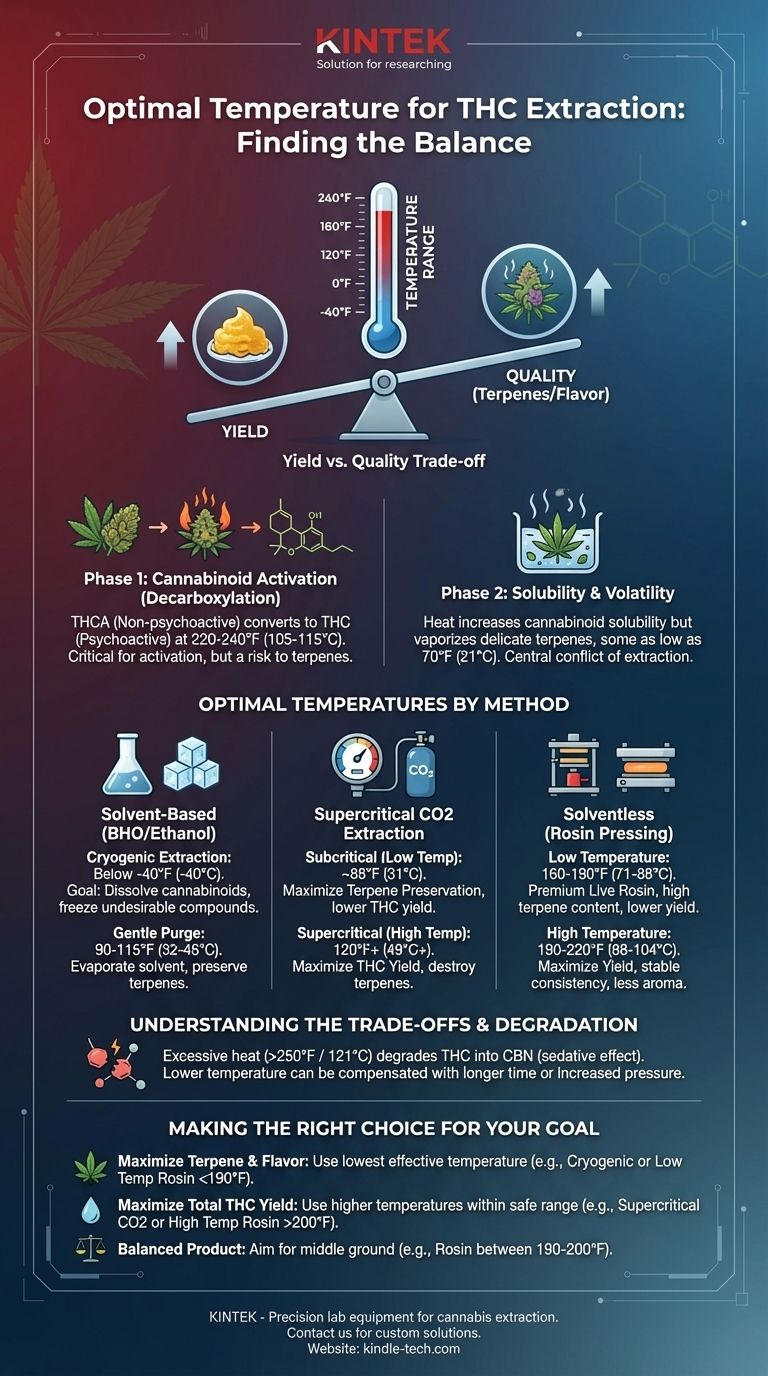
Visual Guide
Related Products
- Automatic Heated Hydraulic Press Machine with Heated Plates for Laboratory Hot Press 25T 30T 50T
- Single Punch Electric Tablet Press Machine Laboratory Powder Tablet Punching TDP Tablet Press
- Single Punch Electric Tablet Press Machine TDP Tablet Punching Machine
- Manual High Temperature Heated Hydraulic Press Machine with Heated Plates for Lab
- Desktop Fast Laboratory Autoclave Sterilizer 35L 50L 90L for Lab Use
People Also Ask
- What machine is needed to make diamonds? HPHT Press vs. CVD Reactor Explained
- What does a hydraulic heat press do? Achieve Industrial-Scale, Consistent Pressure for High-Volume Production
- Why was the hydraulic press important? Unlocking Unprecedented Industrial Power
- How does a hydraulic hot press machine work? Unlock Precision in Material Bonding and Forming
- What are the features of a hydraulic press? Unlock Immense Force with Simple, Reliable Design