In laboratory chemical synthesis, the primary function of a high-pressure autoclave is to provide a sealed, high-temperature, and high-pressure environment for hydrothermal or solvothermal reactions. This specialized vessel allows solvents to remain in a liquid state at temperatures significantly exceeding their atmospheric boiling points. By manipulating these physical conditions, researchers can accelerate reaction rates and synthesize unique crystal phases or morphologies—such as nanosheets and nanoflowers—that are impossible to achieve under standard atmospheric pressure.
The high-pressure autoclave acts as a thermodynamic tool that forces solvents into a "superheated" state, enabling the dissolution of difficult substances and the precise control of crystal growth for advanced materials like catalysts.
The Mechanics of High-Pressure Synthesis
Increasing Solvent Boiling Points
In an open system, a solvent cannot be heated beyond its boiling point because it simply evaporates. A high-pressure autoclave creates a sealed environment that prevents this evaporation, allowing the liquid to reach much higher temperatures. This state increases the kinetic energy of the reactants, often leading to reactions that would otherwise be energetically unfavorable.
Accelerating Reaction Kinetics
By operating at elevated temperatures and pressures, the autoclave significantly accelerates chemical reaction rates. This efficiency is critical for laboratory research where complex synthesis processes need to be completed within reasonable timeframes. The increased pressure also facilitates the dissolution of precursor materials that have low solubility under normal conditions.
Facilitating Hydrothermal and Solvothermal Processes
These processes involve using water (hydrothermal) or organic solvents (solvothermal) under high pressure to facilitate chemical transformations. This environment is essential for the preparation of non-noble metal catalysts, such as cobalt phosphide or nickel sulfide. The autoclave provides the necessary conditions for metal ions and non-metal sources to react effectively within a precursor solution.
Controlling Material Morphology and Phase
Growth of Special Crystal Phases
Certain materials and crystal structures are only stable or capable of forming under extreme pressure. The autoclave allows researchers to access these special phases, which are often required for advanced materials chemistry. This capability is vital for developing high-performance electronic, magnetic, or structural materials.
Directing Nanostructure Formation
High-pressure environments allow for the controlled growth of crystals in specific directions. This precision enables the creation of unique structures like nanosheets or nanoflowers, which provide high specific surface areas. These structures are highly valued in electrochemistry because they expose more active sites, improving the overall efficiency and stability of the material.
Understanding the Trade-offs and Risks
Synthesis vs. Sterilization
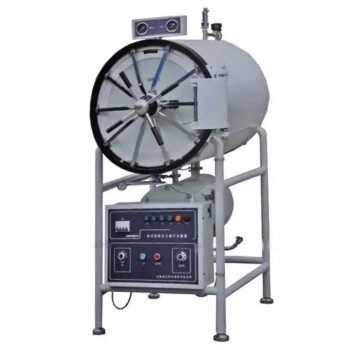
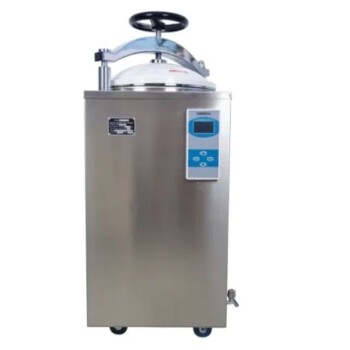
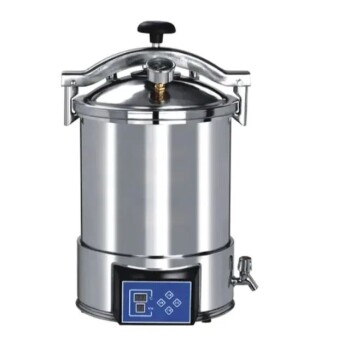
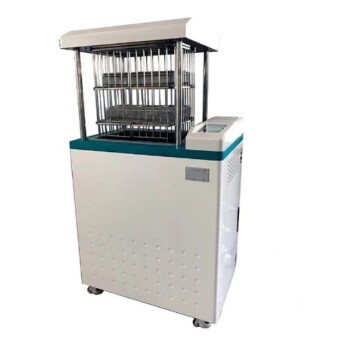
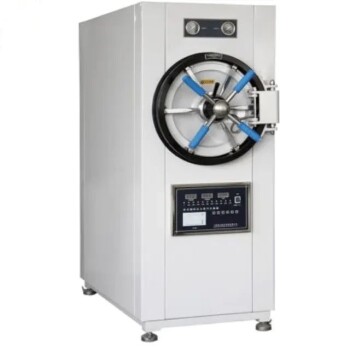
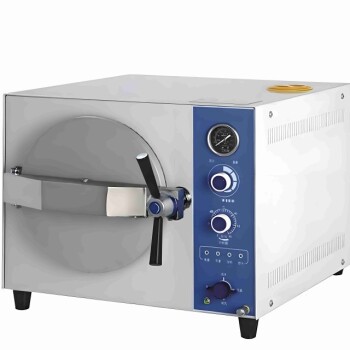
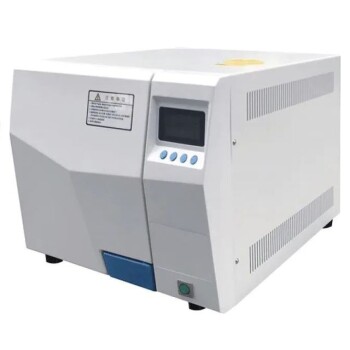
It is critical to distinguish between a synthesis autoclave and a medical/lab autoclave. While the latter is designed primarily for sterilization (killing bacteria and spores using steam), the synthesis autoclave is a heavy-duty reactor designed for chemical transformations. Using the wrong equipment for chemical synthesis can lead to equipment failure or ineffective reactions.
Safety and Vessel Integrity
Operating at high pressure and temperature introduces significant safety risks, including the potential for vessel rupture. High-pressure autoclaves must be constructed from specialized alloys and equipped with pressure-relief valves and rupture disks. Constant monitoring and rigorous maintenance are non-negotiable requirements for their use in a laboratory setting.
Complexity of Monitoring
Because the reaction occurs inside a sealed, thick-walled metal vessel, real-time observation of the process is difficult. Researchers often rely on "black box" synthesis, where the outcome is only known after the vessel cools and is opened. While some advanced autoclaves feature sapphire windows or internal sensors, they are significantly more expensive and complex to operate.
Making the Right Choice for Your Synthesis Goal
How to Apply This to Your Project
Selecting the right conditions and equipment depends entirely on the material properties you intend to achieve.
- If your primary focus is catalyst performance: Use high-pressure solvothermal synthesis to create nanostructures with high specific surface areas and exposed active sites.
- If your primary focus is crystal purity: Adjust the temperature and pressure to stay within the specific thermodynamic window that favors the growth of your target phase while suppressing impurities.
- If your primary focus is lab safety: Ensure your vessel is rated for at least 1.5 times your maximum intended operating pressure and perform regular hydrostatic testing.
The high-pressure autoclave remains an indispensable tool for pushing the boundaries of what is chemically possible in modern materials science.
Summary Table:
| Feature | Function in Synthesis | Benefit to Researcher |
|---|---|---|
| Superheating | Prevents solvent evaporation at high temps | Enables reactions above standard boiling points |
| Kinetics | Increases reactant kinetic energy | Significantly accelerates chemical reaction rates |
| Phase Control | Manipulates thermodynamic conditions | Synthesizes unique crystal phases and morphologies |
| Solubility | High-pressure environment | Dissolves precursors with low normal solubility |
Elevate Your Chemical Synthesis with KINTEK Precision
Unlock the full potential of hydrothermal and solvothermal research with KINTEK’s high-performance laboratory solutions. We specialize in high-temperature high-pressure reactors and autoclaves, alongside a complete range of muffle furnaces, vacuum systems, and crushing and milling equipment.
Whether you are synthesizing advanced catalysts or directing the formation of complex nanostructures like nanosheets and nanoflowers, our equipment provides the safety, durability, and precision your lab demands. KINTEK offers everything from cooling solutions and ULT freezers to essential consumables like PTFE products and ceramics.
Ready to optimize your synthesis process? Contact KINTEK Today to explore our comprehensive portfolio. Let our experts help you find the perfect high-pressure reactor to achieve your research breakthroughs!
References
- Gang Wang, Zhongrong Shen. Designing High‐mass Loading 2D Ni‐TiO <sub>2</sub> /graphene Pellet Electrodes for Lithium Metal Batteries. DOI: 10.1002/slct.202300961
This article is also based on technical information from Kintek Solution Knowledge Base .
Related Products
- Mini SS High Pressure Autoclave Reactor for Laboratory Use
- High Pressure Laboratory Autoclave Reactor for Hydrothermal Synthesis
- Stainless High Pressure Autoclave Reactor Laboratory Pressure Reactor
- Desktop Fast High Pressure Laboratory Autoclave Sterilizer 16L 24L for Lab Use
- Portable High Pressure Laboratory Autoclave Steam Sterilizer for Lab Use
People Also Ask
- Why use high-pressure reactors for molecular sieve synthesis? Unlock Superior Crystallinity and Framework Control
- What is the function of a high-pressure reactor autoclave? Enhancing Cu/N Co-Doped Carbon Catalyst Synthesis
- Why are high-pressure reactors or autoclaves necessary for the synthesis of new functional materials? Unlock Precision.
- What are the advantages of using a high-pressure reactor like an autoclave? Maximize Liquefaction Speed & Yield
- How are high-pressure reactors used to prepare metaphosphate electrocatalysts? Master In-Situ Precursor Growth